The best AI test case generation tools in 2026, ranked by generation method:
- Shiplight AI, agent-native: your coding agent authors YAML tests in your git repo.
- Playwright codegen and Selenium IDE, open source: recording into code you own.
- TestFiesta AI Copilot: generation built into a test-management suite, so cases land straight in the suite you already run.
- Spec-driven and cloud-agent generation services.
- testRigor: the vendor-console archetype for manual-QA organizations.
- QA Wolf: the managed-service archetype.
- Virtuoso QA and ACCELQ: enterprise codeless suites for packaged-app estates.
- TestMax AI: requirement-driven generation from user stories and acceptance criteria.
- Tricentis Tosca: the model-based-testing incumbent for SAP-class estates.
Scripting every test case manually is one of the highest-friction parts of software development, and these tools have made it largely optional. They differ in input format, output portability, self-healing approach, and team fit.
We build Shiplight, so it is ranked first; the comparison below is honest about where each alternative is the better choice.
This guide ranks all 12 based on generation quality, output portability, self-healing capability, and fit for modern AI-assisted development workflows. For a framework to evaluate any tool against your specific needs, see the AI test generation tools buyer's guide.
How to Evaluate AI Test Case Generation Tools
| # | Tool | Designed for | Generation Input | Where tests live |
|---|---|---|---|---|
| 1 | Shiplight AI | AI coding agent teams | Natural language YAML intent | YAML in your git repo |
| 2 | Playwright codegen | Engineering teams recording flows into code | Recorded browser sessions | Code in your repo |
| 3 | TestFiesta AI Copilot | Software testers, test managers, QA engineers | Requirements documents, user stories (pasted in), screenshots, free-form notes in natural language | Test suite inside TestFiesta with sign-off |
| 4 | Selenium IDE | Selenium shops recording quick coverage | Record-and-playback | Exported code in your repo |
| 5 | Spec-driven generation services (category) | Teams handing written specs to a vendor cloud agent | Specs, PRDs, user stories | Varies; execution on the vendor's cloud |
| 6 | Cloud-agent generation services (category) | Teams outsourcing authorship to a cloud agent | App crawling, recorded traffic | Often your repo; healing in the vendor's cloud |
| 7 | testRigor | Manual-QA orgs authoring in a vendor console | Constrained English DSL | Vendor's cloud console |
| 8 | QA Wolf | Teams outsourcing QA entirely | Managed humans + AI | Vendor's infrastructure |
| 9 | Virtuoso QA | Enterprise packaged-app estates | Natural language, user stories | Vendor's platform |
| 10 | ACCELQ | Enterprise multi-platform (SAP, mobile, API) | NLP + visual recording | Vendor's cloud |
| 11 | TestMax AI | QA and enterprise teams that want requirement-driven generation | User stories, acceptance criteria, requirement documents | TestMax AI platform |
| 12 | Tricentis Tosca | SAP-class enterprise estates | Model-based modules | Repository database objects |
Before the rankings, here's the criteria:
| Criterion | Why It Matters |
|---|---|
| Generation input | Natural language, recording, session replay, or exploration: some teams can specify; others need inference |
| Output format | Proprietary vs. open (YAML, code): open formats survive tool changes |
| Self-healing | Tests break when UI changes; AI-based healing determines long-term ROI |
| CI/CD integration | Tests that don't run on every PR don't catch regressions |
| AI agent support | If you use Claude Code, Cursor, or Codex, can the tool integrate directly? |
Requirement intelligence is a separate criterion worth naming: it matters when test quality depends on the completeness of the user stories, acceptance criteria, or requirement documents behind a feature. TestMax AI is built for teams that want to validate what should be tested before generating test cases; Shiplight focuses on verifying implemented UI behavior inside the coding-agent development workflow. Different stage of the pipeline, not competing answers to the same question.
The 12 Best AI Test Case Generation Tools in 2026
1. Shiplight AI
Best for: Engineering teams using AI coding agents
Shiplight generates test cases from natural language intent written in YAML: readable by engineers, reviewable in pull requests, and self-healing when the UI changes. Shiplight installs as an MCP server plus Skills in Claude Code, Cursor, Codex, and more, so AI coding agents can generate and run test cases without leaving their workflow.
Test cases look like this:
goal: Verify user can complete checkout
statements:
  - intent: Log in as a test user
  - intent: Navigate to the product catalog
  - intent: Add the first product to the cart
  - intent: Proceed to checkout
  - intent: Enter shipping address
  - intent: Complete payment with test card
  - VERIFY: order confirmation page shows order number
Each intent step resolves to browser actions at runtime. When the UI changes, the intent stays valid: the resolution adapts. Tests live in your git repository, appear in PR diffs, and run in any CI environment via the Shiplight CLI.
Shiplight is built on Playwright: the YAML transpiles to Playwright at run time, so it supports every Playwright browser and runs alongside an existing suite.
Standout capability: Direct integration into AI coding agent workflows, with MCP plus Skills across every major coding agent, tests in your git repo, and local runs with no account: the agent generates code, calls Shiplight to verify it, and gets a test case back, all in one loop. See how AI coding agents use Shiplight for the full pattern.
Pricing: Local runs need no account; Free $0, Pro $60/mo.
2. Playwright codegen
Designed for: Engineering teams that want recorded flows as standard, free, open-source code
Playwright's built-in codegen (npx playwright codegen) opens a browser, records the flow you click through, and emits Playwright test code with sensible locators. The output is standard framework code in your repo, editable, version-controlled, and owned by nobody but you. Playwright has also shipped first-party agent tooling (planner, generator, and healer agents) that pushes generation beyond simple recording.
Honest limit: codegen generates the first version of a test, not its upkeep. The output is selector-bound code, and someone fixes it when the UI changes, whether a human or a coding agent wrote it. There is no self-healing runtime.
Pricing: Free and open source.
3. TestFiesta AI Copilot
Designed for: QA teams that want test generation and test management living in one place
TestFiesta AI Copilot is a conversational test case generation feature built into the TestFiesta test management platform, rather than a standalone generation tool. A tester pastes in requirements documents, user stories, screenshots, or free-form notes, and the Copilot returns structured test cases in the same conversation; the tester reviews and refines the output before it's added to the suite.
Keeping generation and management in one product means a generated case doesn't need a separate import step to become part of your suite, which matters for traceability if your team already runs its test process inside TestFiesta.
Honest limit: the Copilot only works inside TestFiesta. Tests live in the platform, not your git repo, and there is no export or code-ownership path documented; teams that want generated tests as portable code or YAML should look elsewhere on this list.
Pricing: flat $10/user/month, one plan, no tiers, 14-day free trial, no credit card required.
4. Selenium IDE
Designed for: Teams on Selenium that want quick recorded coverage without scripting
Selenium IDE is a browser-extension recorder: click through a flow, get a replayable test, and export it to Selenium bindings in several languages when you outgrow the extension. It is the longest-standing record-and-playback tool, free, and open source.
Honest limit: recorded Selenium tests inherit Selenium's maintenance profile: brittle selectors, manual waits, and no healing. Most new suites start on Playwright today; see best Selenium alternatives if you're evaluating a move.
Pricing: Free and open source.
5. Spec-driven generation services
Designed for: Teams that want a vendor's cloud agent to generate tests from written requirements
A commercial category rather than a single tool: you hand the service a spec, a PRD, or user stories, and its cloud agent generates test cases from them. Some services deposit test files locally, but execution runs on the vendor's cloud runners (some CLIs reject localhost outright), and runs are metered.
Honest limit: where the tests live and what they cost to run is the whole question with this category. Before committing, verify where every run executes, what generation and re-generation cost, and whether anything remains runnable if you stop paying.
Pricing: Typically metered cloud runs; models vary by vendor.
6. Cloud-agent generation services
Designed for: Teams outsourcing test authorship to a cloud agent, often from real user traffic
The second half of the same commercial pattern: the vendor's cloud agent generates standard framework code by crawling your application or observing recorded production sessions, often delivered as pull requests to your repo. Routine runs may be plain code you own; healing and agent features execute as billable sessions in the vendor's cloud.
Honest limit: session-derived coverage is reactive: a new feature has no traffic yet, so it has no tests yet. And the portability story needs checking per vendor: code in your repo does not mean maintenance is free of the vendor's metered cloud.
Pricing: Typically quote-only, with healing metered per cloud session.
7. testRigor
Designed for: manual-QA-heavy organizations where non-engineers author tests in a vendor cloud console
testRigor, a cloud-hosted platform founded in 2015 (before the coding-agent era), generates test cases from sentences in a constrained plain-English DSL rather than free English: their own docs note the parsed English "has some syntax to it," and free-form phrasing is LLM-translated into their command set. A non-engineer can write:
go to "https://app.example.com"
enter "user@example.com" into "Email"
click "Sign In"
check that page contains "Welcome"
The platform converts these sentences to browser actions and resolves elements by visible-attribute matching with an AI screenshot fallback. Suites live in testRigor's web console, not your repo, and run on their hosted runners; logic the DSL cannot express drops into embedded ECMAScript 5.1 JavaScript invoked as strings.
Export to Selenium is available only under paid-customer agreements, and the MCP server wraps the cloud console, so it is agent-integrated, not agent-native.
Its scoped fit is authoring accessible to non-technical QA in manual-QA-heavy organizations, a buyer profile distinct from engineering-led teams. It is a representative example of the wider vendor-console category. Against a small review base, reported issues include nondeterministic failures on hosted runners, crashes, and limited test management.
Pricing: Free sign-up advertised; paid plans quote-based, with capacity sold in virtual machines.
8. QA Wolf
Designed for: Teams outsourcing coverage creation to a managed service
QA Wolf is a managed QA service, the archetype of the category: human QA engineers, with AI tooling, write and maintain standard Playwright and Appium test cases for your application. You don't specify what to test; their team explores your app and builds the coverage.
The output is standard Playwright code, but the tests live and run on QA Wolf's infrastructure; export is the escape hatch, not the home. Maintenance is a human-backed SLA rather than a self-healing runtime, and there is no MCP server for coding agents to call.
Buying coverage as a service is a decision about staffing as much as tooling, and QA Wolf alternatives works through the other ways to make it.
Honest limit: The tests and the testing knowledge sit on the vendor's platform, outside your development loop. The people who understand your suite work for the vendor.
Pricing: Coverage-as-a-service is quote-only; a self-serve platform is usage-priced.
9. Virtuoso QA
Designed for: Enterprise QA organizations testing packaged apps (Salesforce, SAP, D365, Workday) with non-programmer testers
Virtuoso generates test cases from natural language and user stories, and integrates with Jira and Azure DevOps to pull acceptance criteria into test generation. The platform is codeless throughout, with pre-built libraries for the major packaged enterprise applications.
Tests are proprietary journey objects in Virtuoso's web console, executed on its cloud. That design center is the manual-QA enterprise organization, not the engineering-led web team; there is no documented coding-agent surface.
Pricing: Enterprise, contact for pricing.
10. ACCELQ
Designed for: Enterprises testing across web, mobile, API, and SAP
ACCELQ, an enterprise codeless platform, generates test cases from natural language descriptions and visual recording, covering web, mobile, API, and SAP from a single platform, with genuine on-prem deployment options for behind-the-firewall requirements. Authoring is a constrained-vocabulary statement editor in their console.
Tests are proprietary server entities in ACCELQ's object model, not files in git, with no documented export path and no coding-agent surface. The heterogeneous-stack scope (mobile, API, desktop, SAP) is the reason to shortlist it; Shiplight does not serve those surfaces.
If the codeless enterprise suite is the category rather than ACCELQ specifically, ACCELQ alternatives compares it against the rest of that shelf.
Pricing: Enterprise, contact for pricing.
11. TestMax AI
Designed for: QA teams that want AI test generation to start from requirement quality
TestMax AI is a requirement-driven testing platform. Its fit is teams that want to analyze requirements before generating test cases, rather than treating test creation as a standalone downstream step.
The platform's core is requirement intelligence: analyzing user stories, acceptance criteria, and requirement documents to flag missing business rules, ambiguous acceptance criteria, untestable statements, and coverage gaps before test generation begins. Once requirements are analyzed, it supports the downstream lifecycle with AI-generated test cases, automated script creation, self-healing execution, and requirements traceability, all inside the TestMax AI platform.
Honest limit: TestMax AI is strongest when the team wants a requirement-first QA workflow. Engineering teams that want a coding agent to verify UI changes directly in a browser during development are better served by an agent-integrated workflow such as Shiplight.
Pricing: Contact the vendor.
12. Tricentis Tosca
Designed for: Global enterprises testing SAP, Oracle, and packaged-application landscapes with large manual-QA organizations
Tosca is the model-based-testing incumbent: screens are scanned into reusable Modules in a Windows desktop application, tests compose those modules, and changing a module once propagates everywhere, which is its own form of generated, centrally-maintained coverage. SAP resells Tosca, and its reach into legacy technologies extends far beyond what browser-first tools touch.
Tests are database objects in Tosca's proprietary repository, with a C# plugin SDK as the escape hatch and no documented export path out.
Honest limit: Windows desktop authoring, quote-only pricing, and a steep learning curve. It solves the packaged-app enterprise estate, not the fast-moving web product.
Pricing: Quote-only.
How to Choose the Right AI Test Case Generation Tool
By operating model
| How should test cases get generated, and where do they live? | Fit |
|---|---|
| Coding agents (Claude Code, Cursor, Codex) generate YAML tests in your git repo | Shiplight AI |
| Recorded flows as free, standard framework code your team maintains | Playwright codegen or Selenium IDE |
| A vendor cloud agent generates from your specs or your traffic, on metered cloud execution | A spec-driven or cloud-agent generation service |
| Manual-QA staff author structured English in a vendor cloud console | The vendor-console category (testRigor is a representative example) |
| Coverage built for you by a managed service | A managed QA service (QA Wolf is the archetype) |
| Enterprise, mission-critical web flows | Shiplight AI (SOC 2, VPC, hosted CI runners, dedicated CSM) |
| Requirement quality (user stories, acceptance criteria) needs validating before test generation starts | TestMax AI |
| Multi-platform stack spanning SAP and mobile (surfaces Shiplight does not serve) | ACCELQ, Virtuoso QA, or Tricentis Tosca |
By generation input
"I want to describe flows in natural language" → Shiplight (YAML intent in your repo), a constrained-English vendor console, or an enterprise codeless suite with NLP authoring
"I want to record a flow once and get code" → Playwright codegen or Selenium IDE
"I want tests generated from real user behavior" → a cloud-agent generation service
"I want to validate requirements before test cases exist" → TestMax AI (user stories, acceptance criteria, requirement documents)
"I want someone else to build the test suite for me" → a managed QA service
"I want generated tests as code I can edit" → Shiplight (YAML in git) or open-source codegen (standard framework code in your repo)
Key questions before buying
- Does the output format travel? Proprietary formats create lock-in. YAML and code in your repository don't.
- Can non-engineers review generated test cases? Intent-based formats are readable; compiled scripts aren't.
- How does self-healing work at scale? Test it on a real UI change before committing.
- Can generated tests run without the vendor's cloud? Some tools require vendor runners; others work anywhere.
- Does it integrate with your CI/CD pipeline? Test case generation that doesn't run on PRs doesn't catch regressions.
Conclusion
AI test case generation has matured from a promise into a practical capability. The right tool depends on how you want to specify what to test, what you need the output to look like, and how your team actually builds software.
For teams building with AI coding agents, Shiplight for AI coding agents generates test cases inside the development loop: the agent verifies its own work and creates a covering test without leaving the workflow, committed to your repo as reviewable YAML.
For engineering teams that want free, standard code and accept the maintenance, open-source codegen is the baseline. For manual-QA-heavy organizations, structured-English authoring in a vendor cloud console serves that design center.
Start with a pilot on your two or three highest-value user flows. Measure coverage generated, healing rate on a real UI change, and time saved versus manual authoring. Those numbers will tell you which tool fits.
Related: AI test generation platform for product and QA teams · AI testing tools that automatically generate test cases · best AI testing tools in 2026 · best agentic QA tools in 2026 · what is self-healing test automation · testing layer for AI coding agents · agentic QA benchmark
References: Playwright documentation, Selenium IDE, Google Testing Blog
FAQ: AI Test Case Generation Tools
What are the best tools for automated test generation?
Seven methods, and the method matters more than the vendor: agent-native generation in your repo (Shiplight), open-source recorders, spec-driven cloud services, vendor consoles, enterprise codeless suites, managed QA services, and requirement-driven generation (TestMax AI). They differ in who authors the test, where it lives, and what execution costs. The comparison above shows which suits which team.
What is AI test case generation?
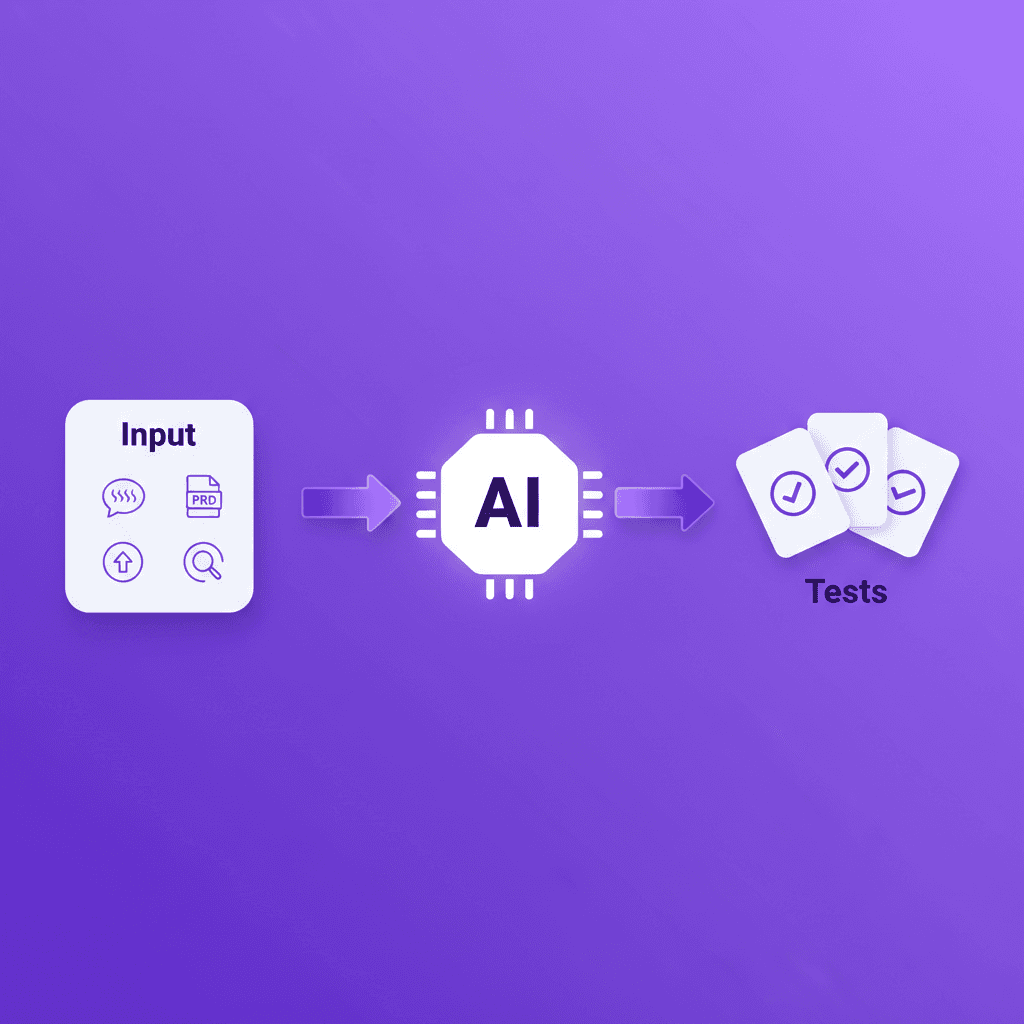
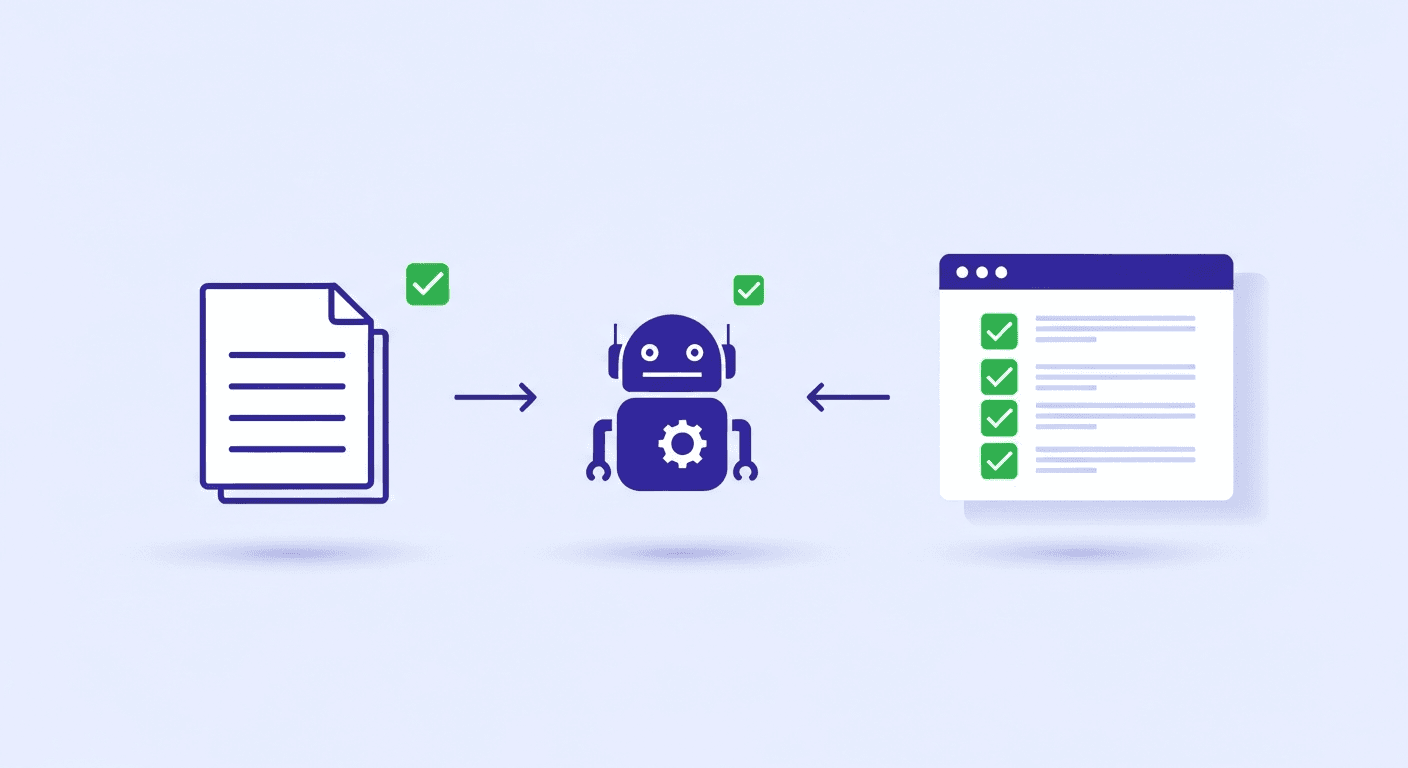
AI test case generation is the use of AI to create functional test cases without manual scripting. The AI accepts inputs (natural language, user stories, recorded flows, session data, or live app exploration) and produces executable tests that verify your application's behavior. The best tools also self-heal when the UI changes, so generated tests remain valid without constant manual maintenance.
How accurate are AI-generated test cases?
It depends on the approach. Intent-based generation is accurate for flows you describe; recording is exact for the path you clicked and nothing else; session-based services cover real traffic; exploration finds paths that may be low priority. Human review of business rules and edge cases is still worth the time in every case.
Do AI-generated test cases break when the UI changes?
With self-healing tools, they adapt rather than break. Intent-based healing (Shiplight) handles larger UI changes better than locator-fallback healing, because the AI resolves from semantic intent rather than a selector shortlist. Without self-healing, generated test cases become selector-bound code that someone maintains, and that holds even when a coding agent generated the code.
Can AI generate test cases for authentication and payment flows?
Yes. Most modern tools handle login flows, OAuth, 2FA, and payment flows. Shiplight supports email and auth testing end-to-end, including verification links and real inbox interaction. Payment flows typically require test card configuration in your staging environment.
What's the difference between test case generation and test execution?
Test case generation creates the specification: what steps to take and what to verify. Test execution runs those steps against a real browser. Most tools on this list do both, but the generation quality (accuracy of steps, durability across UI changes) varies significantly. Tools that separate generation from execution often provide better portability: your test cases can run anywhere.