One of the most common questions in software testing strategy is where to draw the line between end-to-end tests and integration tests. Both verify that components work together, but they operate at different scales, catch different categories of bugs, and carry different maintenance costs.
Understanding these differences is essential for building a test strategy that delivers confidence without wasting engineering time.
Definitions
What Is Integration Testing?
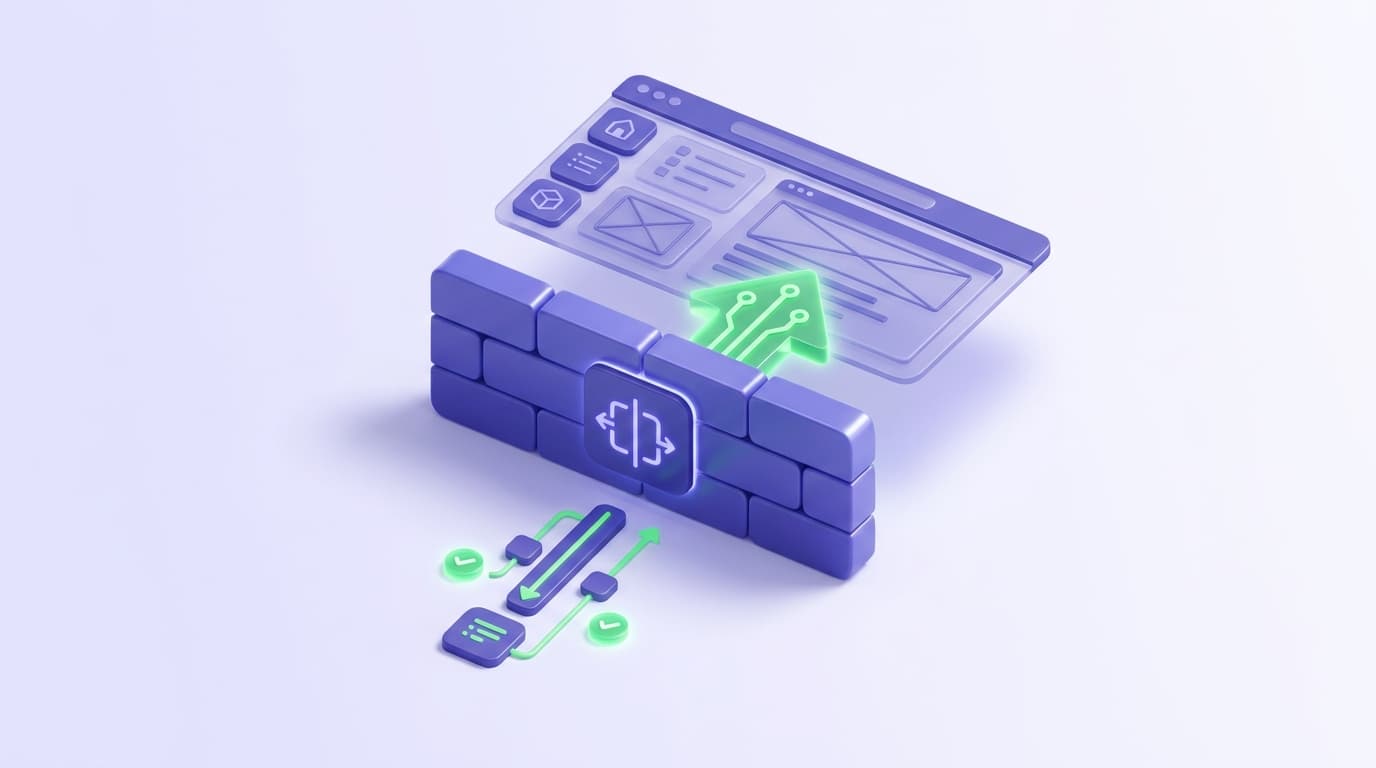
Integration testing verifies that two or more components or services work correctly together. The scope is intentionally limited: you test the boundary between components rather than the entire system.
Examples include testing that an API endpoint correctly reads from and writes to the database, verifying that a frontend component renders correctly after an API call, and checking that a payment service communicates properly with a third-party gateway.
Integration tests typically mock or stub external dependencies outside the boundary being tested.
What Is E2E Testing?
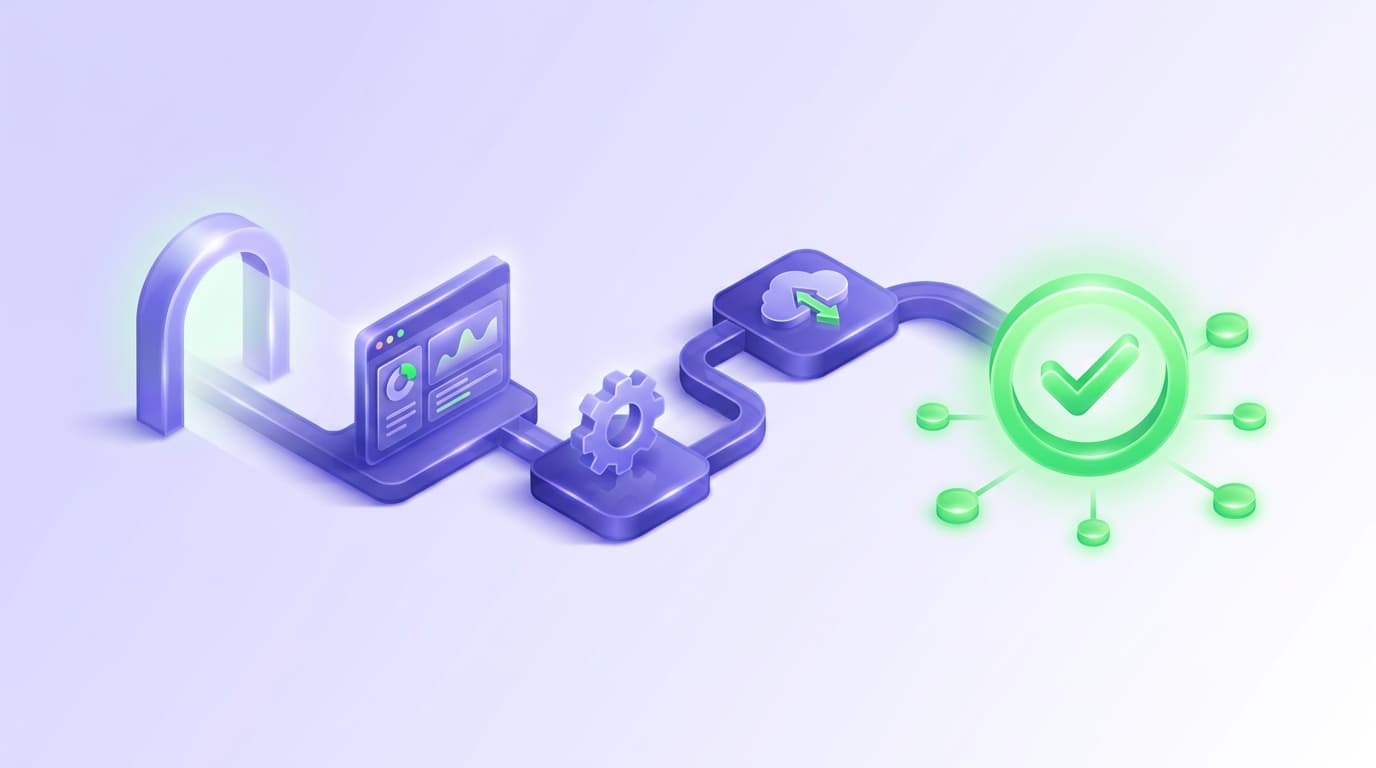
End-to-end testing validates complete user workflows across the entire application stack. Nothing is mocked. The test exercises the same browser, APIs, databases, and third-party services that a real user would encounter.
Examples include a user completing sign-up through email verification, a customer going through the full checkout flow, or an admin creating a team and verifying member access.
For a deeper dive into modern E2E testing practices, see our complete guide to E2E testing in 2026.
Side-by-Side Comparison
| Dimension | Integration Testing | E2E Testing |
|---|---|---|
| Scope | Two or more components at a boundary | Full user workflow across the entire stack |
| Speed | Fast (seconds) | Moderate (seconds to low minutes with modern tools) |
| Setup complexity | Moderate (requires service stubs or test databases) | Higher (requires full environment, test data, auth) |
| Maintenance cost | Lower (fewer moving parts) | Higher (sensitive to UI and workflow changes) |
| Reliability | High (controlled environment) | Moderate to high (depends on tooling and patterns) |
| What it catches | API contract violations, data layer bugs, service communication failures | Broken user journeys, cross-service regressions, deployment configuration issues |
| Who writes them | Developers | Developers, QA engineers, and increasingly PMs with AI tools |
| Feedback loop | Fast (runs in seconds in CI) | Slightly slower but increasingly fast with modern frameworks |
| Mocking | Partial (external dependencies stubbed) | None (real services and infrastructure) |
| Confidence level | Medium (proves components connect correctly) | High (proves the product works as users experience it) |
When to Use Integration Testing
Integration tests are the right choice when you need to verify that the contract between two systems is correct without the overhead of running a full environment.
API Boundary Validation
When your frontend consumes a backend API, integration tests verify that the API returns the expected shape and content. This catches breaking changes early, before they propagate to E2E test failures that are harder to diagnose.
Database and Service Communication
Integration tests are ideal for verifying ORM behavior, transaction boundaries, and service-to-service communication over REST, gRPC, or message queues. They run fast against test databases and catch data-layer bugs that mocked unit tests would miss.
Third-Party API Integration
When your application depends on external services like payment gateways or email providers, integration tests with recorded responses verify correct handling without making real network calls.
When to Use E2E Testing
E2E tests are essential when you need to verify that the product actually works from the user's perspective.
Critical User Journeys
Authentication, onboarding, checkout, and account management are workflows where failure has direct business impact. These deserve E2E coverage because no amount of unit or integration testing can guarantee that the full chain works correctly in a deployed environment.
Build an E2E coverage ladder that prioritizes these high-value paths first.
Cross-Service Regressions and Deployment Verification
When a change in one service breaks a workflow that spans multiple services, only an E2E test will catch it. Similarly, E2E tests running against staging verify that deployment configuration, migrations, and infrastructure changes have not broken user-facing functionality. Some bugs are only visible when the full UI renders in a real browser.
How They Complement Each Other
Integration tests and E2E tests are not competitors. They form complementary layers in a well-designed test strategy.
Integration tests provide fast, targeted feedback that pinpoints the exact failure location in seconds. E2E tests provide holistic confidence that the change does not break any real user workflow.
A Practical Strategy
A balanced approach for most applications looks like this:
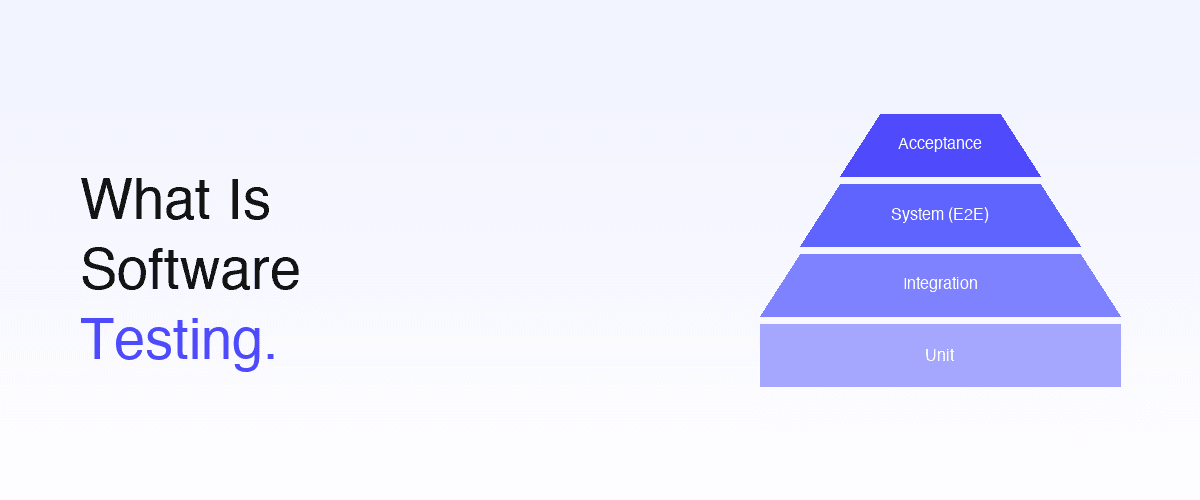
- Unit tests cover business logic, data transformations, and edge cases. Run on every save.
- Integration tests cover API contracts, database operations, and service boundaries. Run on every commit.
- E2E tests cover critical user journeys. Run on every pull request.
Most bugs are caught quickly by unit and integration tests. E2E tests act as a final safety net. For teams exploring AI-powered tools that reduce this cost further, see our roundup of the best AI testing tools in 2026.
Common Mistakes
Over-Relying on E2E Tests
Testing every edge case with E2E tests leads to slow CI pipelines and high maintenance costs. Use E2E tests for happy paths and critical journeys. Push edge cases down to integration and unit tests.
Skipping Integration Tests Entirely
Some teams jump from unit tests directly to E2E tests, skipping integration tests altogether. This creates a gap where API contract changes and data-layer bugs go undetected until they cause confusing E2E failures.
Duplicating Coverage Across Layers
If an integration test already verifies that the API returns the correct error for invalid input, you do not need an E2E test that exercises the same error path through the browser. Each test layer should add unique value.
Key Takeaways
- Integration tests verify component boundaries quickly and cheaply. Use them for API contracts, database operations, and service communication.
- E2E tests verify complete user workflows across the full stack. Use them for critical journeys where failure has direct business impact.
- The two approaches are complementary, not competing. A strong test strategy uses both.
- Modern AI-native tools are reducing the cost and maintenance burden of E2E tests, making it practical to increase E2E coverage without proportional effort.
- Avoid the common mistake of testing edge cases at the E2E layer. Push those down to integration and unit tests.
Frequently Asked Questions
Can integration tests replace E2E tests?
No. Integration tests verify that components connect correctly at their boundaries, but they cannot confirm that a complete user workflow functions end-to-end. A system where every integration test passes can still have broken user experiences due to configuration issues, environment differences, or cross-service logic errors.
How many integration tests should I write compared to E2E tests?
Most projects benefit from a ratio of roughly five to ten integration tests for every E2E test. Integration tests are cheaper to write and maintain, so they should handle the bulk of boundary verification. Reserve E2E tests for the critical user journeys that integration tests cannot cover.
Are AI tools making the distinction less important?
AI tools are reducing the maintenance cost of E2E tests, which historically was the main argument for minimizing them. However, the distinction remains important for understanding what each test layer catches and for designing an efficient feedback loop. Explore Shiplight Plugins to see how AI-native tooling streamlines E2E test authoring and maintenance.
Which should I write first for a new project?
Start with integration tests for your core API boundaries, then add E2E tests for your most critical user journey, typically sign-up or the primary conversion flow. Expand both layers incrementally as the product grows.
What tools test both frontend and backend flows together?
End-to-end tools: they drive the real UI while each request travels through your actual API and database, so one test covers both layers. Playwright and Cypress do this in code; Shiplight does it with intent-based YAML the agent maintains. Contract tests still cover backend-only seams.
- Martin Fowler, Test Pyramid: https://martinfowler.com/bliki/TestPyramid.html
References
- Google Testing Blog: https://testing.googleblog.com