The Testing Landscape Has Split in Two
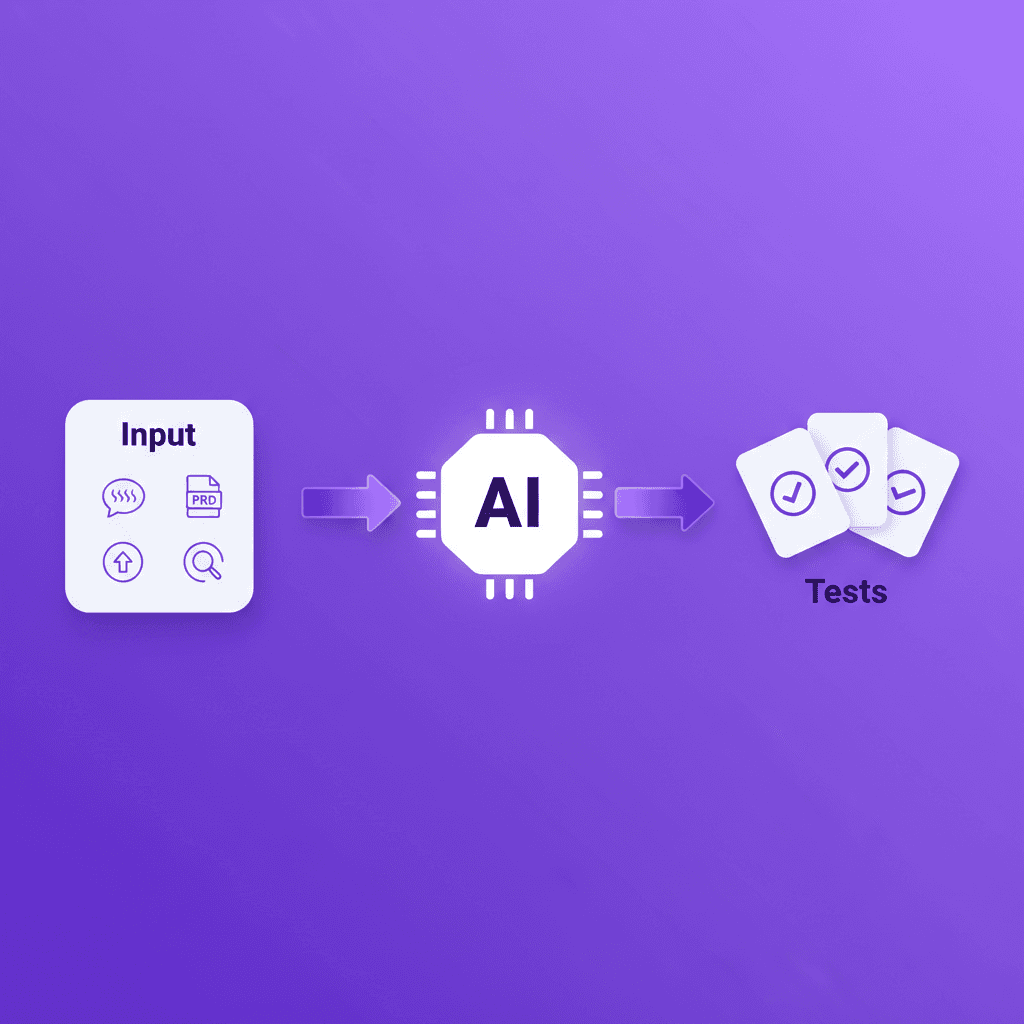
The rise of AI test generation has created a genuine strategic question: should you let AI generate your end-to-end tests, continue writing them by hand, or adopt a hybrid approach?
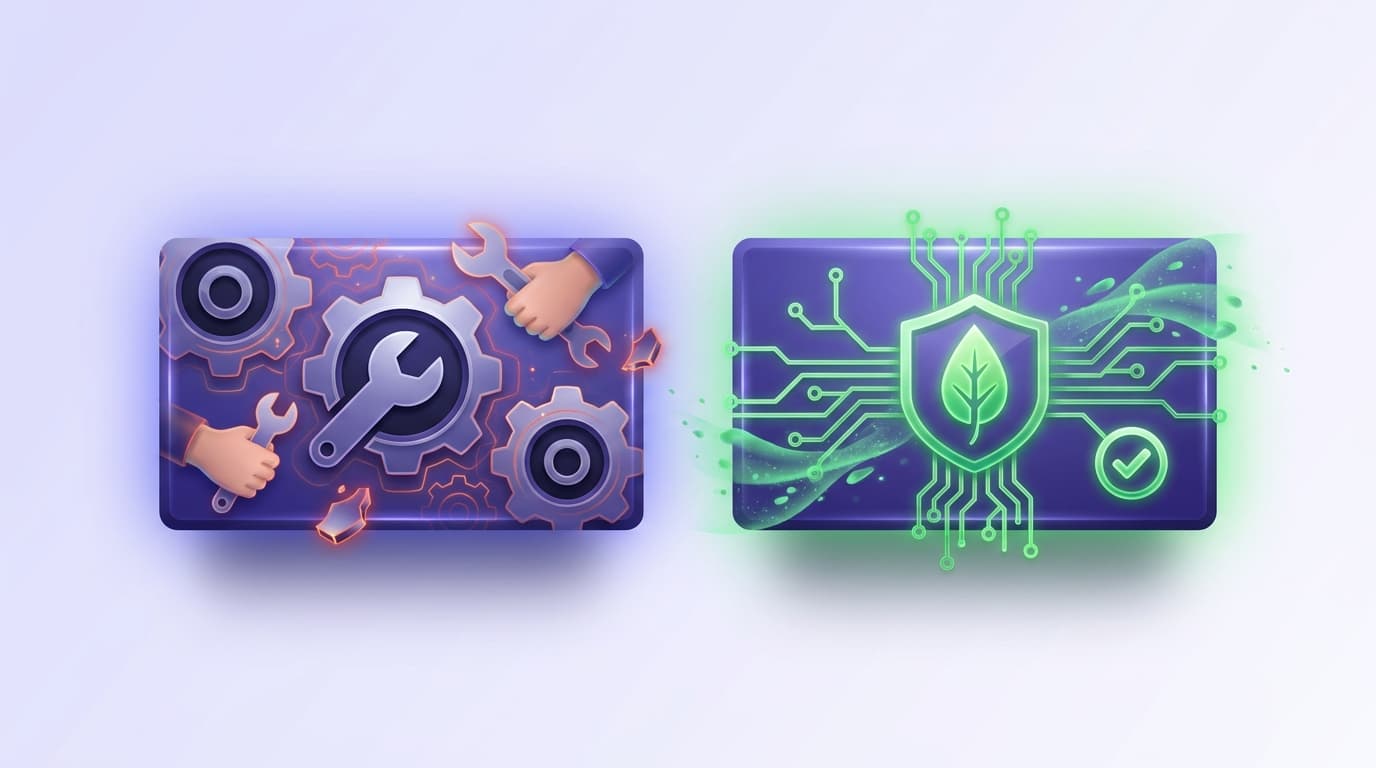
Both methods have legitimate strengths. AI-generated tests produce broad coverage in minutes. Hand-written tests capture domain expertise that AI cannot infer from the UI alone. The answer is understanding where each excels and deploying them accordingly.
Comparison Table
| Dimension | AI-Generated Tests | Hand-Written Tests |
|---|---|---|
| Speed to create | Minutes | Hours to days |
| Domain accuracy | Moderate -- infers from UI | High -- encodes expert knowledge |
| Coverage breadth | Wide -- explores many paths | Narrow -- covers prioritized flows |
| Maintenance burden | Low with self-healing | High -- manual updates required |
| Edge case handling | Limited -- relies on visible UI | Strong -- can encode business rules |
| Consistency | High -- follows patterns uniformly | Variable -- depends on author |
| Onboarding cost | Low | High -- requires framework expertise |
| CI/CD integration | Automatic | Manual configuration |
| Regression detection | Good for UI regressions | Excellent for business logic |
| Cost per test | Low | High |
Where AI-Generated Tests Excel
Speed and Coverage Breadth
An AI test generation tool can analyze your application, identify critical user flows, and produce executable test code in minutes. For teams adopting end-to-end testing for the first time, this is transformative -- meaningful coverage within a sprint instead of a quarter. Tools like Shiplight generate tests as YAML specifications that are readable, editable, and version-controlled.
Consistency and Self-Healing
AI-generated tests follow uniform patterns: same assertion style, waiting strategy, and error handling. This consistency reduces debugging time. They also pair naturally with self-healing capabilities -- the AI understands the intent behind each step and can repair broken locators automatically.
According to research on the Google Testing Blog, test maintenance consumes 40-60% of total QA effort. AI-generated tests with self-healing can reduce that to under 5%.
Scaling Coverage Economically
When you need to test 50 user flows across multiple browsers and viewports, AI generation makes it feasible. The marginal cost of an additional AI-generated test is near zero.
Where Hand-Written Tests Excel
Domain Knowledge and Business Logic
AI sees your application's UI but does not understand your business rules or regulatory requirements. A hand-written test can encode knowledge like "users with an expired subscription should see the upgrade prompt with the legally required cancellation link." Critical paths involving complex state management or compliance requirements should be hand-written.
Edge Cases and Negative Testing
Hand-written tests excel at edge cases AI would not explore: session expiry mid-checkout, unexpected payment gateway errors, or Unicode characters breaking sanitization. These scenarios require adversarial thinking from testers who have debugged production incidents.
Complex Assertions and Compliance
Some assertions require deep domain knowledge -- financial calculations correct to the penny, locale-specific sort orders, or WCAG accessibility compliance. Hand-written tests use the full power of Playwright for sophisticated assertions AI tools do not yet produce reliably. In regulated industries, hand-written tests also serve as auditable compliance evidence.
Regression testing efficiency: where AI generation wins decisively
Regression testing is the case the comparison decides: repetitive, high-volume, re-run every release, the cost center most exposed to manual scripting's weaknesses. On regression specifically, the efficiency gap between AI-powered generation and manual scripts is the widest:
| Dimension | Manual scripts | AI-powered generation |
|---|---|---|
| Creation speed | Hours to days per test case | Seconds to minutes: effort reductions up to 70% reported |
| Execution | Linear, fatigue-prone | Parallel and continuous in CI |
| Maintenance | Selector-bound scripts break on every UI change, whoever wrote them | Self-healing re-resolves elements semantically |
| Coverage | Limited to documented happy paths | Wider; autonomous exploration finds edge cases |
| Cost | Labor scales with project size | Up to 30% lower TCO, ~25% higher ROI in published case studies |
Four AI-powered capabilities drive the regression gap (beyond raw authoring speed):
- Intelligent test prioritization. AI analyzes code changes and historical failure data to run only the regression tests a given change can actually affect (Test Impact Analysis), instead of brute-forcing the whole suite on every commit.
- Predictive analytics. Tools flag high-risk modules likely to regress under an update so the team focuses scrutiny where it counts, not uniformly across the diff.
- No-code intent authoring. Authors define the desired outcome ("confirm dashboard loads after login") instead of selectors, IDs, or coordinates: survives the UI churn selector-bound scripts shatter on.
- Realistic test-data generation. AI produces diverse, varied test data and distinct edge-case inputs on demand, removing the fixture-maintenance tax manual regression suites accumulate.
For platforms implementing these on the regression layer, see Shiplight (intent-based YAML in your git repo, MCP-callable, self-healing in a real browser). Vendor cloud consoles and enterprise codeless suites occupy a different design center: tests authored in constrained plain-English or codeless form, hosted in the vendor's cloud, built for manual-QA-heavy organizations.
For the regression-specific architecture and adoption phases see how to automate regression tests with AI; for the full method portfolio see how to reduce manual testing effort.
Honest scope: AI wins on regression efficiency, not on every dimension. Manual remains essential for exploratory testing, nuanced UX judgment, and early-stage projects where the suite is too small to justify automation infrastructure. The mature pattern is regression-on-AI, exploration-on-humans.
The Hybrid Approach: Best of Both Worlds
The most effective testing strategy combines both approaches. Here is a practical framework:
Use AI Generation For:
- Smoke tests covering primary user flows
- Regression suites that verify existing features still work after changes
- Cross-browser and responsive testing where you need breadth
- New feature coverage where you want a baseline quickly
- Visual regression testing where AI can compare screenshots effectively
Use Hand-Written Tests For:
- Critical business logic that encodes domain knowledge
- Compliance and regulatory tests that require auditability
- Edge cases identified through production incident analysis
- Complex multi-step workflows with branching conditions
- Performance-sensitive assertions where timing and precision matter
How They Work Together
Start with AI-generated tests to establish broad coverage quickly. Then layer hand-written tests on top for critical paths that require domain expertise. Use AI to maintain both sets of tests -- even hand-written tests benefit from self-healing locator management.
Shiplight's plugin architecture supports this hybrid approach directly. You can mix AI-generated YAML test specifications with hand-written Playwright tests in the same suite, and both benefit from the same self-healing and reporting infrastructure.
For guidance on verifying AI-written changes, including tests generated by AI coding assistants, see our dedicated guide.
Cost Comparison Over 12 Months
For a mid-sized application with 200 end-to-end tests:
| Cost Factor | All Hand-Written | All AI-Generated | Hybrid (60/40) |
|---|---|---|---|
| Initial creation | $80,000 | $5,000 | $35,000 |
| Monthly maintenance | $8,000 | $800 | $3,500 |
| Annual total (Year 1) | $176,000 | $14,600 | $77,000 |
| Coverage quality | High for tested paths | Broad but shallow | Broad and deep |
The hybrid approach costs less than half of all-manual while delivering coverage that is both broad and deep where it matters.
Key Takeaways
- AI-generated tests win on speed, consistency, coverage breadth, and maintenance cost
- Hand-written tests win on domain accuracy, edge case coverage, and regulatory compliance
- The hybrid approach combines the strengths of both for the best cost-to-coverage ratio
- Self-healing benefits both AI-generated and hand-written tests equally
- Start with AI generation for breadth, then add hand-written tests for critical business logic
Related: spec-driven development vs TDD · test-driven development in the AI era
Get Started
Explore how Shiplight combines AI test generation with hand-written test support. Check out the YAML test specification format to see how AI-generated tests are authored, or browse the plugin ecosystem to understand integration options.
References: Google Testing Blog, Playwright Documentation
Frequently Asked Questions
Can AI-generated tests replace hand-written tests entirely?
Not yet. AI-generated tests cover standard user flows well but cannot encode business domain knowledge or edge cases requiring adversarial thinking. Use AI for breadth, hand-written tests for depth.
How do I decide which tests to hand-write vs generate?
If the test requires knowledge not visible in the UI, write it by hand. If it verifies a visible workflow from the user's perspective, generate it with AI. Business logic and compliance need hand-written tests; navigation flows and form submissions are strong candidates for AI generation.
Do AI-generated tests work with existing test frameworks?
Shiplight generates tests on Playwright, so they integrate with your existing CI/CD pipeline. AI-generated and hand-written tests run side by side without compatibility issues.
How does AI-powered test generation compare to manual scripts for regression testing efficiency?
On regression specifically, AI-powered generation beats manual scripts on every efficiency axis: creation speed (seconds vs hours, up to 70% effort reduction), parallel execution, self-healing maintenance, wider edge-case coverage, and cost (up to 30% lower TCO). Manual testing stays essential for exploratory work, UX judgment, and early-stage projects too small to justify automation.
How accurate are AI-generated tests compared to hand-written ones?
For standard user flows, AI-generated tests are highly accurate and more consistent. For complex business logic, hand-written tests are more accurate because they encode domain knowledge AI cannot infer. The best AI testing tools in 2026 continue to narrow this gap.