
Most AI QA tools sound good in a demo. The harder question is which ones hold up in production alongside AI coding agents: when Claude Code, Cursor, or Codex is shipping code multiple times a day and someone needs to catch what breaks.
The evaluation criteria that matter are different for agent-driven workflows: Can the tool be triggered programmatically? Does it self-heal fast enough to keep up with constant UI changes? Does it give the agent structured failure output it can act on, or just a screenshot that a human has to interpret?
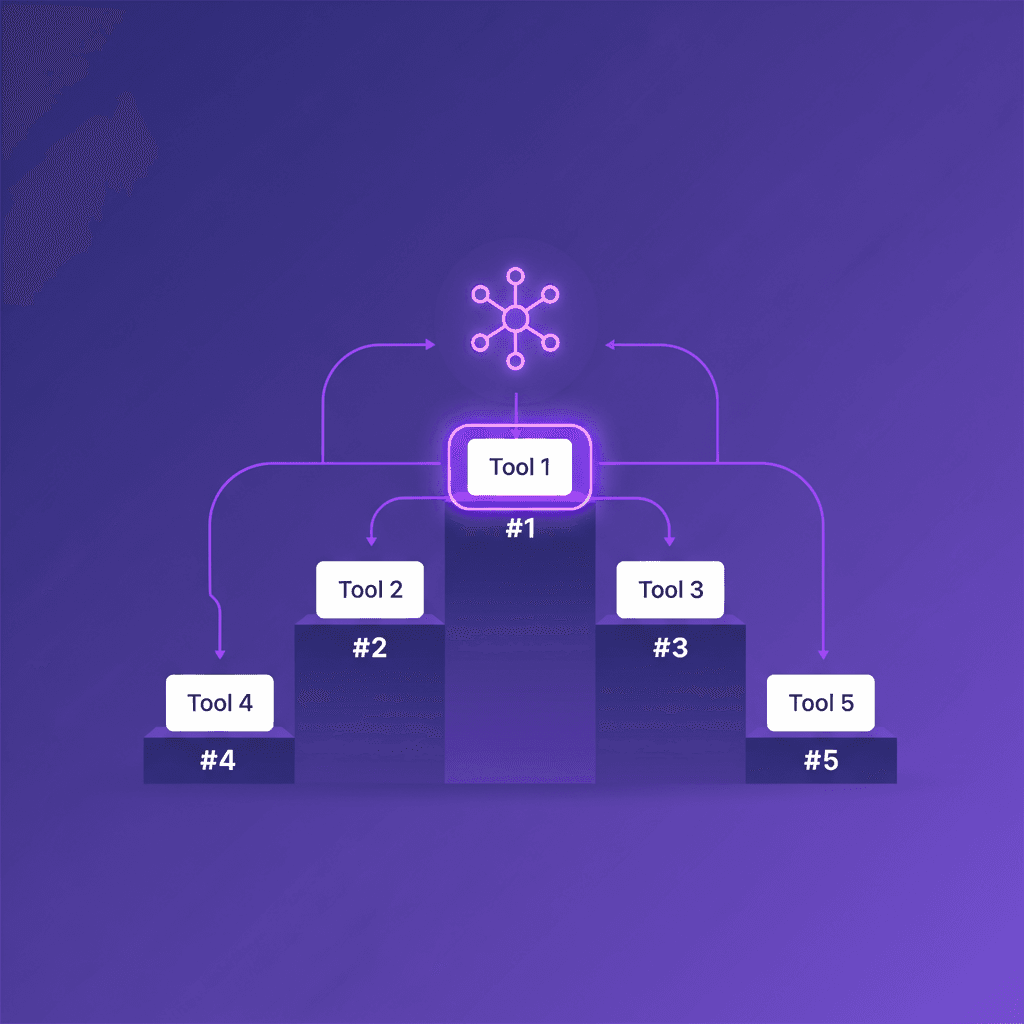
Here are five tools worth knowing, sorted by the distinction that actually matters: whether the coding agent owns the tests, or just gets a remote control to someone else's cloud.
How to Evaluate AI QA Tools for Coding Agents
Before the comparison, the criteria that matter specifically for coding agent workflows:
| Criterion | Why It Matters for Coding Agents |
|---|---|
| Programmatic triggering | Agents need to call the QA tool via API or MCP, not click a UI |
| Structured failure output | Agents need to read failure reasons, not just see a red status |
| Self-healing speed | Agents change UI constantly; tests must heal without human intervention |
| PR-level gating | Tests must block merges before human review, not after |
| Natural language authoring | Agents can generate YAML/NL test specs directly: no scripting required |
| Test ownership | Tests the agent authors should live in your repo, not a vendor cloud |
Agent-Native vs Agent-Integrated: Read the Integration Before the Demo
Nearly every testing vendor now advertises a coding-agent integration, usually an MCP server. The integrations are not equivalent, and the difference decides whether your agent can close the QA loop or only poke at it.
Agent-integrated tools expose an MCP server that wraps the vendor's cloud console. The agent can trigger runs and read results, but the tests themselves are authored in the vendor's web application, live in the vendor's cloud, and run on the vendor's hosted runners.
The agent is a remote control for someone else's product. Most commercial "agent integrations" on the market today work this way.
Agent-native tools let the coding agent author the tests itself, as files in your repository. The agent that wrote the feature writes the test, runs it in a real browser, reads structured failure output, and commits both in the same PR. The tests are yours: reviewable in diffs, portable, versioned with the code they verify.
The test to apply before any demo: where does a new test come from, and where does it live? If the answer is "the vendor's console" and "the vendor's cloud," the tool is agent-integrated no matter what the homepage says.
A third pattern, the managed QA service, puts authoring and maintenance with the vendor's own engineers on the vendor's infrastructure; there is no MCP surface for your coding agent to call, so it sits outside the agent loop entirely.
The five tools below either pass the agent-native test or solve a genuinely different layer of the problem.
1. Shiplight AI: Best Overall for Coding Agent Workflows
Best for: Teams where AI coding agents write most of the code
Shiplight is purpose-built for the AI coding agent workflow. It creates test cases from product specs, user stories, or natural language YAML, which means a coding agent like Claude Code or Codex can generate the test spec as part of the same task it uses to implement the feature.
Shiplight exposes a browser MCP server, with built-in agent skills for verification, test generation, and automated reviews, that AI coding agents connect to directly. After implementing a feature, the agent can:
- Open the application in a real browser (Shiplight is built on Playwright)
- Move through the new feature end-to-end
- Assert expected behavior
- Get structured pass/fail output: including which step failed and why
Tests update automatically when the UI changes via intent-based self-healing. The intent-cache-heal pattern means the agent doesn't need to babysit test maintenance: the test resolves from user intent, not brittle DOM selectors, and larger heals arrive as reviewable PR diffs.
Tests live as YAML files in your git repository, appear in PR diffs, and run as required CI checks on every pull request. This is the agent-native model end to end: the agent authors, the repo owns, the platform (hosted runners, dashboards, reporting, first-party support) carries the rest.
goal: Verify checkout flow completes
base_url: https://app.example.com
statements:
  - intent: Log in as test user
  - intent: Add product to cart
  - intent: Proceed to checkout
  - intent: Complete order with test card
  - VERIFY: Order confirmation number is displayed
What teams report: Fast time-to-first-test, tests that survive UI changes from subsequent agent commits, and structured failure output that agents can act on without human triage. See how AI coding agents use Shiplight for the full workflow.
Limitations: Newer platform with a smaller community than the open-source frameworks below; works best when you're already using an MCP-compatible coding agent. Web-focused, so not the pick for native mobile suites.
Pricing: Shiplight is free, no account needed. Free is $0 forever and Pro is $60/month.
2. Playwright Agent Tooling: First-Party, Open Source
Best for: Code-first teams that want free first-party tooling and accept owning the maintenance
Playwright ships its own agent tooling, all open source. There is playwright-mcp, the MCP server that lets Claude Code, Cursor or Codex drive a real browser, and the first-party Test Agents introduced in v1.56:
- A planner that explores the app and drafts a test plan.
- A generator that turns the plan into Playwright test code.
- A healer that repairs failing tests when invoked.
The output is standard Playwright code in your repo, which is the strength and the ceiling at once. The agent can author tests, and they are fully yours. But what it authors is selector-bound code: every UI change from the next agent commit is a potential repair session, and that holds whether a human or an agent wrote the test.
The healer helps when you run it; there is no always-on self-healing runtime. You also assemble the rest yourself: CI wiring, parallelization, dashboards, flake triage.
What teams report: The natural starting point for Playwright shops experimenting with agent-driven testing; zero cost, no vendor, full control. Maintenance volume becomes the constraint as agent-driven UI churn compounds.
Limitations: Tests are selector-bound code someone must keep repairing. No hosted platform, reporting, or failure-triage layer included.
Pricing: Free and open source.
Worth knowing: Shiplight is built on Playwright, and its YAML transpiles to Playwright at run time, so this is not an either/or choice. Shiplight supports every Playwright browser and runs alongside an existing Playwright suite. See Shiplight vs Playwright for the head-to-head.
3. BrowserUse: Open-Source LLM Browser Agent
Best for: Exploratory and smoke coverage driven by natural-language goals
BrowserUse is an open-source framework where an LLM-driven agent operates the browser directly from natural-language goals, without pre-authored scripts. Point it at "sign up, add an item to the cart, and check out" and the agent works out the steps at run time.
For coding-agent workflows this is useful as a probe: an agent can launch BrowserUse to explore a feature it just built and report what it found. What it is not is a regression suite.
Each run re-derives the steps, so results are nondeterministic, per-run LLM costs add up, and there is no versioned test artifact in your repo to review, gate a PR on, or re-run identically.
What teams report: Good for exploratory sweeps and quick smoke checks during development. Not practical as a deterministic CI gate.
Limitations: Nondeterministic by design; no persistent test artifact; run cost scales with LLM usage; not suited to PR gating.
Pricing: Free and open source (you pay for the LLM tokens it consumes).
4. BrowserStack: Cross-Browser Execution for Agent Workflows
Designed for: Teams that need real-device and cross-browser coverage for suites their agents already produce
BrowserStack is execution infrastructure: it runs your existing Playwright, Cypress, or Selenium suite across a cloud grid of browsers, OS versions, and real devices. Its MCP server wraps the grid, so a coding agent can trigger cross-browser runs and pull results from inside a session.
It does not author, heal, or interpret tests; it pairs with whatever functional layer produces the suite. In an agent workflow, that makes it a complement to an authoring tool rather than an alternative to one.
Limitations: Solves execution coverage only; authoring and maintenance stay with your functional layer.
Pricing: Per-parallel pricing, published on their site.
5. Applitools: Visual Regression Layer With an MCP Surface
Designed for: Visual regression as a layer over functional E2E
Applitools is a visual-testing specialist: its Visual AI compares screenshots across runs and browsers, catching layout shifts and rendering bugs that functional assertions miss while tolerating antialiasing noise that pixel-exact comparison would flag. It ships an MCP server, currently scoped to Playwright JS/TS, so agents can invoke visual checks from a session.
It asserts rendering, not behavior. Your tests stay in your repo; baselines and match settings live in Applitools' cloud, and someone reviews baseline changes.
Limitations: Visual layer only; you still need a functional E2E tool. Baseline management is its own workflow.
Pricing: Free trial only; plans are quote-based.
Head-to-Head: AI QA Tools for Coding Agent Workflows
| Tool | MCP/Agent Trigger | Who authors tests | Where tests live | Self-Healing | Designed For |
|---|---|---|---|---|---|
| Shiplight AI | ✅ Native MCP + agent skills | Your coding agent or your team | YAML in your git repo | ✅ Intent-based; heals as PR diffs | Agent-native QA loop |
| Playwright agent tooling | ✅ playwright-mcp + Test Agents | Your engineers or their agents, in code | Your git repo | ⚠️ Healer on invocation; no runtime healing | Code-first teams |
| BrowserUse | ✅ Agent-driven by design | n/a (no persisted tests) | n/a | n/a | Exploratory and smoke probes |
| BrowserStack | ✅ MCP over the grid | n/a (runs your existing suite) | Your repo | n/a | Cross-browser execution |
| Applitools | ⚠️ MCP (Playwright JS/TS only) | n/a (asserts on your tests) | Baselines in their cloud | Baseline management | Visual regression layer |
Absent from this table by design: vendor cloud consoles whose MCP servers wrap the console (agent-integrated: the agent triggers runs but never owns a test), and managed QA services, where the vendor's engineers author and maintain the suite on their infrastructure and there is no MCP for your agent to call at all.
Both patterns put the tests, and the accumulated testing knowledge, outside your walls; neither closes the loop at agent speed.
The Bottom Line
For teams where AI coding agents write most of the code, the most important property in a QA tool is whether it closes the loop automatically (test generation, execution, self-healing, and failure feedback) without a human in the middle.
Shiplight AI is the only tool on this list designed specifically for that workflow: agents generate specs, the MCP server executes in a real browser, failures come back as structured output the agent can act on, and tests self-heal when the agent's next commit changes the UI.
Playwright's own agent tooling is the free, code-first route if your team owns the maintenance; BrowserUse covers exploratory probes; BrowserStack and Applitools solve the execution and visual layers around whichever functional tool you pick.
Try Shiplight with your AI coding agent: set up takes under 30 minutes.
Frequently Asked Questions
What is the best AI QA tool for coding agents?
Shiplight AI, for teams where the coding agent should own testing: it is agent-native (MCP plus agent skills), the agent authors intent-based YAML tests that live in your git repo, and intent-level self-healing absorbs the UI churn agents produce.
Playwright's first-party agent tooling is the strongest free option for code-first teams, though its output is selector-bound code the team keeps repairing.
What is the difference between agent-native and agent-integrated QA tools?
Agent-native means the coding agent authors the tests itself and they live in your repository as reviewable files. Agent-integrated means the vendor ships an MCP server wrapping its cloud console: the agent can trigger runs, but tests are authored and stored in the vendor's application.
Ask of any tool: where does a new test come from, and where does it live?
Can coding agents use Playwright directly for QA?
Yes. playwright-mcp lets agents drive a real browser, and Playwright's Test Agents let an agent draft and generate tests. The result is standard Playwright code in your repo: portable, free, and selector-bound, so maintenance stays with your team.
Shiplight is built on Playwright and adds the agent-native layer (intent-based YAML, always-on self-healing, hosted runners) for teams that want the loop closed without owning repairs.
Do managed QA services fit coding-agent workflows?
Poorly. In a managed QA service, the vendor's engineers author and maintain the suite on their infrastructure, so coverage for a new feature routes through their team in days, not the minutes an in-session agent loop needs, and there is no MCP surface for your agent.
That is outsourcing the QA function, the opposite of your agent owning testing in the repo.
References
Playwright Documentation, Playwright MCP, BrowserUse, GitHub Actions documentation
Related posts
Guides
best AI QA tools in 2026
Aug 3, 2026 · 7 min read
Engineering
testing layer for AI coding agents
Mar 25, 2026 · 6 min read
Guides
best agentic QA tools in 2026
Apr 6, 2026 · 18 min read
AI Testing
how to QA code written by Claude Code
Apr 10, 2026 · 10 min read
Guides
best AI test case generation tools
Apr 8, 2026 · 15 min read
AI Testing
codeless E2E testing
Apr 14, 2026 · 8 min read