
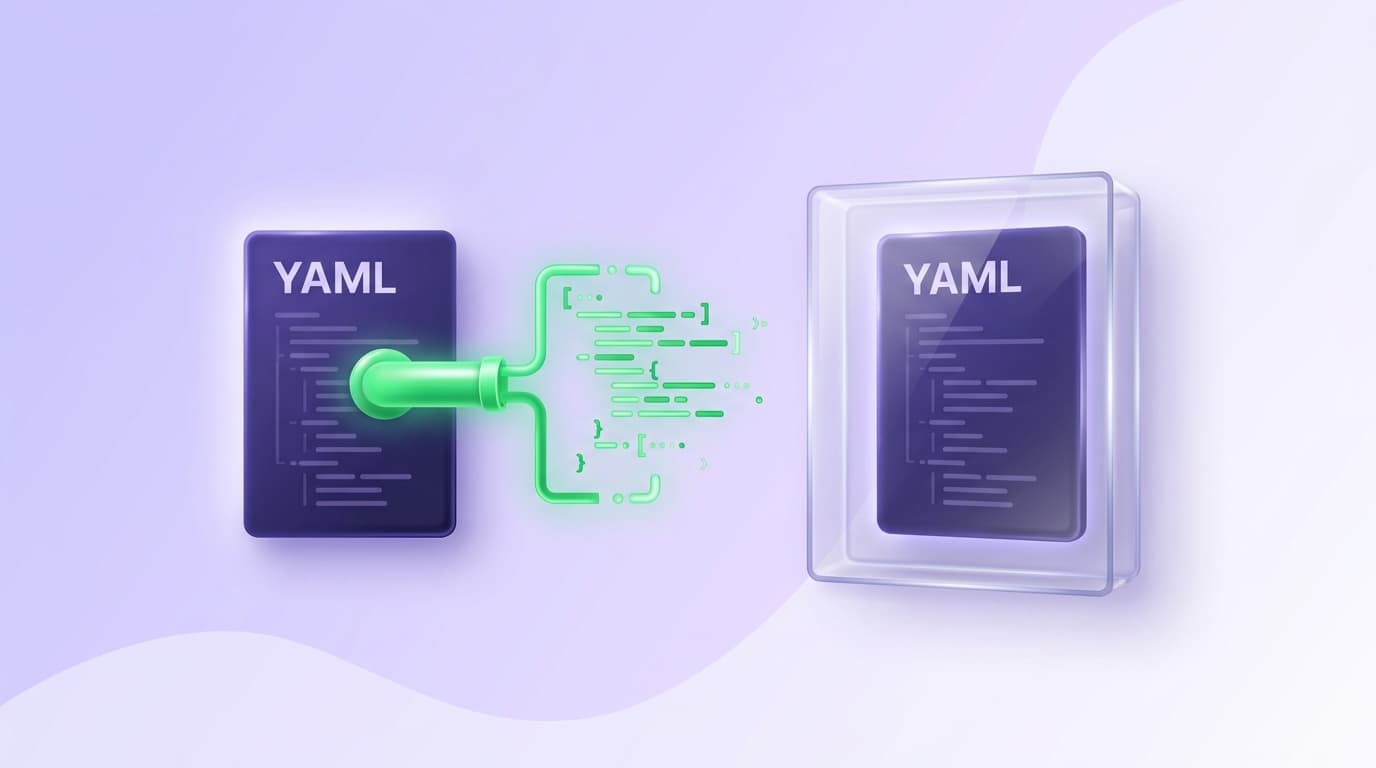
Shiplight and Momentic look alike on the surface: plain-language end-to-end tests stored as YAML files in your git repo, authored with help from AI, self-healing at run time.
The three structural differences
The purchase decision lives in three places where they differ structurally. Exit path: Shiplight's YAML transpiles to Playwright code, so you can eject to the open-source standard at any time; Momentic's YAML has no documented export to portable code and runs only through Momentic's tooling.
Authoring economics: with Shiplight, your coding agent authors tests through its own subscription over MCP, with no Shiplight account or token required; Momentic authoring and every run flow through a Momentic account, and every test step of every run consumes a metered credit.
Openness: Shiplight is built on Playwright, the strongest open-source framework in its class, with the option to run beside an existing suite; Momentic is a proprietary system of its own from day one.
Momentic is the most credible of the AI-native testing platforms and the closest peer comparison Shiplight gets. Teams evaluating the two are usually past the "should tests be plain-language?" question and into the one that actually matters: which architecture do you want to own in two years?
We build Shiplight, so we have a position. This comparison sticks to mechanisms you can verify in both products' documentation, states where Momentic is genuinely strong, and is explicit about the trade each choice locks in. All competitor facts were checked against Momentic's live site and docs on August 3, 2026.
Quick Comparison
| Axis | Shiplight | Momentic |
|---|---|---|
| Test artifact | Plain YAML in your git repo; transpiles to Playwright code each run | YAML in your git repo; executed by Momentic's runtime |
| Exit path | Eject to standard Playwright anytime; the transpiled code is yours | No documented export of Momentic YAML to portable framework code |
| Existing Playwright suite | Runs alongside it; reuse configs; adopt incrementally, new flows first | Separate suite; no documented interop with an existing Playwright suite |
| Authoring cost | Through your coding agent's own subscription via MCP + Skills; no Shiplight account or token needed | Through Momentic's tooling with a Momentic account; generated steps consume credits |
| Run economics | Cached deterministic steps call no LLM; AI steps bill by actual model usage, on our key or your own | "Every test step uses one credit," including steps AI features generate and run |
| Bring your own LLM key | Yes, on any plan including Free (Anthropic, OpenAI, Google, incl. Azure, Bedrock, Vertex) | No equivalent documented |
| Self-healing delivery | Locator cache heals at run time (repo copy + hosted copy updates immediately); larger changes arrive as reviewable PR diffs | In-run healing plus a triage agent that rewrites tests and opens PRs |
| Infrastructure | Both modes: Shiplight-hosted CI runners and LLM proxy, or your own CI runners with your own keys | Momentic cloud or your CI via their CLI; runs consume Momentic credits either way |
| Pricing (checked 2026-08-03) | Free $0 forever; Pro $60/mo; Enterprise contract | Free 2,000 credits/mo; $125/mo for 10,000 credits, overage per credit; Enterprise custom |
The exit path is the architecture
Both products store tests in your repo, and that phrase hides the real difference. A file in git is only yours in the way that matters if something other than the vendor can execute it.
Shiplight's YAML transpiles to Playwright tests at run time. That is not a marketing abstraction; the transpiled file is real Playwright code, which is why Shiplight supports every Playwright browser and feature. If you stop paying Shiplight, you eject to the code and keep a standard suite. The lock-in conversation ends there.
Momentic's docs state that web tests run on Playwright and mobile tests on Appium, so the engines underneath are open source there too. But the YAML format itself is executed by Momentic's runtime and CLI, and no export of Momentic YAML to standalone framework code appears anywhere in their documentation.
The repo file is readable and diffable, which is genuinely better than a cloud console, and it is still only runnable through the vendor.
If your team has an existing Playwright suite, this difference compounds. Shiplight runs next to it: same repo, reused configs, new flows first, nothing rewritten or abandoned. Momentic is a new suite in a new format from the first test.
Whose subscription pays for authoring
This is the quiet line item that dominates cost at agent velocity. When your coding agent writes and verifies tests all day, authoring is no longer an occasional human activity; it is a metered workload.
With Shiplight, authoring runs through the coding agent you already pay for. Claude Code, Cursor, or Codex uses Shiplight's browser MCP server and Skills to walk your app, write YAML tests, and verify UI changes, and that work needs no Shiplight account or token.
Executing a test file does use an LLM key, ours with plan credit or your own, and cached deterministic steps skip the model entirely, so a stable test replays at full Playwright speed with no per-step AI cost.
Momentic's own MCP server also lets coding agents browse, edit, create, and run tests from the editor, which is a real capability and worth crediting. The difference is the meter: Momentic's pricing page states that every test step uses one credit, including steps that AI features generate and run, and there is no documented bring-your-own-key option.
At a few hundred runs a day in CI, the two models produce very different bills, and only one of them lets you route inference through the cloud contract you already have (Azure, Bedrock, or Vertex prefixes all work with Shiplight, on any plan).
Self-healing: cache-first vs run-and-heal
Both platforms heal tests instead of letting selectors rot, and both route bigger changes through pull requests a human reviews, which is the right instinct.
Shiplight's model is cache-first. Deterministic steps cache their resolved locator in two places, a copy in your repo and a copy we host. On a hit, the step runs as plain Playwright with no model call.
On a miss, the step re-resolves from the test's stated intent at run time, the run continues, and the hosted cache updates immediately, so the next run already has the fix with nothing committed.
Your tests adapt without waiting on a commit. AI steps and assertions are deliberately not cached; they call the model every run, which is what lets them absorb what a fixed locator cannot.
Momentic pairs in-run healing with a heal orchestrator that reads your code diff to distinguish intentional changes from drift, and a triage command that rewrites tests and opens PRs. It is a thoughtful design.
The structural difference is what a heal costs and where the intelligence lives: Momentic's healing runs on their metered runtime; Shiplight's cache hits are free of model calls by construction.
Where Momentic is genuinely strong
An honest comparison names this plainly. Momentic is the most production-hardened AI-native runtime in the peer group: a mature step cache, a diff-aware healing pipeline, real CI tooling, and native mobile coverage on Appium with visual diffing.
For a team that wants one vendor's opinionated loop for web and mobile, has no existing Playwright investment to protect, and accepts per-step metering as the cost of that loop, Momentic is a serious product and the evaluation is worth your time.
The scoped trade-off to price in is the pair of tethers: no export path for the test format, and a meter on every step of every run.
Where Shiplight is the stronger choice
- You want an open system, not a captive one. Shiplight is built on Playwright, the strongest open-source browser framework in its class, and its YAML transpiles to real Playwright code. You get the maturity of that ecosystem underneath and no lock-in to a proprietary runtime a vendor invented. Momentic's YAML runs only through Momentic.
- You want options at every layer. That openness is the pattern, not a single feature: run beside an existing Playwright suite or start fresh, our runners or your CI, our LLM key or your own, and eject to plain Playwright whenever you choose. Momentic offers one way: their format, their tooling, their meter.
- You ship with coding agents. The agent that wrote the feature authors and verifies its own test in the same session, on the subscription you already pay for. Coverage grows as a byproduct of shipping.
- You care about run economics at scale. Cached steps call no model, and bringing your own key on any plan, including Free, routes inference through the cloud contract you already have. Per-step metering has no equivalent lever.
Final Verdict
Momentic is the right choice when you want one vendor's complete, opinionated loop for web plus native mobile, you have no Playwright investment to protect, and per-step metered runs fit your budget shape.
Shiplight is the right choice when you want the more open, flexible system: real Playwright underneath, your coding agents doing the authoring on the subscription you already pay for, options at every layer, and an exit you never have to negotiate. Start free or book a demo to see it against your own app.
If Momentic is one of several tools still on the list, our roundup of Momentic alternatives compares the category by mechanism.
Frequently Asked Questions
Is Momentic built on Playwright like Shiplight?
Their docs state web tests run on Playwright and mobile on Appium, so yes at the engine layer. The difference is the artifact: Shiplight's YAML transpiles to Playwright code you can keep, while Momentic's YAML has no documented export and runs only through Momentic's tooling.
Can I export Momentic tests to plain Playwright?
No export of Momentic YAML to standalone framework code is documented as of August 2026. With Shiplight, the transpiled Playwright output is the exit path, available at any time.
Which is cheaper to run?
Structures differ more than stickers. Momentic meters every test step of every run, at $125/month for 10,000 credits after the free tier. Shiplight bills actual LLM usage only where a model is called; cached deterministic steps call no model, and you can bring your own key on any plan. See AI test automation cost for the full cost model.
Do both work with Claude Code and Cursor?
Yes, both ship MCP servers for coding agents. Shiplight's authoring needs no Shiplight account or token, and the tests the agent writes are plain YAML files it edits like any code; see Shiplight for AI coding agents.
Does Shiplight support mobile testing like Momentic?
Momentic has native mobile coverage on Appium and it is a real strength of theirs. Shiplight's focus is web E2E; for mobile-first needs, evaluate that difference honestly.
Which should a team with an existing Playwright suite pick?
Shiplight, structurally: it runs alongside the suite you have, reuses configs, and adopts incrementally. Momentic has no documented interop with an existing Playwright suite; adopting it means running a second, separate system.
References
Related posts
Guides
Best Momentic alternatives
May 15, 2026 · 11 min read

Guides
Shiplight vs Playwright
Jun 30, 2026 · 11 min read

Engineering
Locators are a cache
Mar 25, 2026 · 6 min read

Engineering
The intent cache-heal pattern
Mar 25, 2026 · 7 min read

Guides
Best agentic QA tools in 2026
Apr 6, 2026 · 18 min read
Guides
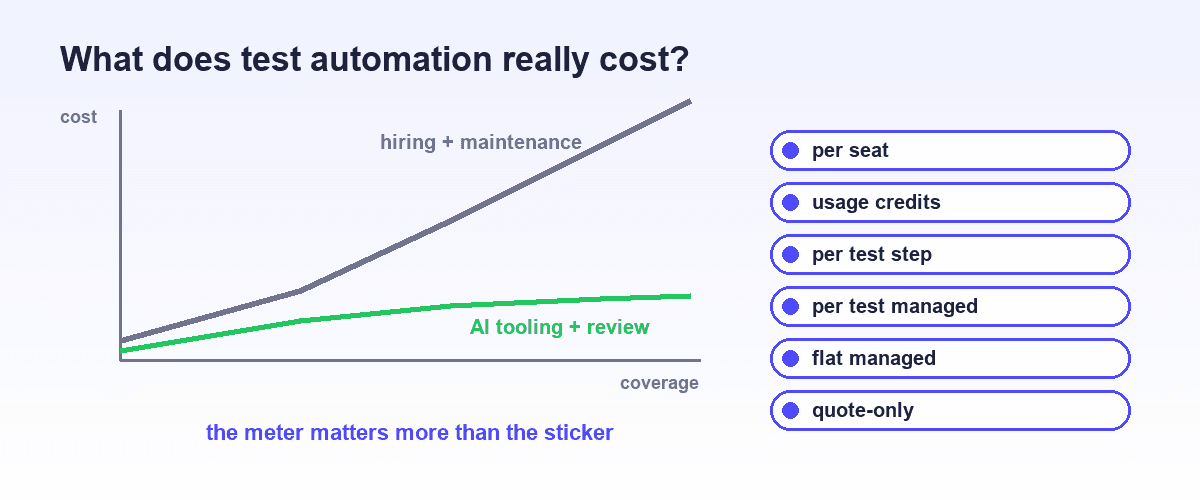
AI test automation cost and pricing
Jul 12, 2026 · 14 min read
Guides
Shiplight vs TestSprite
Apr 2, 2026 · 8 min read