

The most expensive way to find out an agent misunderstood a task is to read the finished diff. By then it has touched twelve files, and unpicking which parts were right takes longer than the work would have taken by hand.
Plan mode exists to move that discovery earlier. The agent reads, researches and proposes an approach, and does not touch your files until you approve. This guide covers what it actually does, when it pays for itself, and when it is overhead.
What it does
In plan mode the agent operates read-only. It can explore the codebase, read files, and search, but it cannot edit, create or run commands that change state. What it produces is a plan: what it understands the task to be, which files it intends to change, and how.
You then approve, reject, or correct the plan. Only on approval does it start editing.
The distinction from ordinary operation is not that the agent thinks more. It is that the thinking becomes an artifact you can reject cheaply.
Why the cheap rejection matters
Consider where a misunderstanding can be caught, and what it costs at each point:
| Caught at | Cost to fix |
|---|---|
| The plan | Rewrite one paragraph |
| Partway through editing | Revert some files, re-explain |
| The finished branch | Full review, then a rewrite |
| Code review by a colleague | Their time as well as yours |
| Production | Incident |
Plan mode moves the correction to the top row. That is the whole argument, and it is the same reason spec-driven development puts a written specification in front of the implementation. Both are betting that agreeing on intent before generation is cheaper than auditing generation afterward.
There is a second effect worth naming. Reading a plan tells you whether the agent understood the problem, which reading a diff does not. A diff shows you what it did. It is entirely possible for a diff to look competent while solving the wrong problem, and that failure is much easier to spot in a plan.
When it pays for itself
Unfamiliar code. When you do not know what a change will touch, the agent's exploration is useful to you as well. The plan doubles as a map.
Wide changes. Anything crossing several modules. The more files a change touches, the worse the finished diff is as a review surface.
Ambiguous requests. If the ticket could reasonably be read two ways, you want to know which reading the agent picked before it commits to one.
Work you will hand to someone else. An approved plan is a handoff artifact. It survives the session and explains the change to a reviewer.
High-stakes areas. Auth, payments, data migrations, anything where the cost of a wrong assumption is not symmetric.
When it is overhead
Small, obvious changes. Fixing a typo does not need a plan, and asking for one is friction that trains you to skip the mode entirely.
Work you are steering closely anyway. If you are watching each step and correcting as it goes, you already have the feedback loop plan mode provides.
Exploratory work where the goal moves. Sometimes the honest process is to try something, see what it looks like, and change your mind. A plan implies you know what you want.
The practical rule most teams settle on: plan mode by default for anything touching more than one file, straight through for the rest.
What plan mode does not do
It confirms the agent understood the task. It says nothing about whether the resulting code works.
An approved plan implemented faithfully can still produce a broken feature, because implementation introduces its own failures: an edge case nobody specified, a shared component that behaved differently than expected, a UI that renders wrong in one browser. Those are downstream of intent and unaffected by agreeing on intent first.
This is worth being explicit about because plan mode can create false confidence. You reviewed something, you approved it, the agent did what it said. None of that is evidence the software behaves correctly.
What produces that evidence is running the change. Something outside the agent's context has to exercise the flow and check it against what was supposed to happen.
Shiplight does this over MCP: after the agent implements the approved plan, it opens a real browser, walks the affected flow, and writes the check into your repository as a test that runs on every future change.
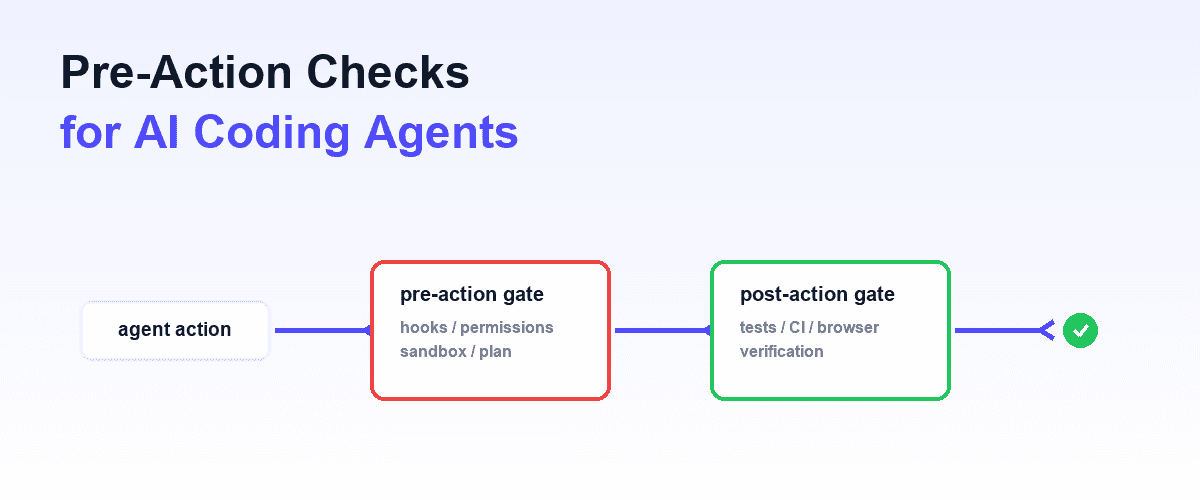
The plan gates intent; the browser check gates behavior. They are different gates and you want both.
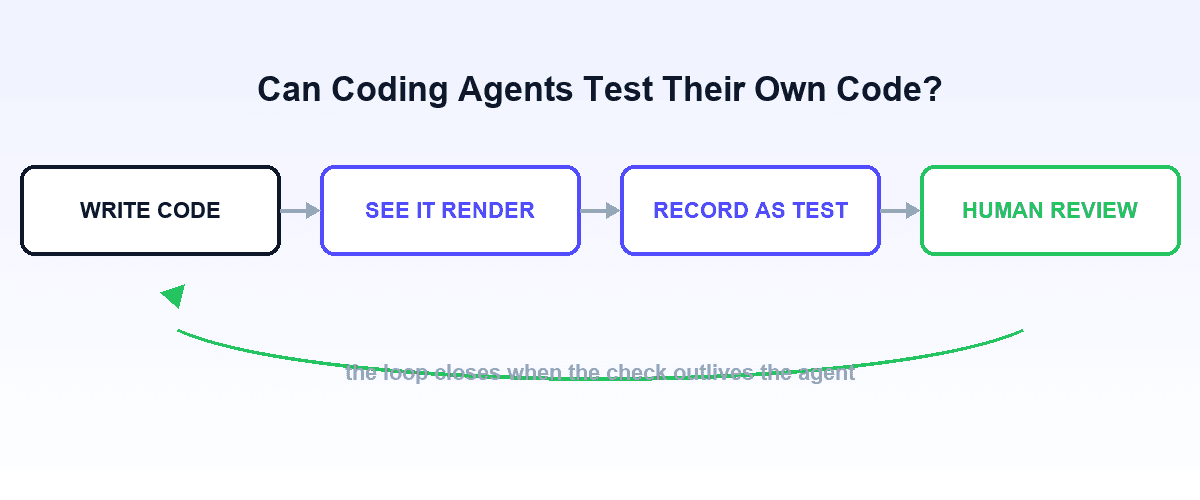
The related reasoning on why the agent's own sign-off is not enough is in can coding agents test their own code?
Frequently Asked Questions
What is plan mode in Claude Code?
A read-only mode where the agent researches the task and proposes an approach without editing files. You approve, correct or reject the plan before any change is made.
How is plan mode different from auto mode?
Auto mode carries the task through without stopping for approval. Plan mode inserts a gate before edits begin, trading a little speed for a much cheaper correction point.
When should I not use plan mode?
For small obvious changes, or exploratory work where you expect to change your mind. The overhead outweighs the benefit and it trains you to skip the gate.
Does an approved plan mean the code will be correct?
No. It means the agent understood the task. Implementation still introduces edge cases and behavior the plan never addressed, which is why a browser check on the result is a separate and necessary gate.
Related posts
Guides
Pre-action checks for AI coding agents
Aug 3, 2026 · 10 min read
AI Testing
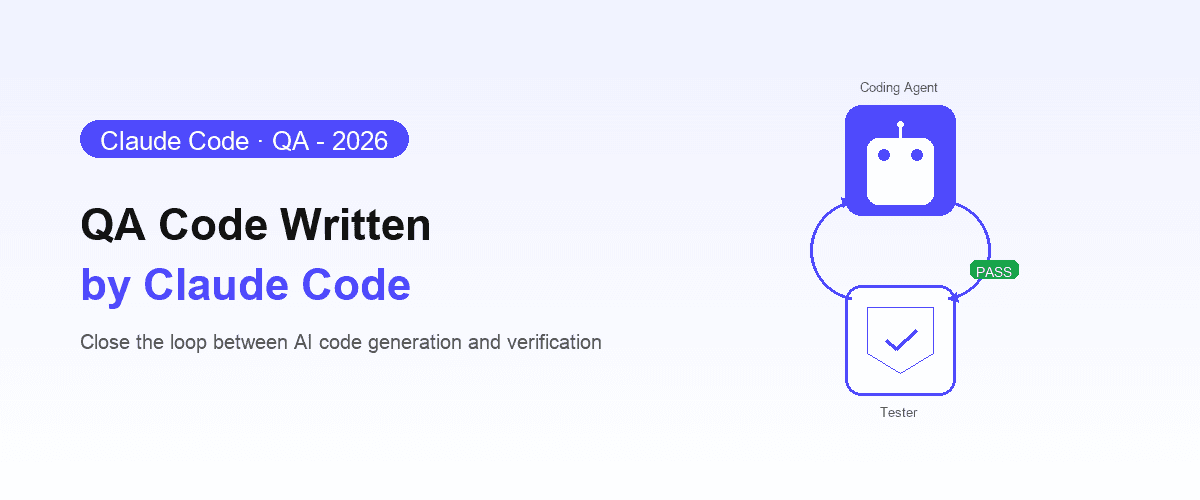
Claude Code testing
Apr 10, 2026 · 10 min read
Guides
Claude Code skills
Jul 30, 2026 · 7 min read

Engineering
What is spec-driven development?
Jul 14, 2026 · 12 min read
AI Testing
Can coding agents test their own code?
Jul 12, 2026 · 9 min read