A question that comes up constantly once teams start building agent tooling: if we already have a REST API, why would we also need a Model Context Protocol server? The framing hides the answer, because the two are not competing choices. Most MCP servers are wrappers around APIs. The useful question is what the wrapper adds.
They are not alternatives
An API is an interface to one service. It has endpoints, a schema, authentication, and documentation written for a human developer who will read it and write integration code.
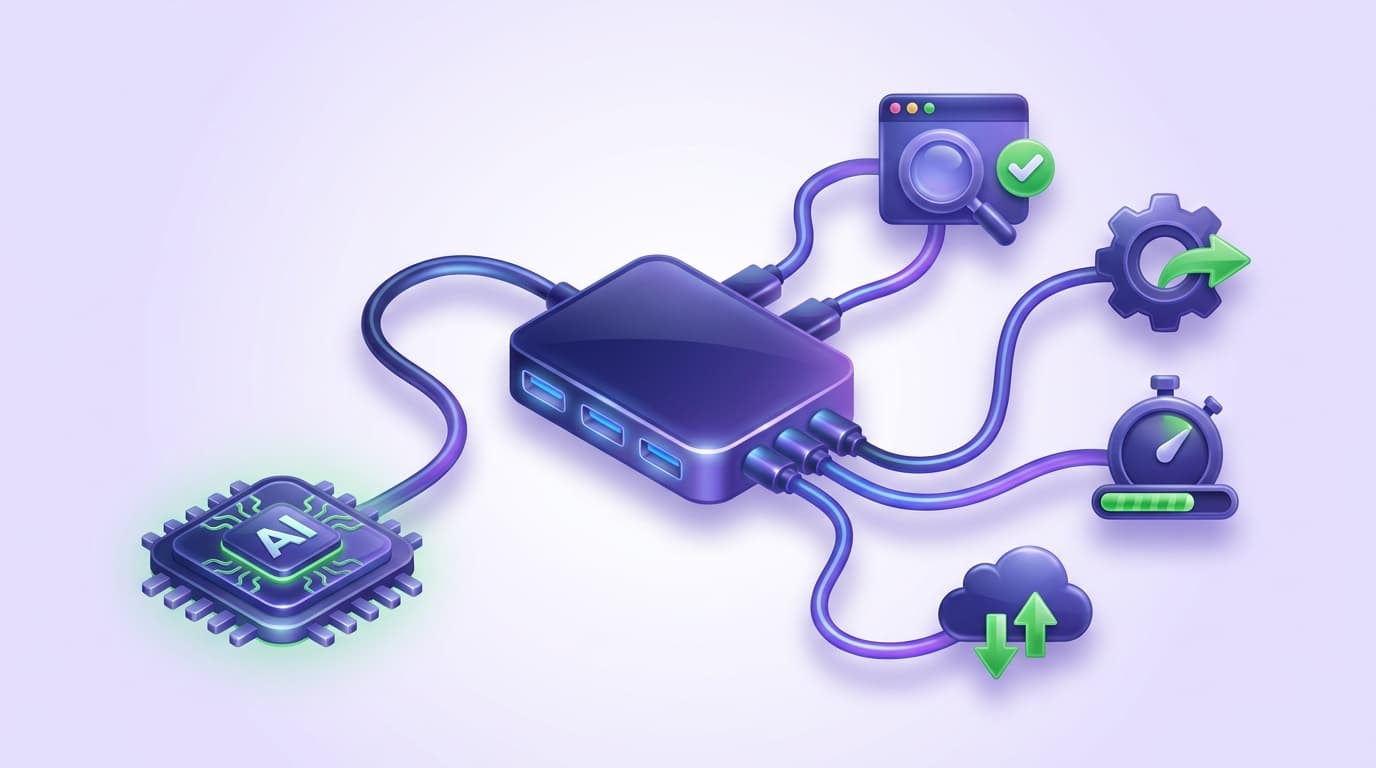
MCP is a standard for how an AI model discovers and calls tools generally. An MCP server usually sits in front of one or more APIs and re-presents them in a form a model can find and use without anyone having written integration code for that specific pairing.
So the honest comparison is not "MCP or API." It is "API alone, or API with an MCP layer in front of it."
| API | MCP | |
|---|---|---|
| Consumer | A developer writing code | A model choosing at runtime |
| Discovery | Read the documentation | The server advertises its tools |
| Integration work | Per client, per service | Once per server, works with every client |
| Schema | Documented for humans | Machine-readable, sent to the model |
| Auth | Whatever the service uses | Handled by the server |
| When it changes | You update your code | The model sees the new tool list |
The difference that actually matters
Who does the discovering.
With an API, a developer reads the docs, decides which endpoints matter, writes the calls, handles the errors, and ships. The integration is fixed at the moment the code was written. The model, if there is one, receives whatever that code chose to expose.
With MCP, the server advertises its tools and their schemas. The model reads that list at runtime and decides which tool fits the task in front of it. Nobody wrote code saying "for this kind of request, call this endpoint."
That shift has a consequence people underrate: it moves integration cost from N times M to N plus M. Ten clients and ten services means a hundred integrations if each pairing is hand-built, and twenty if both sides speak one protocol. That arithmetic is the whole reason the standard won.
When you want a server rather than just an endpoint
When several different agents need the same capability. Building one MCP server beats writing the integration separately for Claude Code, Cursor and Codex, and it beats rewriting all three when a fourth agent arrives.
When the model should choose. If the right call depends on context the model has and your code does not, letting it pick from an advertised tool list beats routing logic you maintain by hand.
When you want portability. Tooling wired through MCP survives a change of agent. When Google retired Gemini CLI in June 2026, workflows built on MCP carried over to Antigravity CLI unchanged; workflows built against that CLI specifically did not.
When the capability is not an HTTP call. Driving a browser, reading local files, running a test suite on the developer's machine. There is often no API to point at, and MCP is the interface.
When a plain API is the right answer
Deterministic backend work. If a service calls another service on a fixed schedule with fixed parameters, adding a model to choose the call is added failure surface for no gain.
Anything you cannot let a model decide. Payments, deletions, production configuration. A tool the model can call is a tool the model can call at the wrong moment. Keep those behind code with explicit conditions.
High-volume machine-to-machine traffic. MCP is built for an agent making a handful of considered calls, not for throughput.
The security point
MCP servers run with the permissions you grant, and the model decides when to invoke them. That is a genuinely different risk profile from an API your own code calls under conditions you wrote.
Two practical rules. Grant the narrowest scope the server needs, the same way you would for any dependency that can reach production. And prefer servers you can read, because "the model decided to call it" is not a satisfying answer during an incident.
Where this lands for testing
The reason we build on MCP rather than only shipping an API is that the capability has to be reachable from whichever agent a team already uses.
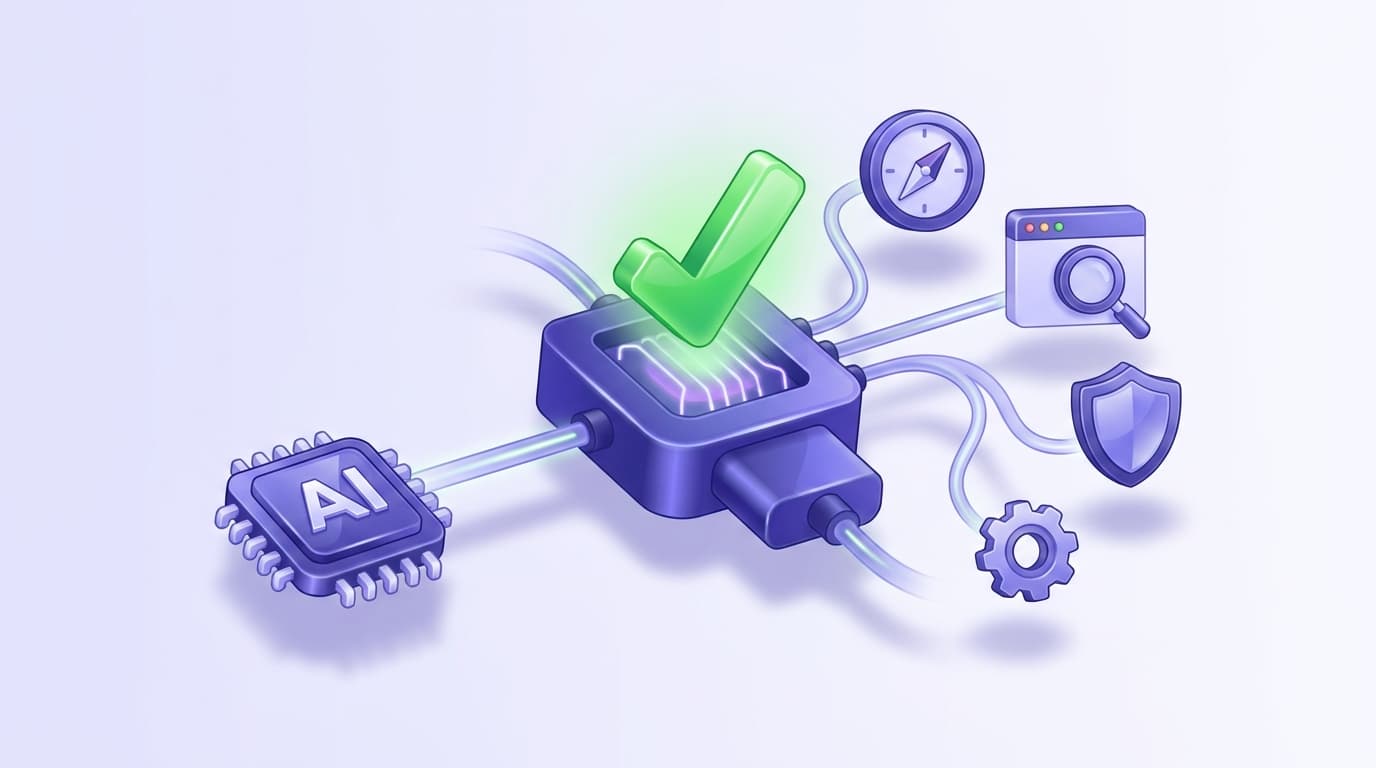
Shiplight exposes browser verification and test generation as MCP tools, so Claude Code, Cursor, Codex and other MCP clients can all call the same thing, and the tests it generates land in your repository as YAML rather than in a vendor database.
The API exists too. The MCP layer is what makes it usable from inside an agent's loop, at the moment the code was written, rather than in a separate step someone has to remember.
Frequently Asked Questions
Is MCP replacing APIs?
No. Most MCP servers wrap APIs and depend on them. MCP standardizes how a model discovers and calls tools; it does not replace the services underneath.
Do I need an MCP server if I already have a REST API?
Only if agents need to use it. A server saves writing a separate integration for every agent and makes the capability available at runtime rather than at the time you wrote the code.
Is MCP just function calling?
Function calling is a model capability; MCP is a transport and discovery standard around it. MCP defines how tools are advertised, invoked and returned across clients, which function calling alone does not.
Which is more secure?
A plain API you call from your own code, because the conditions are explicit. An MCP server hands invocation timing to the model, so grant narrow scopes and vet what you install.