Choosing between an open-source coding agent and a managed one is not a question about capability. It is a question about who owns the harness, and the answer has knock-on effects for cost, portability, offline work, and how much of your workflow you can still run if a vendor changes its mind.
This guide covers what each is actually built to be, where the open-source option genuinely wins, where the managed one does, and what stays true no matter which harness runs the loop.
The structural difference
OpenCode is a harness, not a model. It connects to a large number of LLM providers, including local ones, and lets you switch mid-session. Its benchmark performance is therefore not really its own: it is whatever the model you plugged in scores.
Launched in mid-2025 under an MIT license, it grew fast enough through 2026 to become the default open-source answer in this category.
Claude Code is a managed agent from Anthropic, tied to Anthropic's models, and closed source. What you get in exchange for the coupling is a harness tuned specifically against those models, plus surfaces beyond the terminal and an extension system built around them.
The trade is legible: OpenCode gives you control over the harness and the model. Claude Code gives you a harness someone else tunes, and takes the model choice off the table.
| OpenCode | Claude Code | |
|---|---|---|
| License | MIT, open source | Closed source |
| Model choice | Many providers, swappable mid-session | Anthropic models |
| Local models | Yes, including Ollama | No |
| Surfaces | Terminal | Terminal, IDE, desktop, web, mobile |
| Extension model | Community and config driven | Skills, hooks, subagents, plugins |
| Who tunes the harness | You and the community | Anthropic |
| Cost model | Whatever your model provider charges | Bundled into a Claude subscription |
Where OpenCode genuinely wins
Provider flexibility. Switching models mid-session is not a novelty. It lets you route a cheap mechanical step to a cheap model and a hard reasoning step to an expensive one, in the same task. On a team running agents all day, that routing is a real budget lever rather than a preference.
Local and air-gapped work. If code cannot leave your network, a harness that drives a local model is not just preferable, it is the only option. This is decisive for some regulated environments and irrelevant for most others, so know which you are.
No vendor coupling. An open harness under a permissive license cannot be repriced or retired out from under you. That is not a hypothetical concern in this category: Google retired Gemini CLI in June 2026 and moved users to a different tool on a thirty-day window. Teams with automation built on it had to migrate on someone else's schedule.
Auditability. You can read what the agent does before it does it in your repository. For some security teams that is the whole conversation.
Where Claude Code genuinely wins
A harness tuned against its models. Agent quality is not only model quality. How the loop handles context, retries, tool errors and long tasks matters, and a harness co-developed with the model it drives has an advantage a general one has to work to match.
The extension system. Skills, hooks, subagents and plugins are a layered way to encode team process. Hooks in particular run deterministic code on events, so a rule enforced by a hook cannot be reasoned around by the model. Teams trying to make conventions actually hold across many engineers get something here that configuration alone does not provide.
Reach beyond the terminal. If your work moves between terminal, IDE, and reviewing something from a phone, that breadth is real. If you live entirely in a terminal, it is worth nothing to you, and OpenCode is the nicer place to spend the day.
Nothing to operate. Model routing, provider keys and harness upgrades are someone else's job. For small teams, that saved attention is worth more than the flexibility they would not have used.
The honest way to decide
Ask which of these is true for you:
- Code cannot leave our network. OpenCode, decisively. This is not close.
- We want to route models by task cost. OpenCode. The routing is the point.
- We are trying to encode process across a large team. Claude Code, for the hook and skill layers.
- We do not want to operate anything. Claude Code.
- We got burned by a tool being retired. OpenCode, and the concern is well founded.
- We live entirely in the terminal. Either, and this one comes down to taste.
Most of the arguing about which agent is "better" is really this decision in disguise. Answer the ownership question and the tool follows.
What is the same either way
The harness does not change what the agent can vouch for.
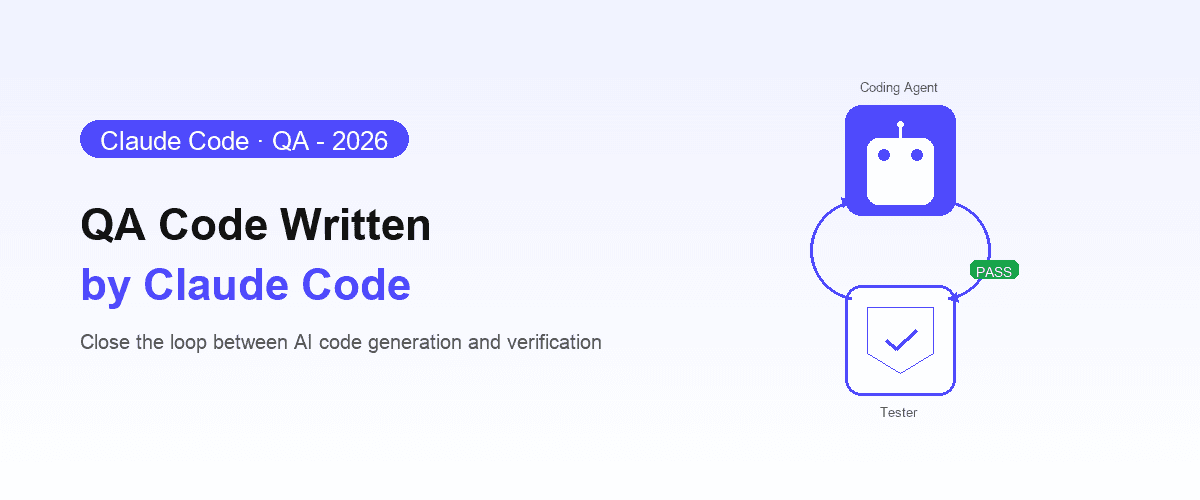
Whichever loop is running, at the end of it a model reports that the code it just wrote works. That report comes from the same context that produced the code, which is the weakest possible position from which to audit it.
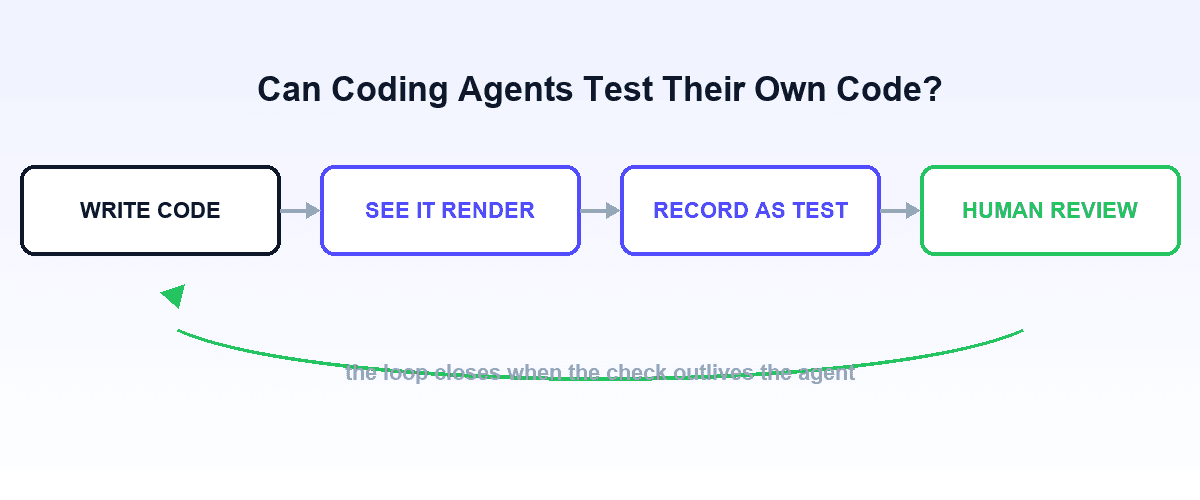
Swapping harnesses, or swapping in a different model, does not fix this. It is structural. The reasoning is in can coding agents test their own code?
The failure that costs the most is also harness-independent: an agent refactors a file and silently removes a safeguard, and nothing in the summary mentions it. See regression risk in AI-generated code.
What actually settles it is evidence from outside the agent's context. A real browser exercising the flow. Assertions derived from what the feature was supposed to do rather than from the diff. A test artifact a human can read in review.
There is a portability point here worth making, because it bears directly on the ownership question this whole comparison turns on. If your tests live in a vendor's cloud, you have solved a lock-in problem on the agent and recreated it on the test suite.
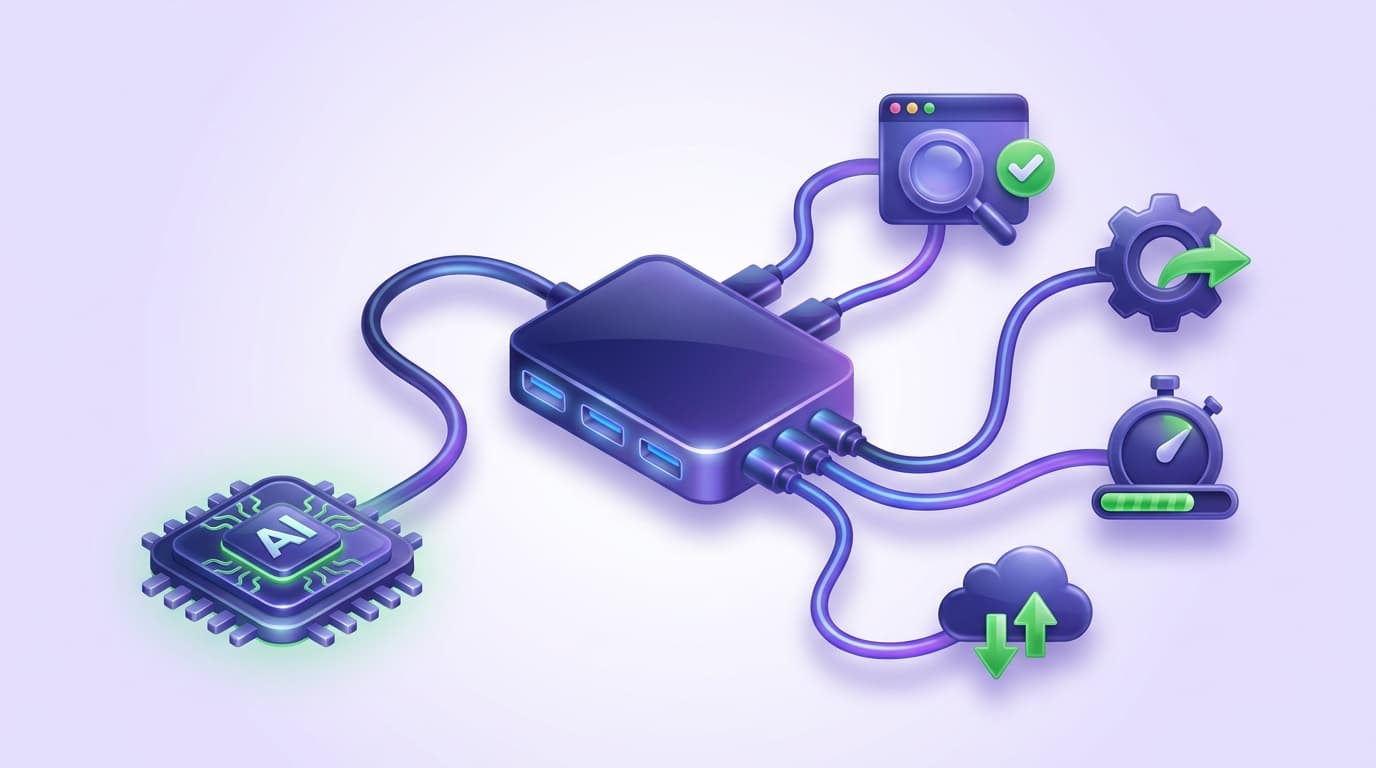
Shiplight exposes browser verification and test generation over MCP, so any agent that speaks MCP can call it, and writes the resulting tests into your repository as YAML. Both harnesses can drive it, and the tests stay yours if you switch.
That is the same logic that makes OpenCode attractive, applied one layer up.
Frequently Asked Questions
Is OpenCode as good as Claude Code?
It depends on the model you plug in, since OpenCode supplies the harness rather than the intelligence. With a strong model, output quality is comparable; the harness tuning and the extension layers are where Claude Code still leads.
Can OpenCode run fully offline?
Yes, pointed at a local model through something like Ollama. Quality will track the local model, which is the main constraint in practice.
Does OpenCode support MCP?
Yes. Tools exposed over the Model Context Protocol work across both, which is why MCP-based tooling is the safer investment when the harness decision is still open.
Which is cheaper?
OpenCode can be, because you control model routing and can send cheap steps to cheap models. Claude Code is bundled into a subscription, so it is simpler to budget and cheaper if you already pay for Claude.
What happens if a vendor retires my agent?
With an open-source harness, nothing forced. Google retired Gemini CLI in June 2026 on a thirty-day migration window, which is the concrete version of this risk.