Defects cost more the later you find them. That observation is decades old, it is still true, and the practice built on it has a name that has been in every quality strategy deck since the 2000s.
The idea was never wrong. What went wrong was the economics of executing it, and those economics changed recently in a way that is worth being precise about.
What it means
Shift left testing means moving verification earlier in the development cycle, toward the point where code is written rather than after it is finished.
The name comes from a left-to-right timeline: requirements, design, code, test, release. Testing sat near the right end. Shifting left means pulling it toward the code step.
The reasoning is about the cost of a fix at each stage. A wrong assumption caught while the developer still has the problem in their head is a few minutes.
The same assumption caught in a QA cycle a week later means re-reading the code, reconstructing the intent and re-testing. In production it means an incident, a hotfix, and possibly a customer.
Why it mostly did not happen
Most teams that adopted the language did not change much. The reason is worth stating plainly.
Writing tests early cost developer time nobody had. Shifting left in practice meant asking developers to write E2E tests alongside features. Under deadline, the tests were the thing that got dropped, because a missing test does not block a release and an unfinished feature does.
The tests that did get written decayed. Tests bound to CSS selectors break when the UI changes. A suite failing for reasons unrelated to product correctness gets ignored, then disabled. Coverage that decays is worse than no coverage, because it produces false confidence.
Nobody owned it. QA owned quality but sat to the right. Developers sat to the left but were measured on shipping. The practice needed someone whose job it was, and the org chart rarely provided one.
So the language spread and the practice did not. That is not cynicism, it is what the retrospectives say.
What changed
The constraint was always developer time. That is the part that moved.
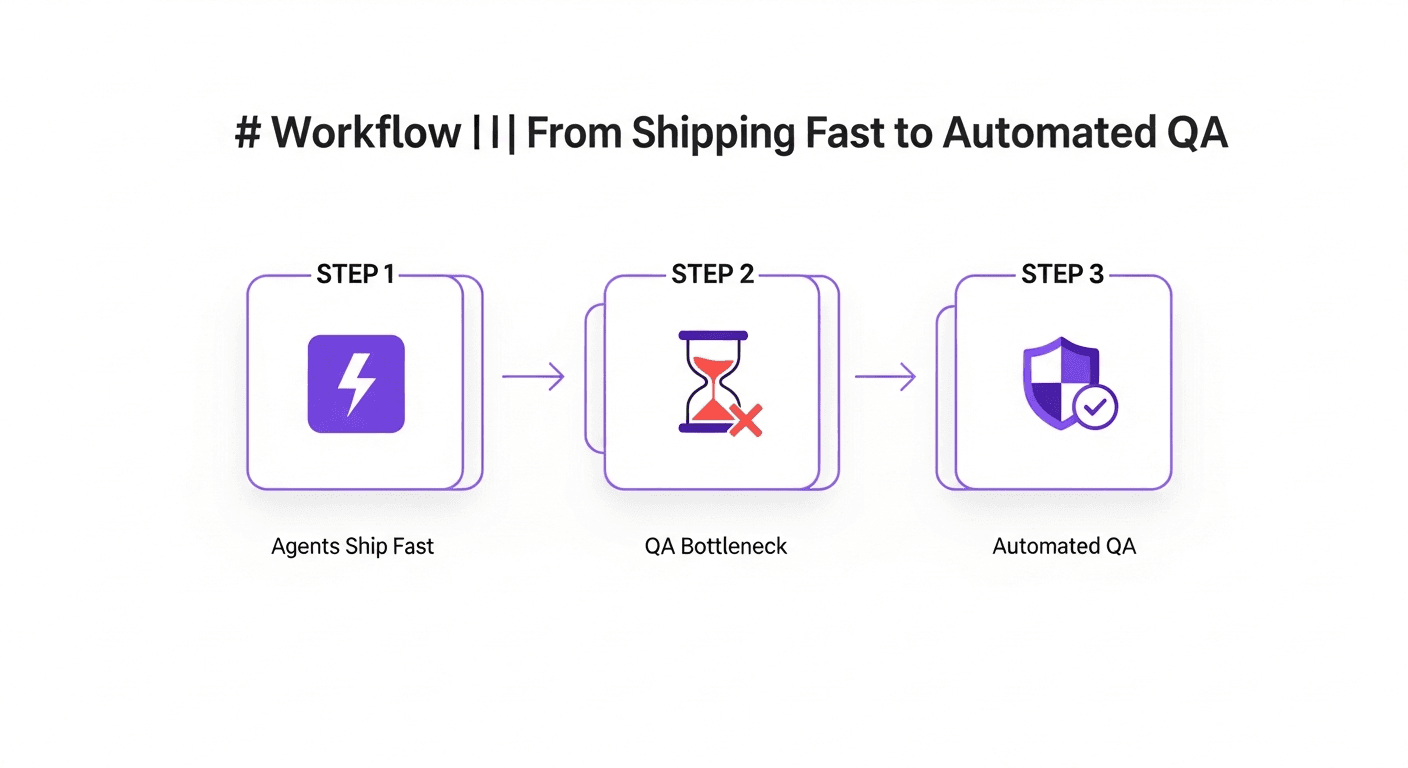
When an AI coding agent writes the feature, the agent can also exercise it. Give it a browser and it can open the application, walk the flow it just built, and confirm the behavior before a human sees the branch. The verification step stops competing with the developer's time, because it is not the developer doing it.
This is a real change to the economics rather than a marketing frame, and it is worth separating from the enthusiasm around it. What actually changed:
Cost per test approached zero. The reason tests got dropped under deadline was the hour they cost. That hour is now a tool call.
Verification moved into the authoring loop. Not a separate phase, not a handoff. The same session that wrote the code checks it.
Test maintenance stopped being the blocker. Tests written as intent rather than selectors can be re-resolved when the UI moves, so the decay that killed earlier suites is addressed rather than endured.
The part that did not change
Two things stayed exactly the same, and skipping them is how teams get this wrong.
Somebody still has to decide what correct means. An agent can verify that a flow completes. It cannot tell you that completing it was the right business outcome. Acceptance criteria are still human work.
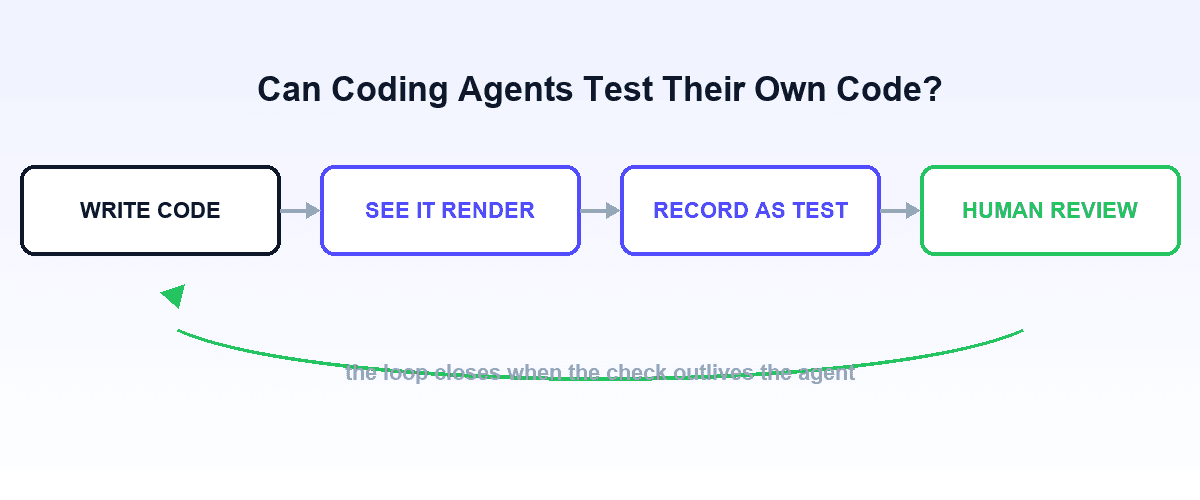
An agent's own sign-off is not evidence. This is the important one. An agent reporting that code it just wrote works is judging from the context that produced the code, which is structurally the weakest position to judge from. The reasoning is in can coding agents test their own code?
What counts is evidence from outside that context: a real browser rendering the page, assertions derived from what the feature was supposed to do rather than from the diff, and a test artifact a human can read in review.
What shifting left actually looks like now
Concretely, for a team using coding agents:
- The agent implements the change, in a plan-then-build loop if the change is wide enough to warrant it.
- The agent opens the running application through a browser MCP server and walks the affected flow. Integration failures surface here, minutes after the code was written. See Playwright MCP.
- The successful walkthrough becomes a test committed to the repository, so today's check catches tomorrow's regression instead of scrolling past.
- CI runs the suite on every pull request, so a change breaking a previously working flow fails the branch rather than reaching review.
- Humans review intent and judgment, having already been told the mechanical parts hold.
That is the same shape the practice always described. The difference is that step 2 and step 3 no longer cost a developer an afternoon, which is why it is worth attempting now and mostly was not before.
Shiplight is built for steps 2 through 4: browser verification and test generation exposed over MCP so the agent can call them mid-task, with tests written into your repository as YAML rather than a vendor database, and heals surfaced as reviewable diffs. Web applications; native mobile is not in it.
Shift left is not shift everything
One honest caution. Moving verification earlier does not mean every check belongs at the earliest possible point.
Some things are genuinely cheaper later. Full cross-browser sweeps, load testing, and long-running suites belong in CI or nightly rather than in the authoring loop, because running them on every keystroke costs more than it catches.
The goal is to move each check to the earliest point where it is cheap and informative, not to the earliest point that is technically possible. A team that puts everything left ends up with a slow inner loop, and a slow inner loop is the thing developers route around.
Frequently Asked Questions
What is shift left testing?
Moving verification earlier in the development cycle, toward the point where code is written rather than a separate phase afterward. The logic is that defects cost less the earlier they are found.
Why did shift left fail for so many teams?
It cost developer time under deadline, so tests were the first thing dropped. The tests that did get written were often selector-bound and decayed until the suite was ignored.
What changed with AI coding agents?
The constraint was developer hours, and the agent that writes the feature can now also exercise it in a browser. Verification stops competing with the developer's time.
Does shift left mean QA engineers are unnecessary?
No. Deciding what correct means, and judging whether a passing flow is the right outcome, is still human work. What moves is the mechanical checking.
Should every test run as early as possible?
No. Full cross-browser sweeps and long suites are cheaper in CI. Move each check to the earliest point where it is cheap and informative, not the earliest point possible.