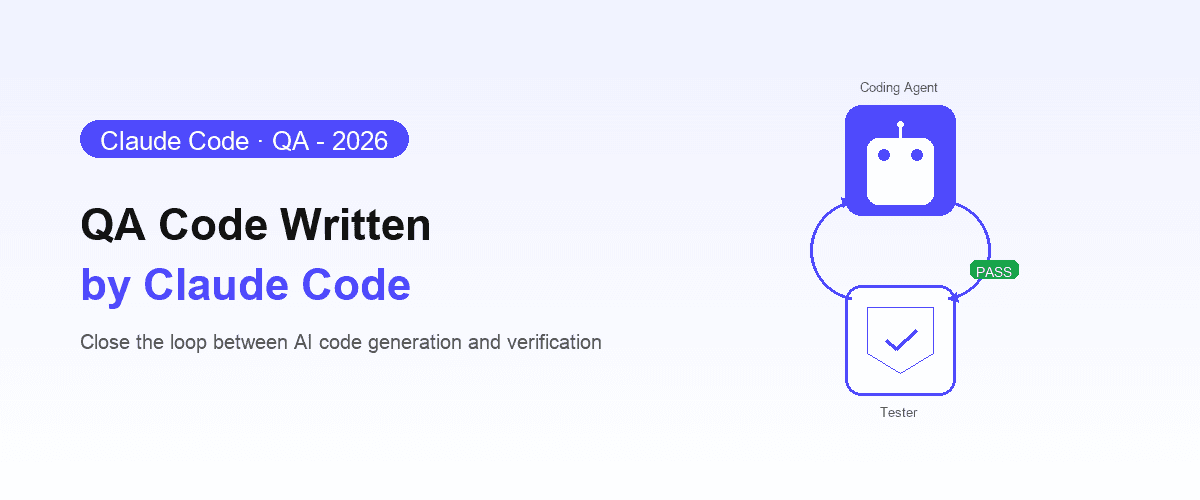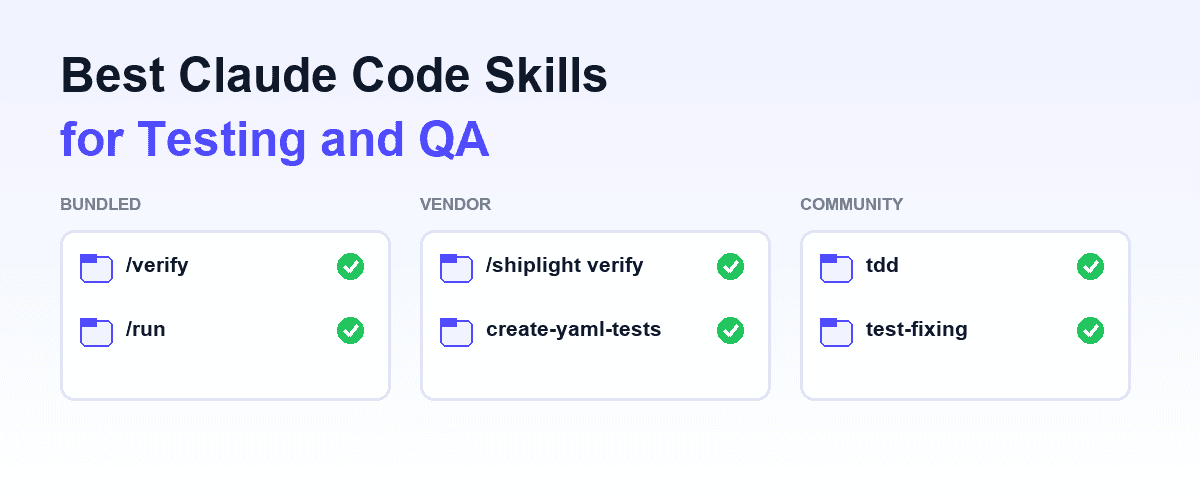
The best Claude Code skills for testing share one property: they turn a verification habit the agent might follow into a procedure it does follow. Claude Code will happily write code all day; whether it proves the code works depends on what its toolkit tells it "done" means. Skills are how you install that definition.
The three groups of testing skill
The useful testing skills fall into three groups: bundled skills that ship with Claude Code itself, vendor skills installed alongside an MCP server that also grants a capability (a real browser, a device farm), and community skills from the open-source ecosystem.
This list covers the ones worth reaching for in each group, and, just as important, the line a skill cannot cross: a skill adds procedure, never capability.
If the check needs a browser the agent does not have, no skill fixes that alone.
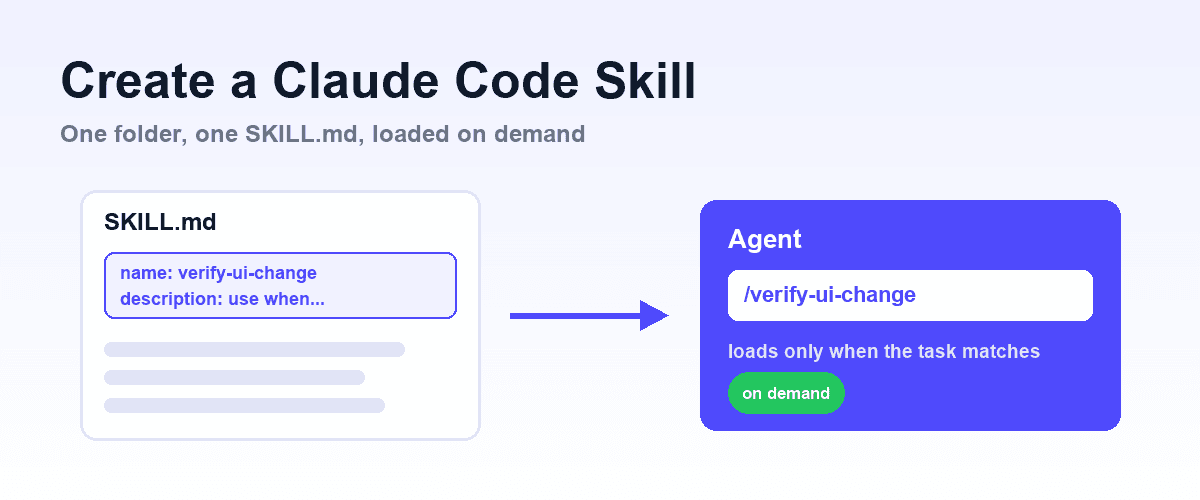
If you are new to the mechanism itself, Claude Code skills: what they are and when to use one is the primer; this page assumes you know what a skill is and want to know which to install.
Bundled skills: already on the machine
1. /verify
Claude Code's bundled /shiplight verify skill gets the app built and running, then drives it to confirm a change behaves. It can record the recipe that worked (install commands, env vars, launch script) so later runs and other agents follow the same steps instead of rediscovering them.
It is the right default for "does this actually run" checks, and its recorded recipes are the closest thing to zero-cost verification setup.
2. /run
The sibling skill: /run starts your app from the recipe /run-skill-generator captured for the project. Not a testing skill by itself, but the precondition for every skill on this list that needs a live app to test against. Record the recipe once per project and stop paying the "how do I even start this thing" tax in every session.
Vendor skills: procedure plus capability
3. Shiplight /shiplight verify
Shiplight installs into Claude Code as a browser MCP server plus a set of skills, and /shiplight verify is the one used most: after the agent edits frontend code, it opens the real app in a real browser, exercises the affected flow, and reports what it saw with screenshots as evidence.
The pairing matters: the MCP server provides the browser (capability), the skill provides the procedure (check the empty, loaded, and error states; capture evidence; flag regressions).
Disclosure: Shiplight is our product, and the browser-plus-skills model is the reason it appears in this list at all; the skills do nothing without the MCP server beside them.
4. Shiplight /shiplight create-yaml-tests
Verification is ephemeral; suites are not. /shiplight create-yaml-tests has the agent walk the app and write E2E tests as intent-based YAML committed to your repo, so today's verification becomes tomorrow's regression gate. The Claude Code testing guide shows the full loop from implement to verify to CI.
5. Shiplight /shiplight fix
When a test fails, /shiplight fix reproduces the failure, diagnoses the cause, and updates the test; if the application is what broke, it reports the bug instead of rewriting the test to pass. That last clause is the difference between test maintenance and test corruption, and it is worth demanding from any fixing skill you adopt.
Community skills: the open-source ecosystem
6. test-driven-development
obra's TDD skill instructs the agent to write the failing test before any implementation code, for every feature and bugfix. Agents drift from TDD exactly the way humans do, and this skill is the cheapest correction available. Pair it with a hook if you want the test-first rule enforced rather than taught.
7. Webapp Testing
ComposioHQ's webapp-testing skill (from the awesome-claude-skills ecosystem) drives local web applications with Playwright to verify frontend functionality. A solid free starting point for browser checks; you supply the Playwright setup and maintenance that a managed browser layer would otherwise absorb.
8. Playwright Browser Automation
lackeyjb's skill teaches the agent to use Playwright for testing and validating web applications, loading automatically when a task matches. Same honest caveat as any Playwright-based approach: the tests it produces are selector-bound code, so budget for the upkeep as the UI churns.
9. test-fixing
mhattingpete's test-fixing skill detects failing tests and proposes patches. Useful triage accelerant; review the patches, because a fixer without a "was it the app or the test?" discipline will happily make a broken feature's tests pass.
10. root-cause-tracing
obra's root-cause-tracing skill kicks in when errors surface deep in execution and the agent needs to walk back to the original trigger. Not testing-specific, but it is the skill you want loaded when a test failure's stack trace starts three layers below the actual mistake.
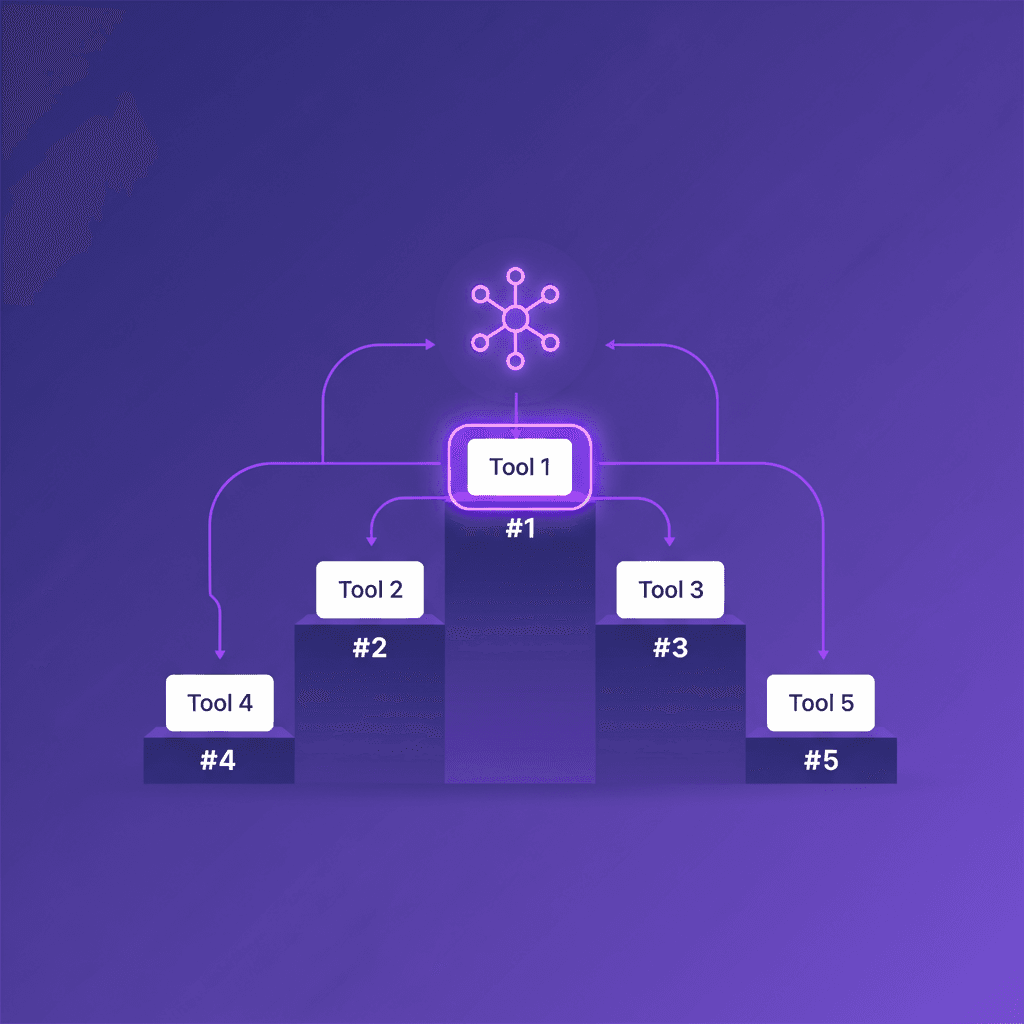
Choosing: a short decision table
| You want | Reach for |
|---|---|
| Confirm the app builds and runs | Bundled /shiplight verify and /run |
| Browser verification with evidence, no Playwright upkeep | Shiplight /shiplight verify |
| Verifications that become a committed regression suite | Shiplight /shiplight create-yaml-tests |
| Test-first discipline on every change | test-driven-development |
| Free Playwright-based browser checks | Webapp Testing or Playwright Browser Automation |
| Failing-test triage | test-fixing, root-cause-tracing, or Shiplight /shiplight fix |
What a skill cannot do (read before installing five of these)
A skill is instruction. It cannot give the agent a browser, a device, or a database; that is what MCP servers are for, and the browser-dependent skills above only work beside one. It also cannot guarantee its own execution: an agent can judge a skill inapplicable and skip it.
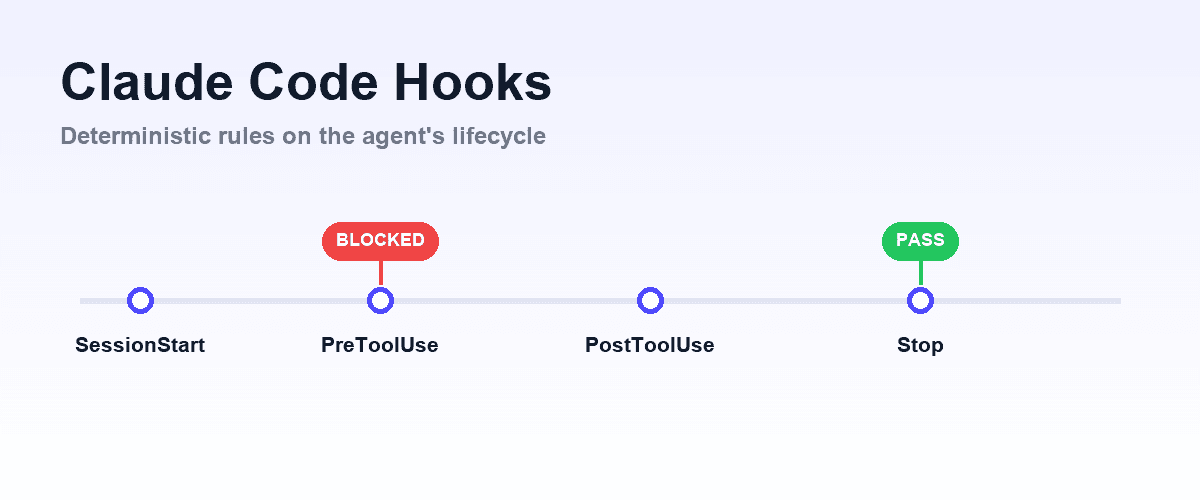
Rules that must hold every time (the suite runs before a task closes, no edits to generated files) belong in hooks, which execute deterministically.
And ten overlapping skills load worse than three sharp ones: every skill's description competes for the agent's attention, so curate like you would a toolbar, not a bookmarks folder.
If your team's real procedure is not on this list, that is normal; the highest-value testing skill is usually the one you write yourself encoding what "done" means in your codebase.
Frequently Asked Questions
What are the best Claude Code skills for testing?
Start with the bundled /shiplight verify and /run for build-and-launch checks, add browser verification through an MCP-paired skill set such as Shiplight's (/shiplight verify, /shiplight create-yaml-tests, /shiplight fix), and pull community skills like obra's test-driven-development and root-cause-tracing where they match your workflow. Curate a few sharp skills rather than installing everything.
Can Claude Code run tests with just a skill installed?
For unit and integration tests, yes: the agent already has the shell, and a skill supplies the procedure. For E2E testing it needs a browser, which no skill can provide; pair the skill with a browser MCP server, or the agent can only write tests it cannot see run.
Where do I find community Claude Code skills?
Curated GitHub lists (awesome-claude-skills and similar), skill marketplaces, and individual authors' repos. Skills follow the Agent Skills open standard, so entries written for other agents generally load in Claude Code too. Review a third-party skill's instructions and any bundled scripts before adopting: it is code and instruction your agent will follow.
Should I install a testing skill or write my own?
Install for generic procedure (TDD discipline, Playwright driving); write your own for anything codebase-specific, starting with a skill that defines what "done" means for a change in your repo. The tutorial: how to create a Claude Code skill.
How do skills and hooks divide testing work?
Skills teach the procedure (how to verify, what a good test covers); hooks enforce the gate (the suite must pass before the task closes). The strongest setups use both: Shiplight's skills for the browser verification procedure, plus a Stop hook that requires the affected tests green.