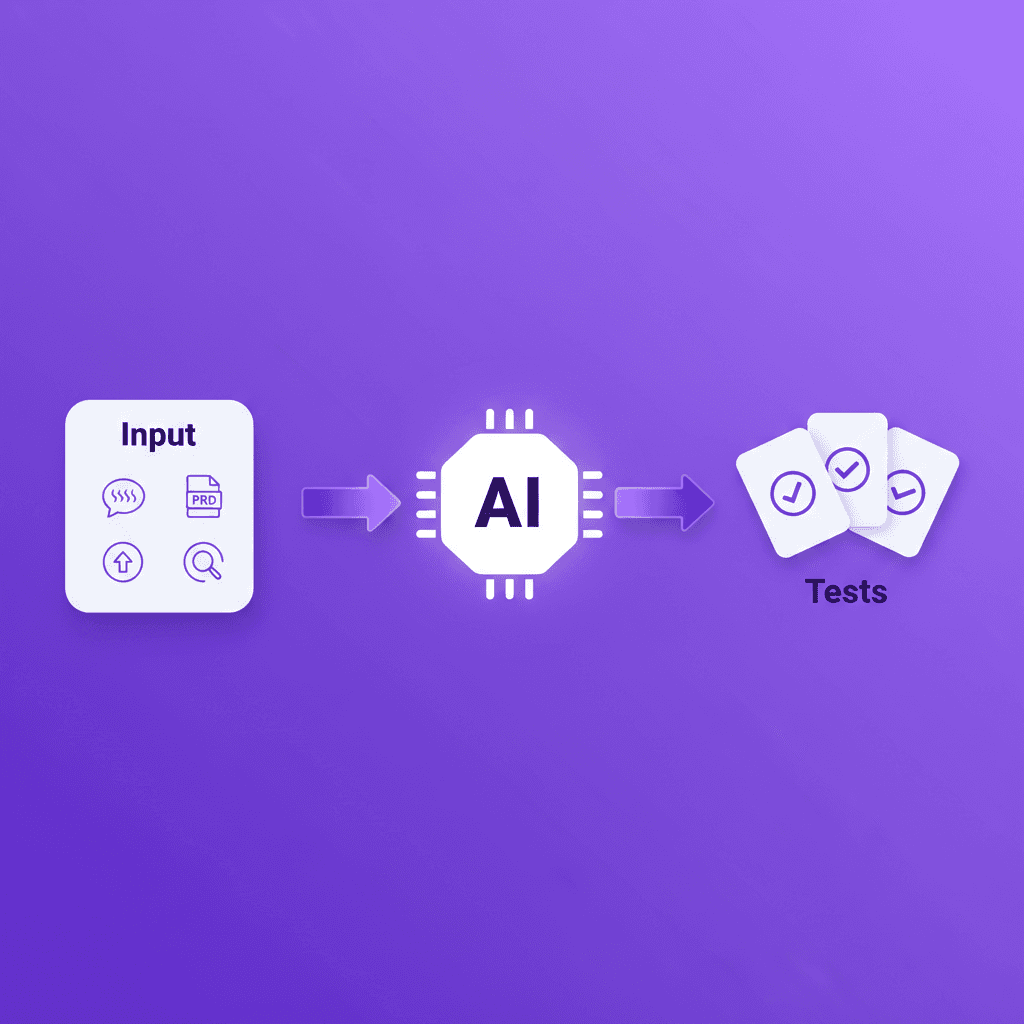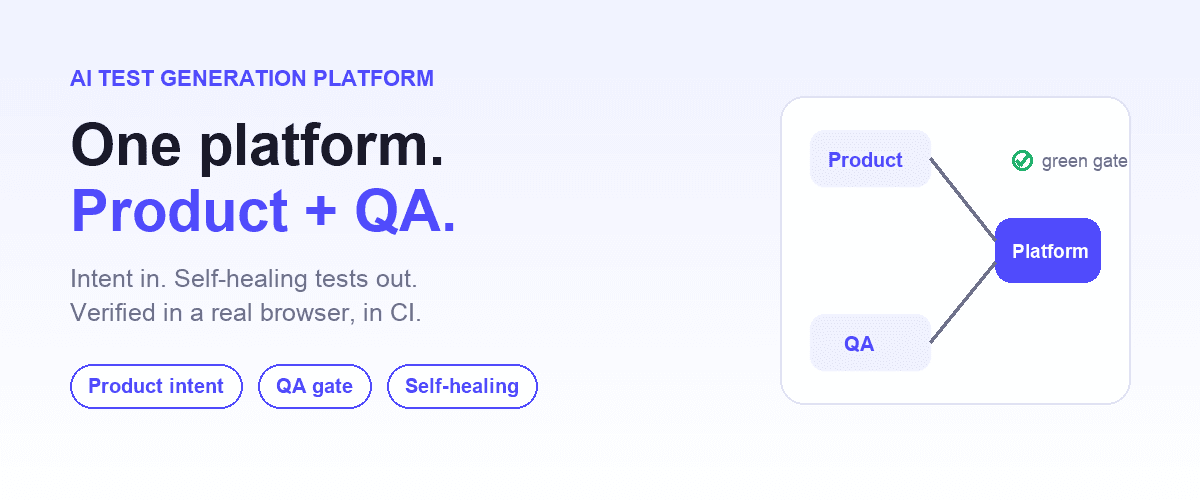
An AI test generation platform is software that automatically creates, runs, and maintains functional tests from natural-language intent, product specs, or live application exploration, without manual scripting.
For product and QA teams, the right platform serves both audiences on one surface: product teams describe the user journeys that must keep working, QA teams own coverage strategy and the quality gate, and the platform turns intent into self-healing tests that survive UI change.
Shiplight is an AI test generation platform built for AI-native teams, where coding agents author tests via MCP and verify them in a real browser.
What separates a platform from a feature
"AI test generation platform" is a category, not a feature. Plenty of tools bolt an LLM onto record-and-playback and call it AI. A platform is different: it owns the full lifecycle (generate, run, maintain, report) and it serves more than one role.
The hardest part of choosing one is not the AI; it's that product teams and QA teams want different things from the same platform, and most tools are built for only one of them.
This guide explains what an AI test generation platform actually is, what product teams need from it, what QA teams need from it, how the two collaborate on a single shared platform, and how to evaluate one, with an honest account of where Shiplight fits.
What an AI test generation platform does
At minimum, a true platform (not just a tool) covers four jobs:
| Capability | What it means | Why it's table stakes |
|---|---|---|
| Generation | Create tests from natural language, PRDs/specs, user stories, or live app exploration | Manual scripting is the bottleneck the platform exists to remove |
| Execution | Run those tests in a real browser, in CI, on every change | A generated test that doesn't run on every PR is documentation, not a gate |
| Maintenance | Self-heal when the UI changes instead of failing on a moved selector | Without this, generation just moves the work from authoring to maintenance |
| Reporting | Turn results into a trustworthy release signal both roles can read | Product reads "is the journey safe"; QA reads "where is coverage thin" |
A point tool typically does one or two of these well. A platform does all four and exposes them to both product and QA. (For the underlying mechanics, see what is AI test generation.)
What product teams need from it
Product managers and designers don't write test scripts and shouldn't have to. What they need from an AI test generation platform:
- Express coverage in intent, not code. "A new user can sign up, verify email, and reach the dashboard" should become a maintained test, without anyone translating it into selectors.
- Confidence that critical journeys can't silently break. The platform should make the set of protected user journeys visible to product, not buried in a QA repo.
- Speed that matches the release cadence. If generating coverage for a new feature takes longer than building it, product routes around the platform.
- No regression theater. Product needs the green/red signal to actually mean the journey works, which depends entirely on the maintenance/self-healing capability above.
The product-team failure mode: a platform that requires engineering translation for every change. It becomes a QA-only tool and product loses visibility into what's actually protected.
What QA teams need from it
QA owns the strategy, the coverage model, and the quality gate. From the same platform they need:
- Coverage strategy control. Which journeys are critical-path, what runs on every PR vs. nightly, where the test pyramid sits: QA owns this, not an opaque AI.
- Maintenance that doesn't consume the team. The historical reason QA can't scale automation is maintenance load; self-healing is what makes generated coverage sustainable. (See self-healing vs manual maintenance.)
- A trustworthy gate, not a flaky one. A platform that generates flaky tests transfers the flakiness-management burden onto QA. (See mitigate test flakiness: strategies for fast-paced teams.)
- CI/CD integration and auditability. Tests must live in version control, run in the pipeline, and produce results QA can trace and trust.
The QA-team failure mode: a platform where generation is impressive in a demo but the generated tests are unmaintainable, so QA quietly stops trusting them.
How product and QA collaborate on one platform
The reason "for product and QA teams" matters is that the value is in the handoff, and a single platform removes the handoff cost:
- Product names the journeys that matter in plain language: the source of truth for what must keep working.
- The platform generates self-healing tests from that intent and runs them in a real browser in CI.
- QA owns the coverage model and the gate: deciding criticality, cadence, and what blocks a release.
- Both read the same report. Product sees "the checkout journey is protected and green"; QA sees coverage gaps and flake trends.
When product and QA use different tools, intent is lost in translation and coverage drifts from what the business actually cares about. A shared AI test generation platform keeps the spec, the test, and the gate in one place.
How Shiplight fits
Shiplight is an AI test generation platform designed for AI-native teams: teams where the code itself is increasingly written by AI coding agents (Cursor, Claude Code, GitHub Copilot, OpenAI Codex). That changes the platform requirements:
- Tests are authored by your coding agent via MCP. Because Shiplight integrates through the Model Context Protocol, the agent that writes the feature also generates and updates its tests in the same loop, closing the "feature shipped, coverage went stale" gap that traditionally lands on QA.
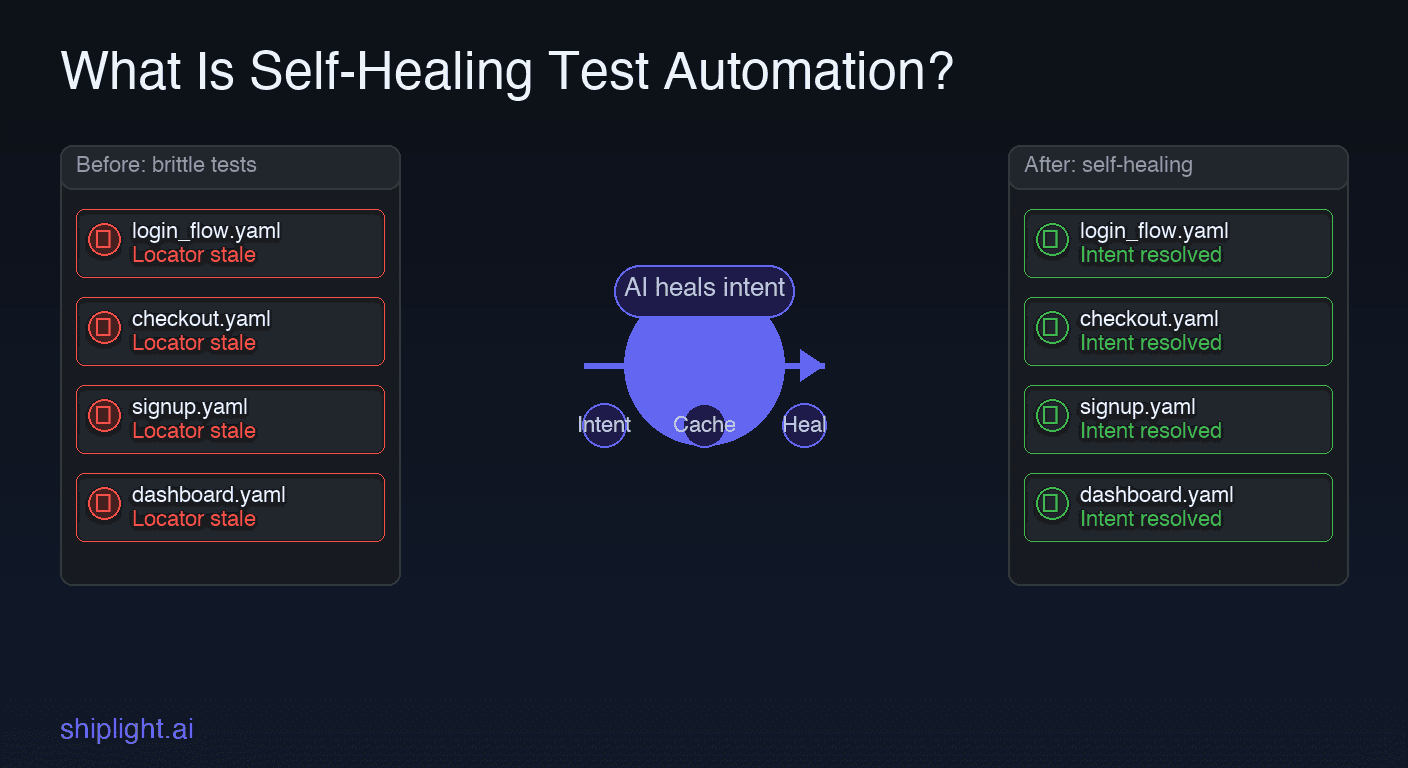
- Intent-based and self-healing. Tests describe what the user is doing, not which element to click, so they survive the UI churn AI-generated code produces, directly serving the product-team need for journeys that don't silently break and the QA-team need for low-maintenance coverage. (See what is self-healing test automation.)
- Verified in a real browser. Generation is checked against real rendering and timing, so the green signal both teams read is trustworthy rather than a mocked approximation.
Honest scope: Shiplight is optimized for end-to-end, browser-level functional coverage authored alongside AI-written code. It is not a unit-test generator or a manual test-case management system. Other platforms in the space optimize for a different center of gravity: some lean toward AI-assisted test-case management, others toward low-code QA-team automation suites.
If your coverage risk is in fast-changing, AI-generated user journeys, the agent-authored/self-healing model fits; if it's primarily test-case management or low-code QA workflows, evaluate those categories on their own terms.
Choose the platform that matches where your coverage risk actually is. For a structured comparison, see how to evaluate AI test generation tools and the best AI test case generation tools.
How to evaluate one (checklist)
- Does it serve both product (intent input, journey visibility) and QA (coverage control, the gate), or only one?
- Does generation come with self-healing maintenance, or does it just relocate the work?
- Do generated tests run in CI in a real browser, or only in the vendor's cloud demo?
- Is there vendor lock-in on the test format, or do tests live in your repo?
- Does it fit your team model: AI-native (agent-authored) vs. traditional manual-QA-led?
Score candidates on all five before the demo dazzles you with generation alone. Generation is the easy part; maintenance and the dual-audience fit are where platforms separate.
Frequently Asked Questions
What is an AI test generation platform?
An AI test generation platform automatically creates, runs, and maintains functional tests from natural-language intent, specs, or live app exploration, without manual scripting. Unlike a point tool that only generates code, a platform owns the full lifecycle: generation, execution in a real browser, self-healing, and reporting both product and QA can act on.
How is an AI test generation platform different for product teams vs QA teams?
Product teams express coverage as plain-language journeys, see which are protected, and trust the green/red signal without writing code. QA teams control the coverage strategy, the release gate, maintenance, and CI/auditability. The right platform serves both on one surface: product supplies intent, QA owns the gate, and the platform turns intent into self-healing tests.
Can product and QA teams use the same AI test generation platform?
Yes, and they should. The value is in the handoff: product names the journeys that matter, the platform generates self-healing tests and runs them in CI, and QA owns criticality and the gate. Using separate tools instead loses intent in translation and lets coverage drift. A shared platform keeps the spec, the test, and the gate in one place.
What should product and QA teams look for when choosing an AI test generation platform?
Five criteria: it serves both product and QA, not just one; generation includes self-healing maintenance, not just authoring; tests run in CI in a real browser; tests live in your repo with no format lock-in; and it fits your team model, AI-native/agent-authored vs. manual-QA-led. Generation is the easy part; maintenance and dual-audience fit are where platforms differ.
Is Shiplight a good AI test generation platform for product and QA teams?
Shiplight is built for AI-native teams: coding agents author end-to-end tests via MCP, tests are intent-based and self-healing so they survive UI churn, and everything is verified in a real browser.
It's optimized for browser-level functional coverage alongside AI-written code, not unit-test generation or manual test-case management. If your coverage risk is fast-changing user journeys, it fits product and QA well.