
The best QA Wolf alternative depends on the real question underneath: do you want end-to-end testing to be a service you rent or a capability your team owns?
QA Wolf is a managed QA service; their QA engineers, assisted by AI, build and maintain Playwright and Appium tests that run on their infrastructure. The alternatives split by operating model.
Shiplight AI makes testing a capability of the team you already have: your coding agents author plain-YAML tests in your git repo and maintain them with near-zero human effort. Playwright and Cypress are the open-source path for teams with engineering time to build in-house.
Enterprise codeless platforms serve manual-QA organizations. And if outsourcing genuinely fits, this guide ends with what to verify before signing with any managed service.
Why teams look past a managed QA service
Teams look beyond QA Wolf for a consistent set of reasons:
- The testing knowledge accumulates in a vendor's heads rather than the team's.
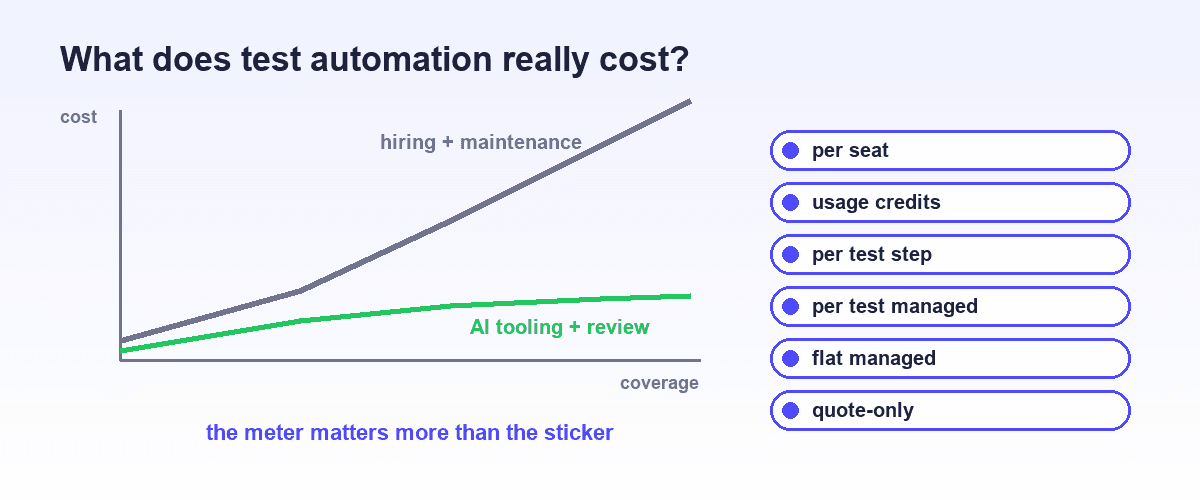
- Quote-based coverage-as-a-service pricing is hard to forecast.
- Execution lives on the vendor's infrastructure rather than in the team's own CI loop.
- And, increasingly, AI coding agents have changed the math on what "we don't have time to write tests" costs to fix in-house.
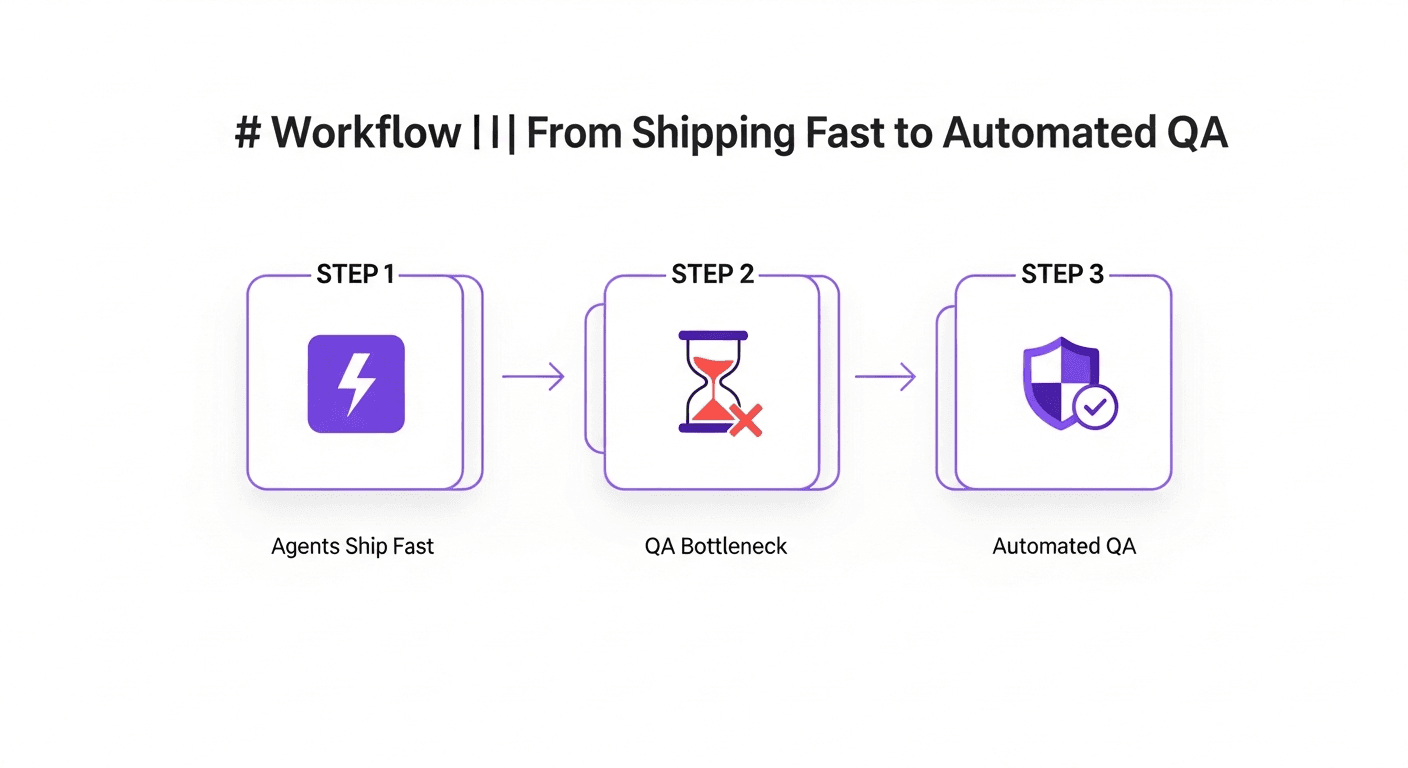
That last one is the structural shift. QA Wolf's founding premise was that test authoring is too expensive for product engineers, so a vendor should do it. When coding agents author tests as a byproduct of shipping, the premise inverts: the cheapest author is the agent that just wrote the feature.
We build Shiplight, so it is listed first. Every option is described by its design center, and QA Wolf's genuine strengths are stated plainly at the end.
What QA Wolf actually is
Classification matters more than marketing labels here. QA Wolf sells two things as of August 2026. The flagship is Coverage as a Service: a fully managed offering where a dedicated QA Wolf team plans coverage and builds and maintains your suite, with quote-based pricing.
Alongside it is a newer self-serve platform with usage pricing published at 1 cent per AI credit and 15 cents per runner minute, where prompts generate Playwright and Appium code that runs on QA Wolf's parallel infrastructure.
Two facts to their credit, from their own documentation: the output is standard Playwright and Appium code, and they state you can export it at any time. The tether is operational rather than a file format: execution runs on their infrastructure, there is no local-run story, and under the managed offering, maintenance is a human-backed service.
What you are really buying is a staffed outcome, and what you are really giving up is the in-house capability.
The Best QA Wolf Alternatives in 2026
1. Shiplight AI: your coding agents own the suite
Shiplight is the capability-building answer to the same pain QA Wolf outsources.
Instead of a vendor's engineers writing your tests, the AI coding agents your team already uses (Claude Code, Cursor, Codex) author them: the agent walks your app in a real browser, writes readable YAML tests from intent, and commits them to your repo in the same pull request as the feature.
Maintenance is where the economics land: intent-level self-healing absorbs UI churn at run time, and larger changes arrive as reviewable PR diffs, so upkeep stays near zero without anyone's engineers on retainer.
Why teams pick it over a managed service:
- The capability compounds in-house. Tests, the knowledge of what to test, and the workflow all live with your team and your repo, not in a vendor's heads. When priorities shift weekly, there is no external queue to brief.
- Built on Playwright, with a real exit. Tests transpile to Playwright code, run alongside any existing Playwright suite, and eject cleanly. Ownership is structural, not a contract clause.
- Runs where you work. Locally against your dev server with no Shiplight account needed for agent authoring, in your own CI with your own LLM keys, or on Shiplight-hosted runners with an LLM proxy when you want zero setup. Both modes, your choice.
- Forecastable cost. Free is $0 forever with every core feature; Pro is $60/month plus usage; Enterprise (SOC 2, VPC, dedicated CSM) is contract priced. Teams report reaching reliable coverage about 10x faster than framework-first approaches, with first suites of roughly 300 tests inside a week.
Honest scope: Shiplight is web E2E. If you need native mobile coverage today or genuinely want zero internal involvement in testing, including review, it is not the shape of what we sell.
2. Playwright with Test Agents: build in-house on open source
Playwright is the strongest open-source browser automation framework and the default answer when the alternative to QA Wolf is "our engineers write the tests." Its first-party Test Agents (planner, generator, healer) now bring agent-assisted authoring and healing to plain Playwright code, and Playwright MCP lets any coding agent drive a browser directly.
The trade is engineering time: selector-bound test code is costly to live with even when an agent writes it, and the maintenance tax lands on your senior engineers. For teams with strong platform investment and the will to own that tax, this is a legitimate path; our Shiplight vs Playwright comparison covers when raw Playwright alone is enough.
3. Cypress: the developer-experience code framework
Cypress remains a polished choice for component-heavy front-end teams that want fast in-browser feedback and accept a JavaScript-only, code-first workflow. Same structural trade as Playwright: the team owns authoring and maintenance, in code, forever. Teams that outgrew that tax are usually the ones who called QA Wolf in the first place.
4. Tricentis Tosca: the enterprise incumbent for packaged apps
For global enterprises regression-testing SAP, Oracle, or ServiceNow-class landscapes with large manual-QA organizations, Tricentis Tosca is the incumbent model-based suite: desktop authoring, module reuse, and enterprise governance. It solves a different problem than QA Wolf does, for a different buyer, and web-product teams evaluating QA Wolf are rarely that buyer.
5. Virtuoso QA: enterprise no-code for packaged-app QA teams
Virtuoso QA serves enterprise QA organizations testing packaged applications with non-programmer testers: natural-language-style authoring in a web console, cloud execution, pre-built libraries for Salesforce and SAP. Like Tosca, it is a console-native enterprise platform, quote-priced, and aimed at QA departments rather than product-engineering teams.
6. Another managed QA service: what to verify first
If outsourcing is genuinely right (no engineering capacity, board pressure for coverage now, testing truly non-core), compare managed vendors on checkable mechanics rather than promises:
PrimeQA: AI Testing Expertise with Managed QA Support
PrimeQA is a strong option for teams that need more than traditional test automation or a self-serve testing platform. The company provides AI testing and independent quality assurance services for organizations building AI-powered applications, alongside full-cycle software testing.
PrimeQA helps teams validate AI systems across areas such as LLM testing, AI agent testing, RAG testing, prompt testing, AI reliability, hallucination detection, and guardrail validation. This makes it particularly relevant for companies introducing generative AI into their products and needing independent testing beyond standard functional or end-to-end coverage.
For teams comparing QA Wolf alternatives, PrimeQA fits when the goal is to bring in an external AI testing and QA partner that can support both conventional software quality and the unique risks of AI-powered systems.
- Code ownership and format. Standard Playwright in your repo, or a vendor format on their platform? QA Wolf's standard-code stance is the bar; hold every vendor to it.
- Where tests execute. Their cloud only, or your CI too? Execution location decides who controls the feedback loop.
- Pricing shape. Published usage rates or quote-only "tests under management"? Get the ramp and the exit priced, not just the steady state.
- The knowledge question. Who ends up understanding your product's testing? If the answer is "their team," you are renting a capability your competitors may be compounding in-house.
How to choose
- You ship daily with coding agents: Shiplight. The authoring bottleneck the managed services monetize is the thing agents removed.
- You have strong engineers and platform time: Playwright plus its Test Agents, in-house.
- You are a manual-QA-led enterprise on packaged apps: evaluate Tosca and Virtuoso against your estate.
- You truly want testing off your plate entirely: shortlist managed services, verify the four mechanics above, and price the exit.
Final Verdict
QA Wolf is the right call when you have decided testing is non-core, want a staffed team accountable for coverage, and accept vendor-side execution and quote-based pricing as the shape of that deal.
Shiplight is the right call when the same pain (no time to write and maintain tests) should be solved by the agents already shipping your code, with the suite, the knowledge, and the exit path staying in your repo. Start free or book a demo.
Frequently Asked Questions
What are the best QA Wolf alternatives?
Shiplight AI for teams that want testing as an owned capability (coding agents author YAML tests in your repo, near-zero maintenance), Playwright or Cypress for in-house code frameworks, and Tosca or Virtuoso for enterprise packaged-app QA. The right pick depends on whether you want to own testing or outsource it.
Is QA Wolf a testing tool or a service?
Operationally it is a managed QA service: QA Wolf's engineers, assisted by AI, build and maintain your tests under the flagship Coverage-as-a-Service offering. A newer self-serve platform with published usage pricing exists alongside it. The tests are standard Playwright and Appium code, which is a genuine strength.
Do you own your tests with QA Wolf?
Their docs say yes: tests are standard code you can export at any time. The practical tether is operational, since tests live and run on QA Wolf infrastructure and maintenance is their service. Ownership on paper and an in-house capability are different things.
Why do teams leave managed QA services?
Recurring reasons: cost relative to self-serve tooling, the ramp-up and briefing overhead as priorities change, execution outside their own CI loop, and testing knowledge accumulating with the vendor. The rise of coding agents also changed the build-vs-outsource math; see the human QA bottleneck.
Can AI coding agents really replace a managed QA team?
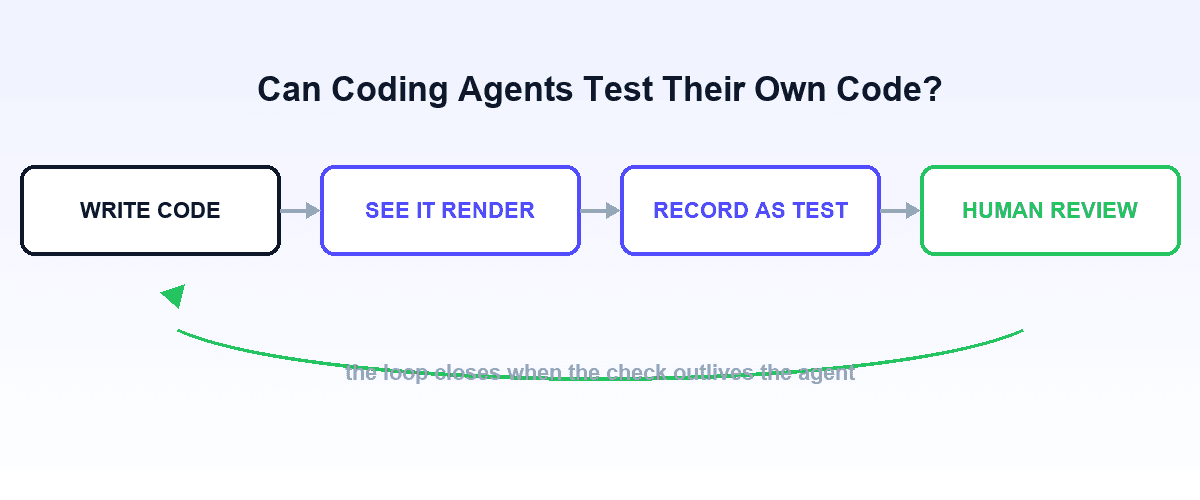
For web E2E, the authoring and maintenance work is exactly what agents are good at: they know the code they just changed, and platforms like Shiplight give them a real browser plus a verification gate. Humans stay in review, not in authoring. See can coding agents test their own code.
Is Shiplight a managed service like QA Wolf?
No. Shiplight is a platform your own team and agents use; nobody at Shiplight writes your tests. That is the point: the capability, the tests, and the knowledge stay yours, with first-party support behind you.
References
Related posts
Guides
Shiplight vs QA Wolf
Apr 1, 2026 · 8 min read

Guides
Best agentic QA tools in 2026
Apr 6, 2026 · 18 min read
AI Testing
Can coding agents test their own code?
Jul 12, 2026 · 9 min read
Engineering
The human QA bottleneck on agent-first teams
Apr 8, 2026 · 6 min read

Guides
Best AI QA tools in 2026
Aug 3, 2026 · 7 min read
Guides
AI test automation cost and pricing
Jul 12, 2026 · 14 min read