
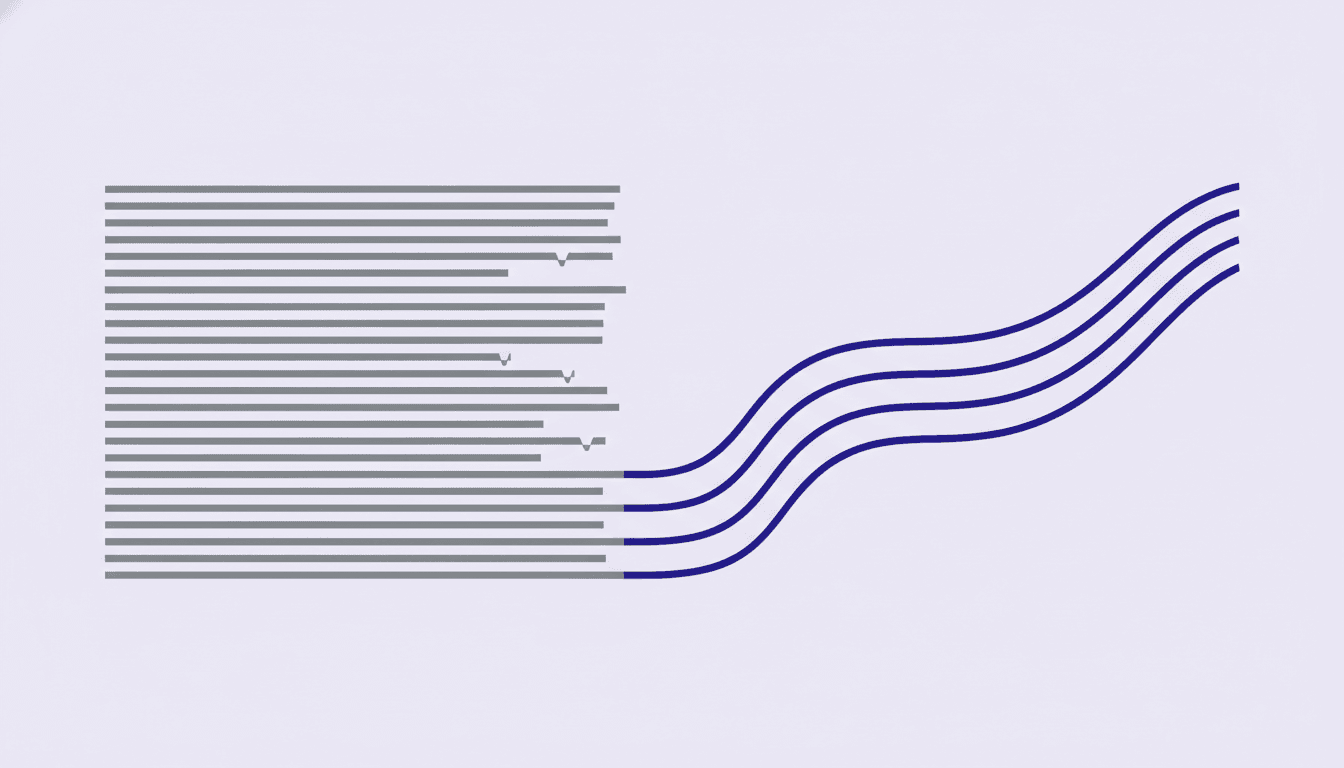
Vibe testing is an AI-driven, intent-based software testing approach that evaluates how an application feels to a user (intuitive flow, UX quality, refined interaction) rather than only whether functions return the correct values.
It uses natural language to guide AI in simulating real user behavior, replacing rigid pre-coded test scripts with intent that survives UI change. Shiplight implements it as intent-based YAML your coding agent writes and maintains, kept in your own git repository.
Where the term came from
The term vibe testing emerged alongside vibe coding in 2025 as engineering teams realized that AI-generated software ships faster than traditional tests can keep up with, and that the bugs that survive aren't the ones a unit test would catch.
They're UX regressions, intent inversions, and the subtle "this doesn't feel right" moments users notice in seconds but specs never described.
Vibe testing is the layer that catches those.
What Is Vibe Testing?
Vibe testing is the practice of verifying that software behaves the way a user intends it to behave, expressed in natural language and executed by an AI agent against a real running application. Three properties define it:
- Intent over implementation. A vibe test describes what the user is trying to do ("submit the order and confirm the success message appears"), not which DOM selectors or function calls the implementation uses. When the UI is refactored, the test re-resolves against the new structure rather than breaking.
- AI-driven execution. An AI agent reads the intent, navigates the running application, and decides at each step which element matches the user's described action. This replaces the brittle selector binding that breaks every time a class name changes.
- Behavior-as-felt, not just behavior-as-asserted. Vibe testing extends past "did the API return 200" into "did the success state actually appear, render correctly, and look like a success state to the user."
This third property is what distinguishes vibe testing from generic intent-based or end-to-end testing: the unit of verification is the user-perceived experience, not just the functional outcome.
Vibe Testing vs Traditional Testing
| Dimension | Traditional E2E Testing | Vibe Testing |
|---|---|---|
| Authored as | Code (Playwright, Cypress, Selenium) | Natural-language intent statements |
| Bound to | CSS selectors, DOM IDs, XPaths | User-described actions and outcomes |
| Breaks when | UI structure changes | Almost never (resolves intent against current UI) |
| Measures | Function returned the expected value | User experience matched stated intent |
| Maintained by | Engineers (40–60% of QA time) | Self-healing: minimal manual upkeep |
| Authored at | Human typing speed | Agent speed, in the same session as the code |
| Tooling | Playwright, Cypress, Selenium | Shiplight: intent YAML in your repo, driven by your coding agent |
Traditional E2E suites work fine until the first UI refactor. After that, every test bound to .btn-primary or #submit breaks silently, and the team chooses between burning cycles fixing tests or ignoring failures until coverage becomes theatre. Vibe testing closes that gap by making the test a description of what the user does, which doesn't change when the implementation does.
Why Vibe Testing Matters in 2026
Three forces converged in 2025–2026 that made vibe testing structurally necessary, not just clever:
1. AI ships features faster than humans write tests
Coding agents (Claude Code, Cursor, Codex, GitHub Copilot) routinely generate 200–400 lines of working code per prompt. A human cannot author Playwright coverage at that pace. The test suite either runs in the same loop as the code agent (at agent speed) or it permanently lags behind production.
Vibe testing is the format that lets coverage match velocity. See QA for the AI coding era for the full argument.
2. UI churn is now the norm, not the exception
In an AI-native development workflow, components get regenerated weekly. A test bound to a specific selector is a test bound to last week's implementation.
Industry studies put test maintenance at 40–60% of total QA effort in selector-bound suites; that number is unsustainable when the UI is being rewritten by an agent every sprint. Intent-based vibe tests adapt automatically. See self-healing tests vs manual maintenance: the ROI case.
3. UX is now the product, not the wrapper
For most consumer and B2B SaaS products, the experience is the differentiation. Function-level testing ("the API returned the right JSON") catches a fraction of what users experience. The bugs that drive churn are usually UX-shaped: a button hover state missing, an animation too slow, a form submission that doesn't confirm visibly, a modal that closes too quickly.
Vibe testing (by exercising the actual user flow in a real browser and verifying the felt outcome) catches these where unit tests cannot.
What Vibe Testing Catches That Traditional Testing Misses
Four categories of defects survive functional tests and reach users. Vibe testing is built to catch them:
- Intent inversion. The code does the opposite of what was requested: sorts oldest-first when the prompt was "newest first." Types check, unit tests pass. A vibe test that asserts "the most recent item appears at the top" catches this immediately.
- Silent feature drop. A refactor regenerates a component and quietly removes a null check, a rate limiter, or a confirmation modal. Existing tests still pass; the missing safeguard surfaces in production. Vibe testing covers the user-visible surface area, so missing UI elements are detected.
- UX regression. A button works but its hover state is missing. A form submits but doesn't visibly confirm. A modal closes before users register the action. None of these fail a function-level test. All of them fail user expectations. Vibe testing (running the flow in a real browser and verifying the rendered, animated outcome) catches them.
- Cross-browser drift. Code that "works" in Chromium but breaks in Safari or Firefox. AI agents cannot see the browsers they didn't render in; only an automated cross-browser run surfaces the divergence.
For deeper coverage of these patterns, see how to detect hidden bugs in AI-generated code.
How Vibe Testing Works in Practice
A working vibe testing setup has three components:
1. An intent format that survives change. Tests are authored as structured natural language: what the user is trying to accomplish, not which selector to click. YAML test files are the format used by AI-native testing platforms because they are readable by humans, parsable by agents, and reviewable in pull requests.
2. An AI agent that resolves intent against a real browser. When the test runs, the agent navigates the application, examines the rendered DOM and accessibility tree, and matches each intent step to the element that fulfills it. When the UI changes, resolution updates rather than failing.
3. A development loop where tests are authored at agent speed. The same coding agent that writes the feature writes the verification in the same session.
Shiplight exposes test authoring and execution as Model Context Protocol (MCP) tools that Claude Code, Cursor, Codex, and GitHub Copilot can call directly, so the agent that just shipped the feature can call /shiplight verify to confirm it works and /shiplight create-yaml-tests to save the verification as a regression test.
The result is a test suite that scales at AI throughput, self-heals across UI changes, and verifies UX-level behavior, not just function-level correctness.
Vibe Testing in One Sentence
Vibe testing is what end-to-end testing becomes when authoring runs at agent speed, intent survives UI change, and the verification target is the user experience, not just the function signature.
If your team is shipping AI-generated code and the gap between "the code works" and "the experience works" is starting to show up in production, that gap is what vibe testing was built to close.
Install Shiplight and the next AI-generated feature you ship will close the loop on the first commit.
Frequently Asked Questions
What is vibe testing in software development?
Vibe testing is an AI-driven approach where tests are authored as natural-language intent statements and executed by an AI agent against a real running application. It evaluates how an application feels to use, not just whether functions return correct values. It is the QA counterpart to vibe coding.
How is vibe testing different from vibe coding?
Vibe coding produces application code from natural-language intent ("describe what you want and let the agent build it"). Vibe testing verifies that the resulting application behaves and feels the way the user intended ("describe what the user does and let the agent confirm it works"). One generates code; the other validates the user experience of that code.
Is vibe testing the same as intent-based testing?
Vibe testing is a subset of intent-based testing. Intent-based testing is the technical methodology where tests bind to user intent rather than DOM selectors. Vibe testing is intent-based testing applied to the UX-felt dimension: verifying how the application behaves to a user, including animation, feedback, and flow, not just functional outcomes.
Why is vibe testing important for AI-generated code?
AI coding agents ship features faster than humans can write Playwright or Cypress tests, so traditional suites lag behind. Vibe testing is authored at agent speed and self-heals when the UI changes, making it the only sustainable QA layer for AI-velocity development. See vibe coding quality issues for the management framing.
What tools support vibe testing?
Shiplight AI is the platform built specifically for vibe testing: MCP-native integration with Claude Code, Cursor, Codex, and GitHub Copilot; intent-based YAML test format; self-healing on UI change; and real-browser execution. See best AI testing tools in 2026 for comparisons.
How do I get started with vibe testing?
Three steps: (1) install Shiplight into your AI coding agent, (2) when your agent finishes a feature, prompt it to call /shiplight verify to confirm the UI works and /shiplight create-yaml-tests to save the verification as a YAML test in your repo, (3) wire the test into CI so every future commit gets verified before merge.
Vibe Testing vs Related Terms
Three adjacent terms get conflated. Disambiguating them clearly:
- Vibe coding: using AI agents to write application code from natural-language intent. The output is shipped code. (Andrej Karpathy coined the term in early 2025.)
- Vibe coding testing: adding QA verification to vibe-coded software, often by having the same coding agent write the tests in the same loop. See vibe coding testing: how to add QA without slowing down.
- Intent-based testing: the technical methodology where tests are authored as user intent rather than DOM selectors. Vibe testing is intent-based testing, but with the additional UX-quality dimension above. See the intent, cache, heal pattern.
In short: vibe coding produces code; vibe testing verifies the user experience of that code; intent-based testing is the technical pattern that makes vibe testing tractable.
Related posts
AI Testing
Vibe coding testing: how to add QA without slowing down
Apr 10, 2026 · 11 min read
AI Testing
Vibe coding quality issues: a triage playbook for engineering leaders
May 8, 2026 · 9 min read
Engineering
QA for the AI coding era
Mar 25, 2026 · 11 min read
Engineering
Deterministic E2E testing: the intent, cache, heal pattern
Mar 25, 2026 · 7 min read
AI Testing
Self-healing tests vs manual maintenance: the ROI case
Apr 1, 2026 · 5 min read