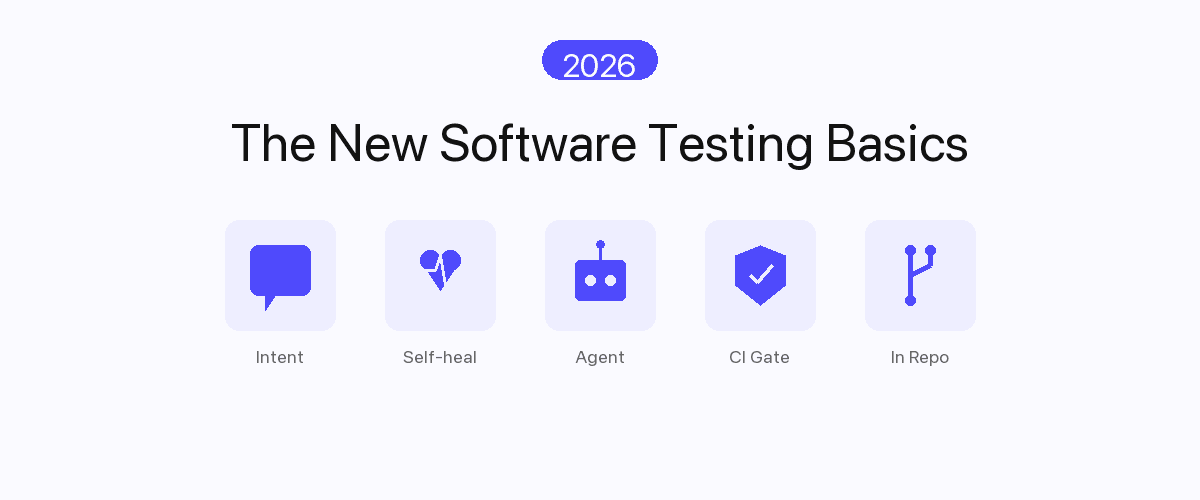
Software testing basics in 2026 look almost nothing like the basics taught five years ago. The unit of authorship is user intent, not DOM selectors.
Self-healing is the default, not a paid add-on. Verification happens inside the AI coding agent's session, not in a separate QA cycle days later.
And the test suite is judged on machine-speed feedback, not on lines of Playwright. If your "basics" still mean "record a click path, watch it break on the next refactor, repeat": this is the catch-up.
Why the basics shifted
The reason the basics shifted isn't that QA invented new theory. It's that the rest of the stack changed. AI coding agents like Claude Code, Cursor, and OpenAI Codex ship features in the time it used to take to write the test plan.
Pull requests multiplied. UI changes became continuous. The 2020-era testing playbook (write Playwright, run on merge, fix selectors when they drift) collapsed under the new throughput.
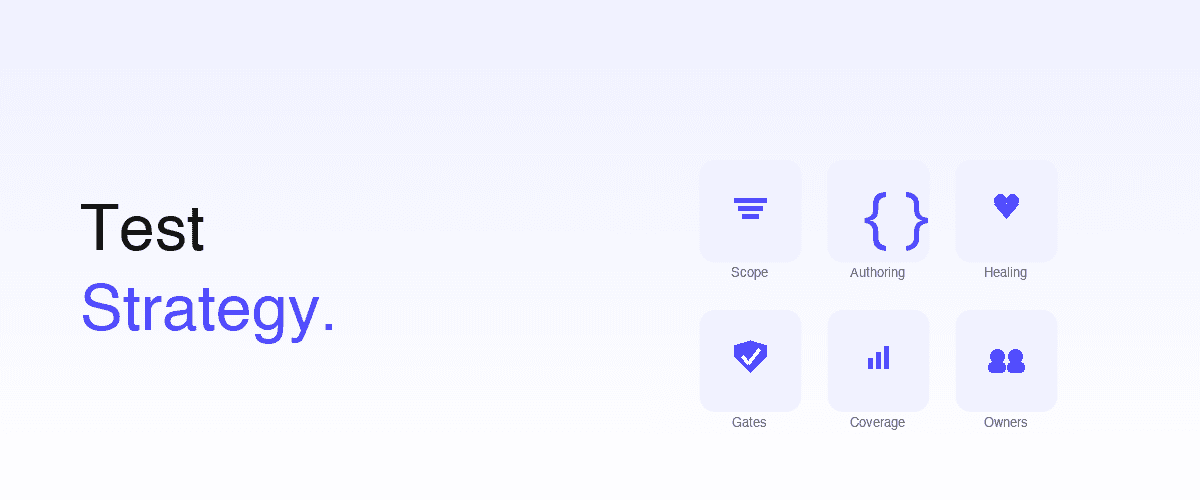
This post is the 2026 replacement playbook: five basics that actually hold up, what each one means concretely, and which Shiplight feature implements it so you can adopt them in the same week you read about them. If you want the broader frame first (the whole category, not just the basics), start with what is AI testing.
TL;DR: the five new basics
- Intent-based authoring. Tests describe what the user does, not which selectors to click. → YAML Test Format
- Self-healing as the default state. Tests survive UI refactors without human edits. → AI Fixer in Shiplight
- Agent-native verification. AI coding agents call testing as a tool, in the same session they write code. → Shiplight MCP Server
- PR-time CI gates, not nightly batches. Real browser verification runs on every pull request and blocks merges that break user flows. → Shiplight Cloud runners + CI integration
- Test ownership in the repo. Tests live as code-reviewable artifacts in git, not in a vendor's UI. → YAML Test Format committed alongside source
Read the rest for the why behind each, and how to upgrade your existing stack without rewriting it.
The 2020 basics vs the 2026 basics
| Dimension | 2020 Software Testing Basics | 2026 Software Testing Basics |
|---|---|---|
| Authored as | Playwright/Cypress/Selenium code, bound to CSS/XPath | Natural-language intent ("click checkout"), bound to user actions |
| Survives UI change? | No: every refactor breaks selector bindings | Yes: intent re-resolves against the current DOM (intent-cache-heal pattern) |
| Authored by | A human engineer at typing speed | The AI coding agent in the same session, at agent speed |
| Verification runs | Nightly or on merge | On every pull request, in real browsers, before review |
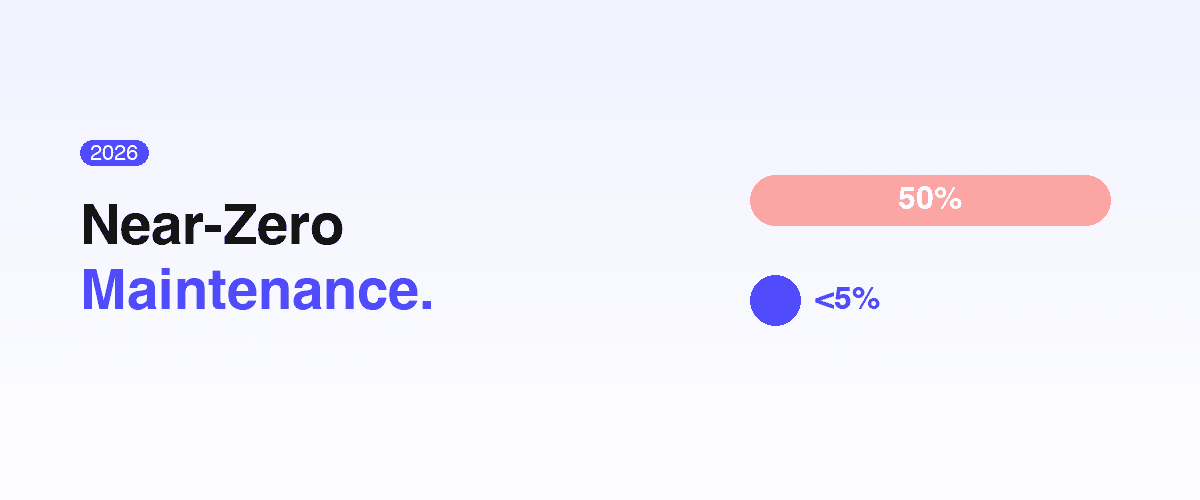
| Maintenance cost | 40–60% of QA time on selector upkeep | Near-zero: auto-heal handles UI drift; humans approve patches |
| Owned by | A QA team, separate cycle | The product engineer who shipped the change |
| Failure signal | Red CI run with stack trace, often flaky | Replay video + DOM snapshot + actionable diff per failure |
| Coverage shape | Whatever someone had time to write | Whatever the agent generated during the build, plus regression carry-forward |
If your shop is still in the left column on most rows, you're not "behind on the latest stuff." You're operating below the 2026 floor. The good news: these aren't incompatible; you can adopt them incrementally without a rewrite. Each basic below stands alone.
Basic 1: Intent-based authoring (selectors are a cache, not a contract)
The single biggest shift in 2026 software testing basics is how a test is written. The old default (bind a step to a CSS selector or XPath) turned every test into a tripwire for refactors. Rename a class, swap a component library, A/B test a button label, and silent test failures stack up overnight.
The 2026 default is the opposite: a test step is a natural-language statement of user intent, and the runner resolves it to a DOM element at execution time.
- intent: Add the first product to the cart
- intent: Proceed to checkout
- VERIFY: order confirmation page shows order number
Compare to:
await page.locator('button.btn-primary[data-testid="add-to-cart"]').click();
await page.locator('a[href="/checkout"]').click();
await expect(page.locator('h1#order-confirmation')).toContainText(/Order #\d+/);
The Playwright version is precise, and brittle. The YAML version is portable across refactors and readable by a non-engineer reviewing a PR. See intent-first E2E testing guide for the deeper rationale.
Shiplight feature. Shiplight YAML Test Format is the intent-based test language. Tests are plain YAML files committed alongside source: code-reviewable, diff-able, grep-able, version-controlled. No proprietary UI to learn, no vendor lock-in on the test definitions themselves.
Basic 2: Self-healing as the default state
In 2020, "self-healing tests" was a premium feature. In 2026, it's the floor. The reason is throughput: if AI coding agents ship 10x more UI changes per week, a test suite that requires human selector maintenance is a permanent bottleneck.
What "self-healing as default" actually means in practice:
- A test step says "click the Submit button." The Submit button moves from a
<button>to an<a>. The next run still finds it, by text + role + position, and the test passes. - A new modal appears between two test steps (e.g., a cookie banner). The runner waits for it to stabilize and dismisses it where reasonable, rather than timing out.
- When a step truly can't resolve, the runner emits a proposed patch for the test, not a red failure. A human approves the diff, like any other PR review.
That last property is the one most "self-healing" tools get wrong. Silent auto-edits to tests destroy auditability. Patches reviewed in PR preserve it. Read more in how to fix flaky E2E tests and self-healing vs manual maintenance.
Shiplight feature. Self-healing is built into Shiplight: every test run uses the AI Fixer to resolve intent against the current DOM. When the Fixer can't resolve a step confidently, it proposes the patch as a reviewable diff. You keep the audit trail; you lose the manual selector maintenance.
Basic 3: Agent-native verification (testing inside the coding session)
This is the basic that didn't exist in 2020 at all, because the trigger condition (autonomous AI coding agents writing production code) didn't exist either. In 2026, agent-native autonomous QA is what closes the loop. It's the shape of AI testing that actually fits how AI coding teams work, rather than retrofitting selector-bound suites onto a new throughput.
Here's the failure mode it solves: a coding agent generates a feature, the test suite passes (because the agent never touched the tests), the PR lands, and three days later a customer reports the new flow is broken. The agent never verified its own output in a real browser. It only ran whatever tests already existed.
The 2026 basic: the coding agent calls testing as a tool, in the same session, before the PR is opened.
It generates an intent-based test for the feature it just built, runs it in a real browser, sees the actual rendered behavior, and only then signals the PR is ready. See the testing layer for AI coding agents for the pattern.
This requires two things from the testing tool:
- A programmatic API the agent can call, not just a UI a human can click. → Shiplight MCP Server.
- An MCP-compatible interface, so any MCP-aware agent (Claude Code, Cursor with MCP, custom orchestrators) can invoke it without bespoke glue. → Shiplight MCP Server and MCP for testing.
The shorthand: if your testing tool doesn't expose itself to the agent, the agent ships code your tool never saw.
Basic 4: PR-time CI gates, not nightly batches
The 2020 norm was a nightly full-suite run plus a smaller smoke check on merge. The 2026 norm is every pull request runs the relevant tests in a real browser before review, and merges are blocked on failure.
Why the shift: with AI-generated code making up the majority of PRs in many teams, the latency of "find out tomorrow that the build broke" is wildly out of step with the latency of "the agent wrote and shipped this in 4 minutes." Quality has to gate at the same speed quality is being produced.
What a 2026 CI gate actually checks:
- Did the intent-based tests for the touched flows pass in a real browser?
- For new functionality, did the agent generate a test, and does that test now run successfully?
- Are any previously quarantined or flaky tests now stable enough to un-quarantine?
- Did the test changes themselves pass code review (since they're code-reviewable YAML)?
This is what a practical quality gate for AI pull requests describes in detail. The output is binary: the PR is mergeable or it isn't, on signals the reviewer can trust.
Shiplight feature. Shiplight Cloud runners hook into GitHub Actions, GitLab CI, and CircleCI. Test runs produce replay video, DOM snapshots, and a structured failure diff per step, not a wall of stack trace. See E2E testing in GitHub Actions: setup guide for the wiring.
Basic 5: Test ownership in the repo (not in a vendor's cloud UI)
The quiet basic (the one people only realize they were missing when they try to migrate off a vendor) is where the test definitions actually live. In the 2020 SaaS-testing era, tests lived in the vendor's UI: drag-and-drop builders, proprietary script formats, screenshots in their cloud. Leaving the vendor meant rewriting from scratch.
In 2026, the basic is: tests live in your repo, as plain text, reviewed in PR, owned by the same engineers who own the feature. Properties this enables:
- The test diff appears in the same PR as the feature change, reviewed by the same person.
- A new engineer reads the test the same way they read the source.
- The test history is
git log, with the same author attribution and revert path as any other file. - Migrating between testing platforms is a parser change, not a rewrite.
This is why YAML-based testing is the format we picked. It's text. It diffs cleanly. It travels.
How to upgrade in 30 days (no rewrite)
Adopting all five basics in one quarter is a rewrite. You don't need a rewrite. Here's the staged path used by teams in the 30-day agentic E2E playbook:
Week 1: make new tests intent-based. Stop writing new Playwright. For every new feature, the engineer (or the coding agent) writes the test in YAML. Existing Playwright keeps running unchanged.
Week 2: enable self-healing on the YAML suite. Run intent tests through Shiplight with self-healing on. Approve patches in PR. Measure the maintenance-time delta vs the legacy Playwright suite: typical teams see 30–50% reduction inside two weeks.
Week 3: wire CI gates. Add Shiplight to your pull-request pipeline. Block merge on failure for the touched flows. Keep the nightly Playwright run as a safety net during transition.
Week 4: give the coding agent access. Install the Shiplight MCP server and let your AI coding agent generate and run tests for the features it builds. The agent now closes its own loop. See agent-first testing.
Month 2+: port the legacy suite opportunistically. Whenever a Playwright test breaks and needs maintenance anyway, rewrite it in YAML instead of patching the selector. The legacy suite shrinks naturally; no big migration project needed.
What about the things people still ask about?
A few perennials that didn't make the "basics" cut, with the 2026 takes:
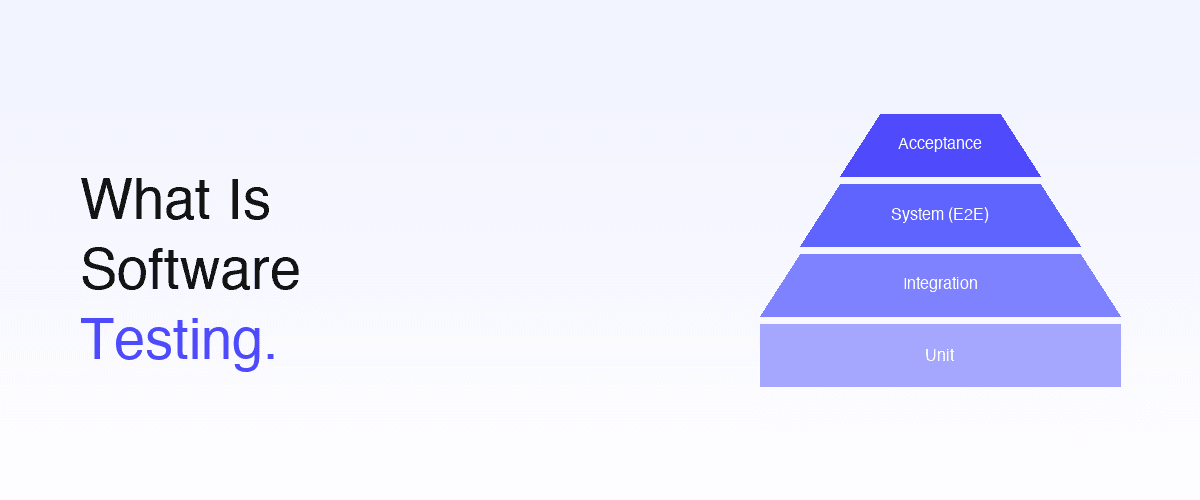
- Should I still write unit tests? Yes. Unit tests test units. The 2026 basics are about the end-to-end layer, which is where AI-generated UI changes most often break and where Playwright maintenance costs were highest. Unit, integration, and E2E remain three distinct layers.
- Are manual exploratory tests obsolete? No. They're rarer. The bug class manual exploratory testing catches (surprising user paths a script wouldn't think to try) is still real. Agentic test generators are starting to close this gap (see agentic QA benchmark) but a human eye on the build is still cheap and worth keeping for high-stakes releases.
- Do I need a separate QA team? Depends on scale. The 2026 default is that the engineer who shipped the change owns the test for the change. A small QA function focused on test strategy, quarantine review, and exploratory still makes sense at enterprise scale. See from human QA bottleneck to agent-first teams.
- What about API and contract tests? Same layer model: API tests live alongside unit tests, run on every PR, fast. The new basics here are mostly about the UI layer, which is where AI coding agents produce the most velocity and the most surprise.
Frequently Asked Questions
What are the software testing basics in 2026?
The 2026 basics are: (1) intent-based authoring instead of selector-bound code, (2) self-healing as the default, not a premium add-on, (3) agent-native verification so AI coding agents test inside their build session, (4) PR-time CI gates that block merges on real-browser failures, and (5) test definitions stored as plain-text artifacts in the repo, not in a vendor UI.
How is this different from 2020 software testing?
In 2020, testing meant Playwright/Cypress/Selenium code bound to CSS selectors, run nightly, with a QA team spending 40-60% of its time on selector upkeep. In 2026, tests are natural-language YAML committed in git, self-heal across refactors, run on every pull request, and are authored by the engineer or AI coding agent that shipped the feature.
Do I have to rewrite my existing test suite?
No. The recommended path is incremental: start writing new tests in the new format, enable self-healing on the new suite first, and let the legacy Playwright suite shrink opportunistically (rewrite a test when it breaks, instead of patching the selector). Most teams reach majority-intent-based coverage in 8–12 weeks without a dedicated migration project.
What does "agent-native verification" actually mean?
It means the AI coding agent (Claude Code, Cursor, Codex) calls testing as a tool inside the same session it wrote the code. It generates a test for what it just built, runs it in a real browser, and only signals the PR is ready if the test passes. Without this, the agent ships code your suite never verified.
Which Shiplight features map to each new basic?
Intent-based authoring → YAML Test Format. Self-healing → Shiplight with built-in AI Fixer. Agent-native verification → Shiplight MCP Server. PR-time CI gates → Shiplight Cloud runners. Test ownership in the repo → YAML files committed alongside source.
How do the 2026 basics relate to AI testing?
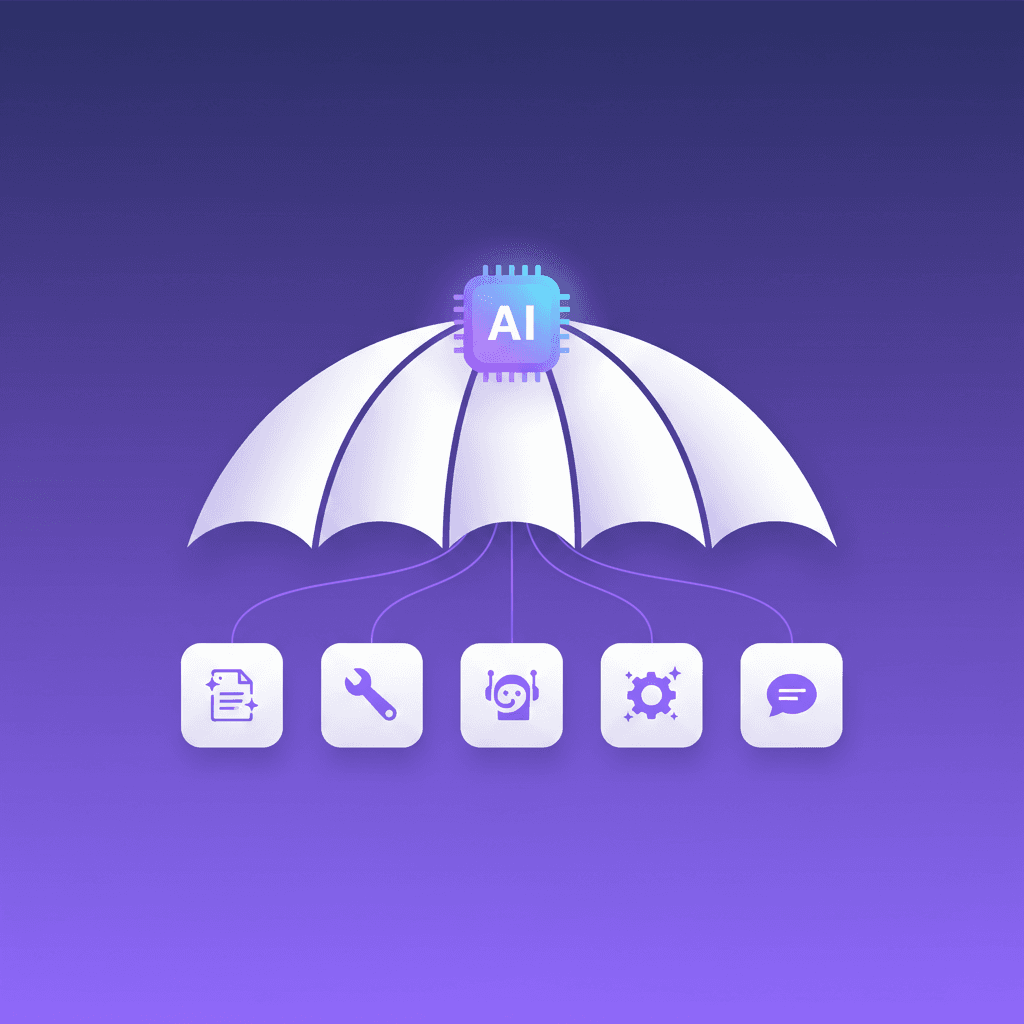
AI testing is the umbrella category: any approach that uses AI for authoring, execution, healing, or analysis. The 2026 basics are the practical floor within that category, the specific patterns (intent-based authoring, self-healing, agent-native verification, PR-time gates, in-repo ownership) that are no longer optional for a credible test stack. For the full taxonomy, start with what is AI testing.
How does self-healing avoid silently rewriting my tests?
Good implementations do not rewrite silently. They emit the repair as a reviewable diff in your pull request, approved like any other change, so the audit trail stays in git log. Pick tools that surface every change to a reviewer rather than editing tests in place.