Agent-Native Testing

Agent-native describes architecture rather than behaviour: software built so an agent can do a whole job, because its actions are callable, its artefacts are files, and its results are readable. These pages cover what that means, what it requires, and how to check a claim.

28 articles, newest first.

Illustrated Shiplight blog cover: a glossy software block being redesigned so its actions expose outward as callable connector ports and its outputs land as readable file cards, with a small human approval gate at the far edge.
EngineeringGuides

Agent-Native Architecture: Designing Software Agents Can Actually Operate

Illustrated Shiplight blog cover: a red failed pipeline stage feeding a screenshot and a trace card into a glossy agent core, which emits a small diagnosis card and a pull request, with a human approval gate before the green merge.
EngineeringAI Testing

Agent-Native CI: What Changes When the Agent Triages Its Own Failures
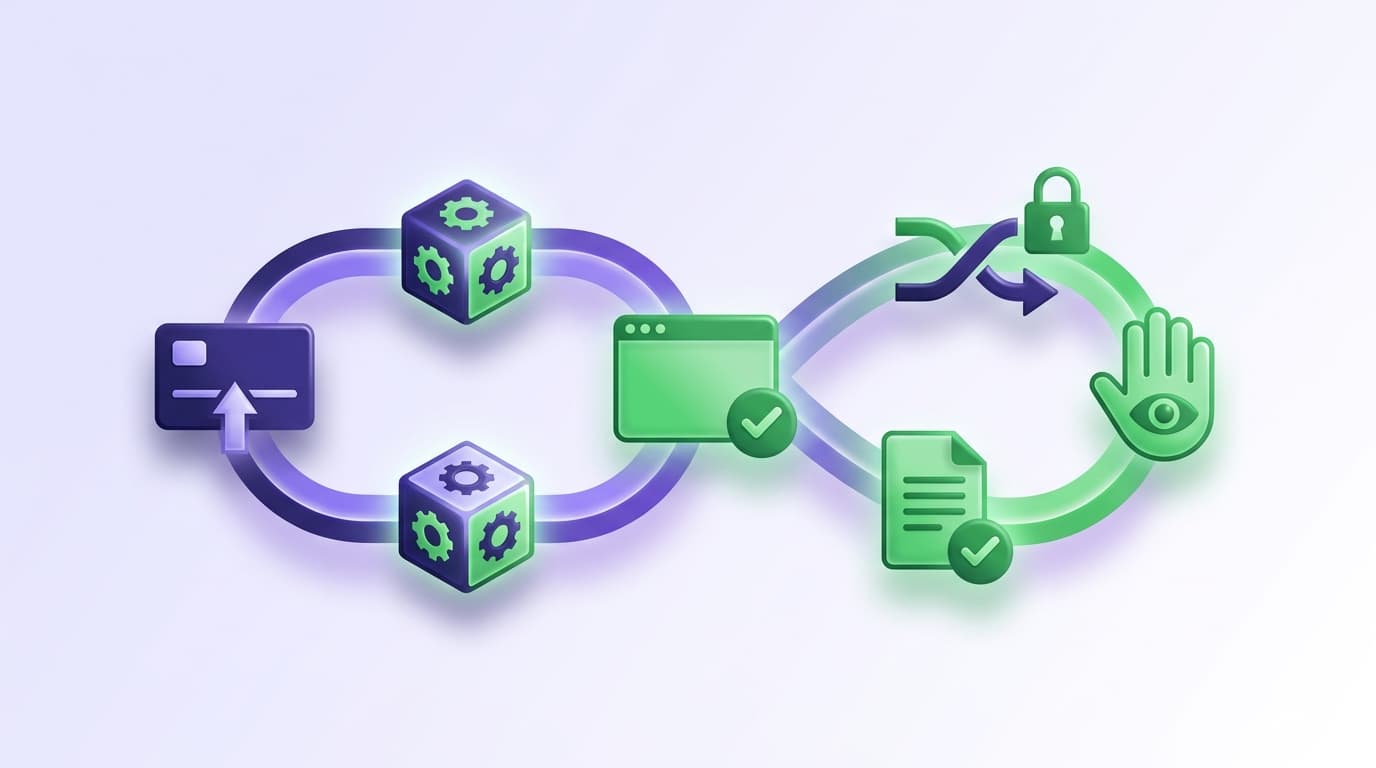
Illustrated Shiplight blog cover: a continuous glossy loop from an intent card to an agent core to a browser check to a test file to a pull request, with one human review gate on the final segment.
EngineeringGuides

The Agent-Native Developer Workflow: What a Day Looks Like When Agents Do the Work
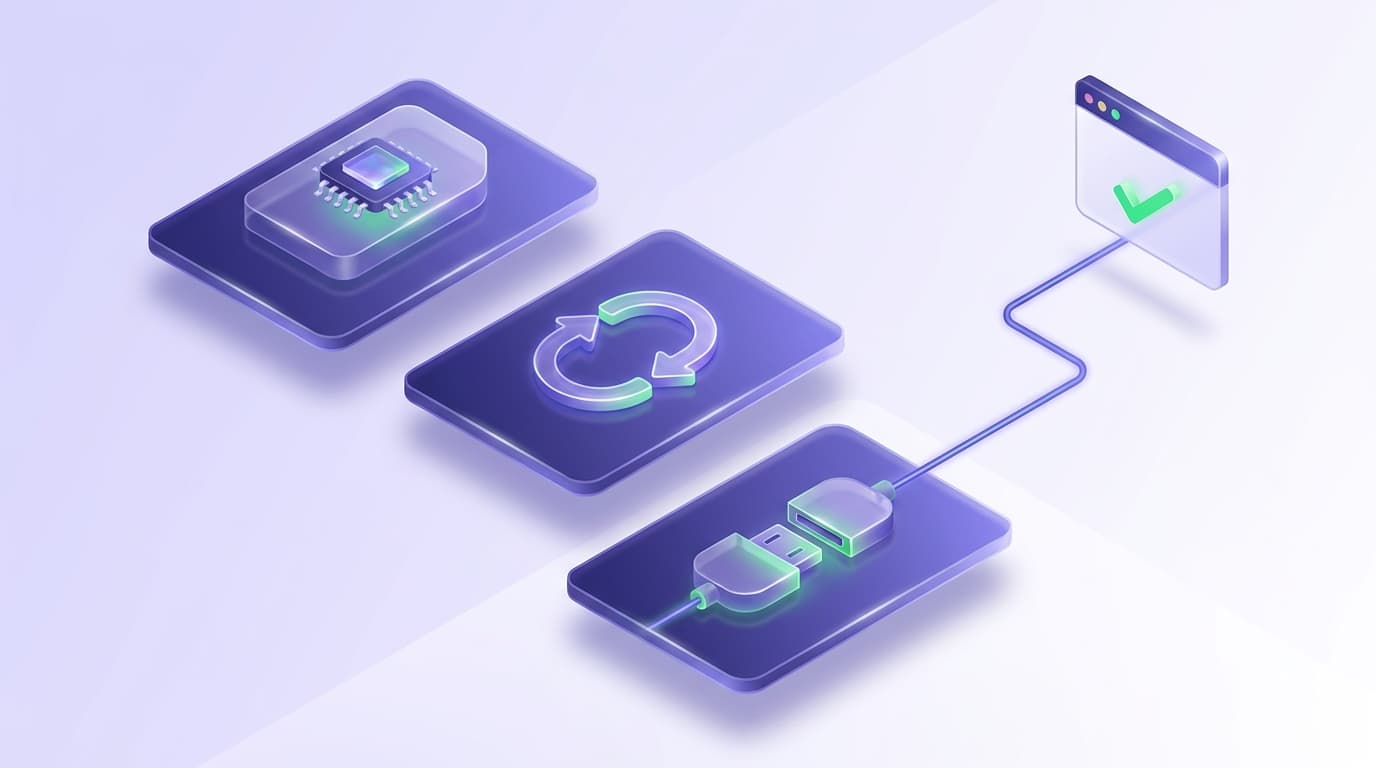
Illustrated Shiplight blog cover: three glossy labeled cards on separate planes, one showing a model chip inside a product shell, one showing a closed looping arrow, one showing an open connector socket with a plug entering it, the third linked by a clean line to a small browser window bearing a bright green checkmark.
AI TestingEngineering

Agent-Native vs Agentic vs AI-Native: What Each Term Actually Means
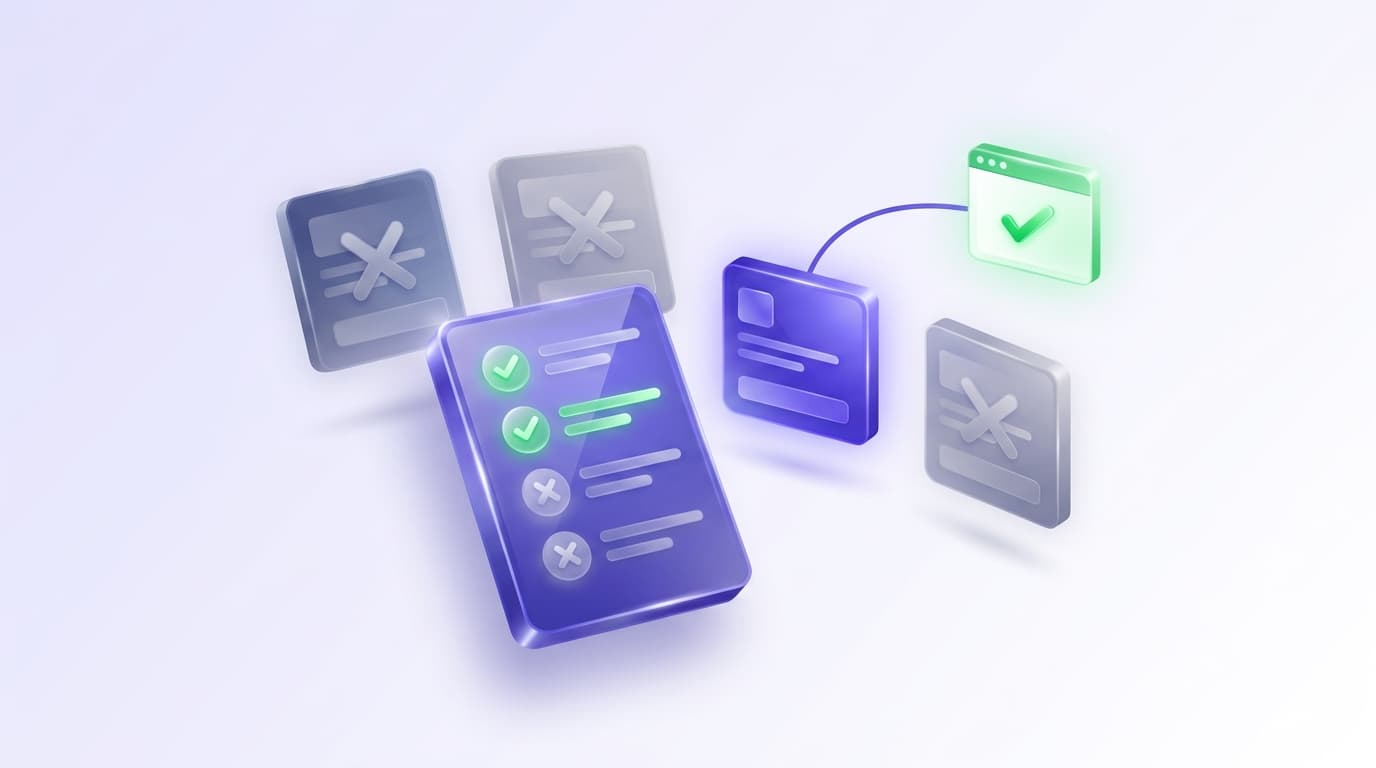
Illustrated Shiplight blog cover: a glossy checklist card floating in front of five vendor cards, three of them faded and marked with soft grey crosses, one connected by a clean line to a small browser window bearing a bright green checkmark.
AI TestingGuides

How to Evaluate a Tool That Claims to Be Agent-Native

Illustrated Shiplight blog cover: a glossy grid of small green passing test cards with one lifted out and turned over to reveal it is hollow, a human figure holding it up to the light beside a real browser window.
AI TestingEngineering

Where the Human Belongs When Agents Write the Tests

Illustrated Shiplight blog cover: a glossy protocol connector port labeled by shape on one side and an open instruction card on the other, the two clicking together into one complete agent capability.
EngineeringGuides

MCP Servers vs Agent Skills: What Each Is For, and Why Tools Need Both

Illustrated Shiplight blog cover: one bright glossy definition card labeled at the center with five faded competing definition cards fanned around it at different angles, the sharpest one connected by a clean line to a small browser window bearing a bright green checkmark.
AI TestingEngineering

What Is Agent-Native? The Definition, the Disagreement, and What It Means for Quality

Illustrated Shiplight blog cover: a glossy agent core reaching into a real browser window and drawing out a readable test file card, with a review checkmark gate standing between the file and a bright green shipped badge.
AI TestingTesting Strategy

What Is Agent-Native Testing? The Category, the Requirements, and How to Tell

Illustrated Shiplight blog cover: a glossy git repository block holding readable test files that branch alongside code, beside a sealed vendor database cylinder whose contents cannot be opened or diffed.
EngineeringBest Practices

Why Your Tests Belong in Your Repo, Not a Vendor's Database
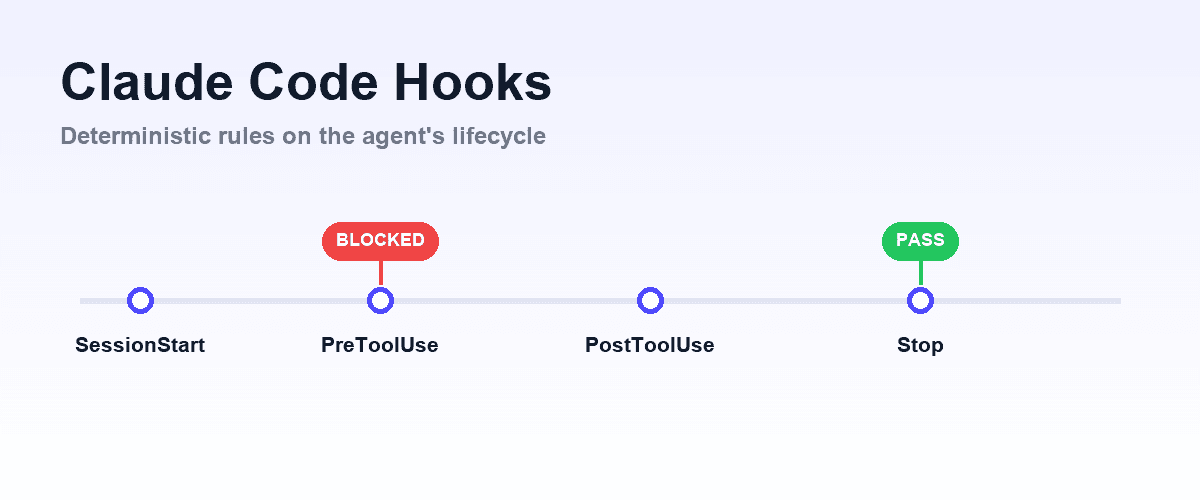
Shiplight blog cover: an event timeline of a Claude Code session with hook checkpoints firing at PreToolUse, PostToolUse and Stop, one gate shown blocking in red and one passing in green
GuidesEngineering

Claude Code Hooks: Deterministic Rules for an Agentic Workflow
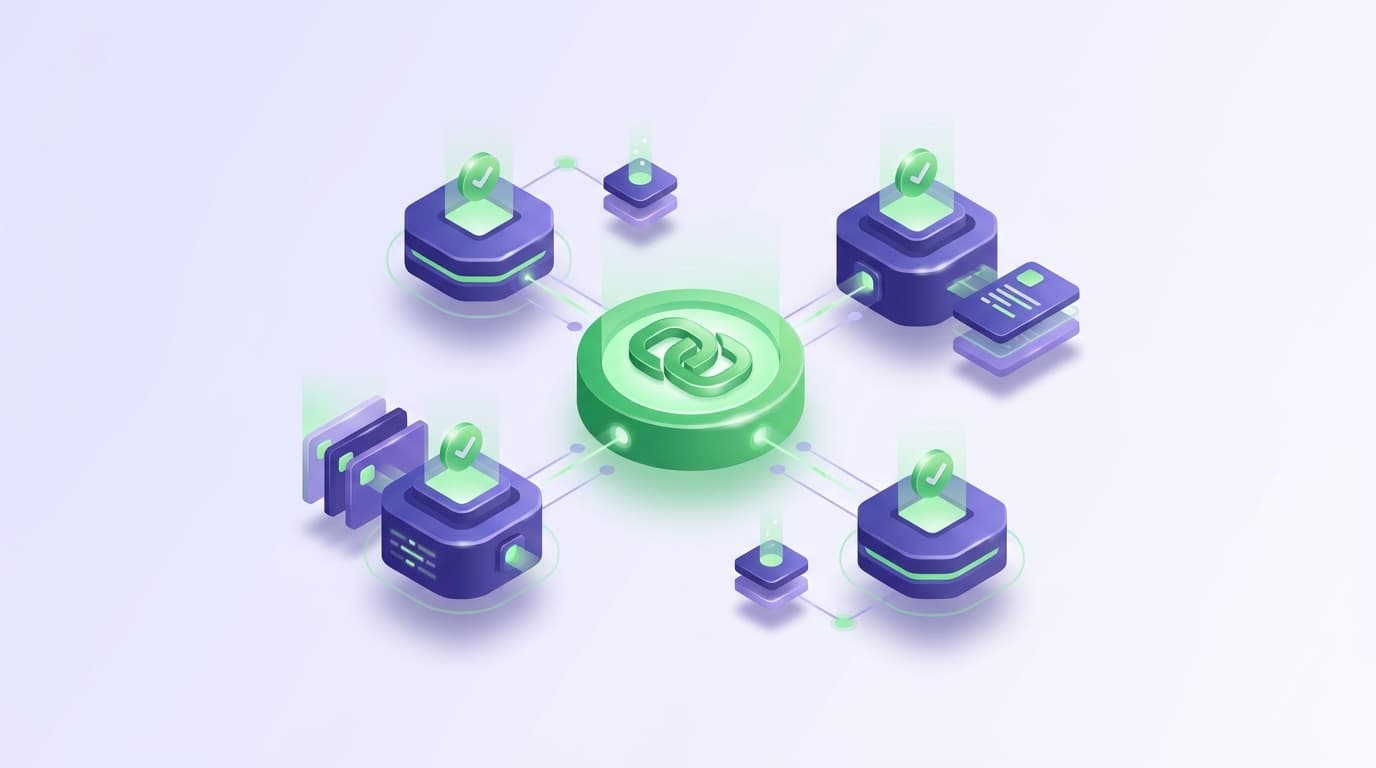
Illustrated Shiplight blog cover: several agents working on separate partitions of one codebase, converging on a single verified result.
GuidesEngineering

Claude Code Agent Teams: Coordinating Several Agents at Once
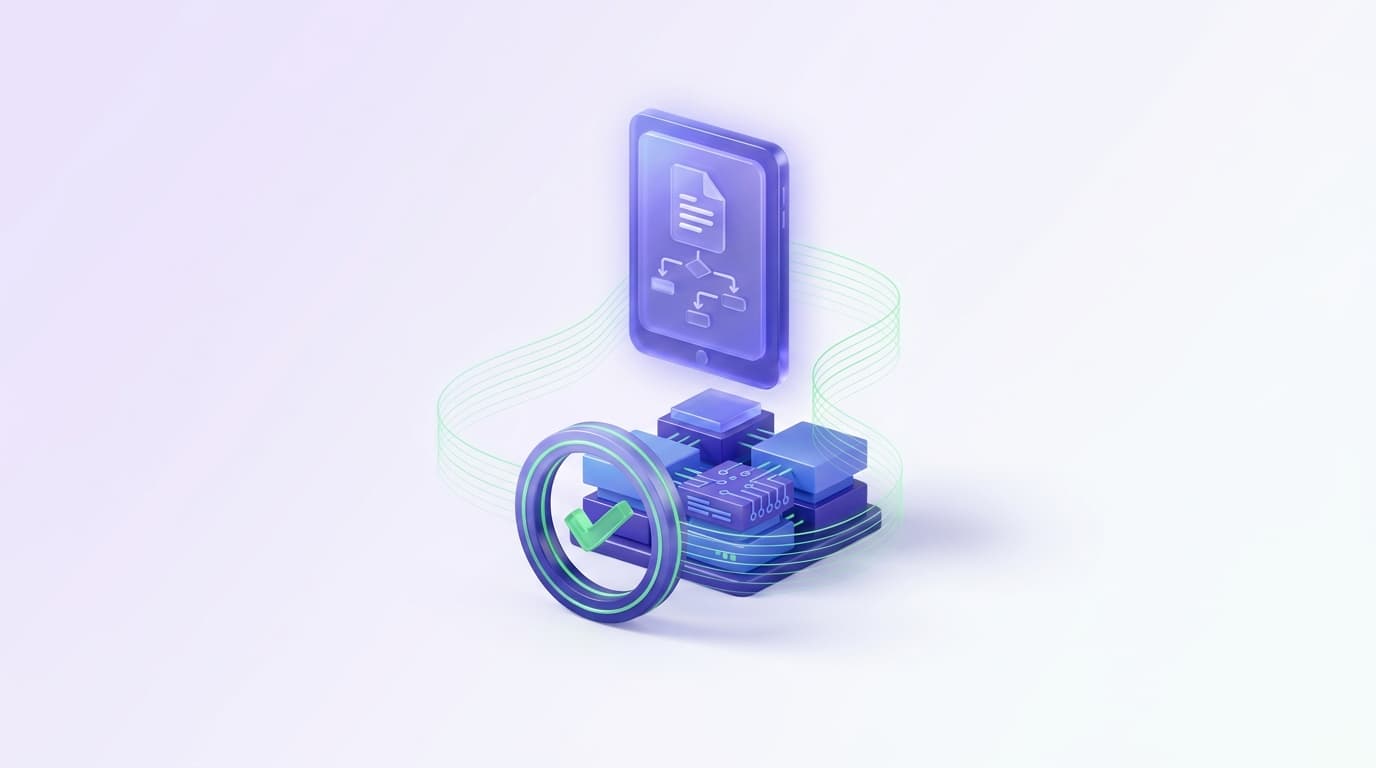
Illustrated Shiplight blog cover: a glossy proposed plan document floating above a codebase with an approval gate before any edit reaches the files.
GuidesEngineering

Claude Code Plan Mode: What It Does and When to Use It
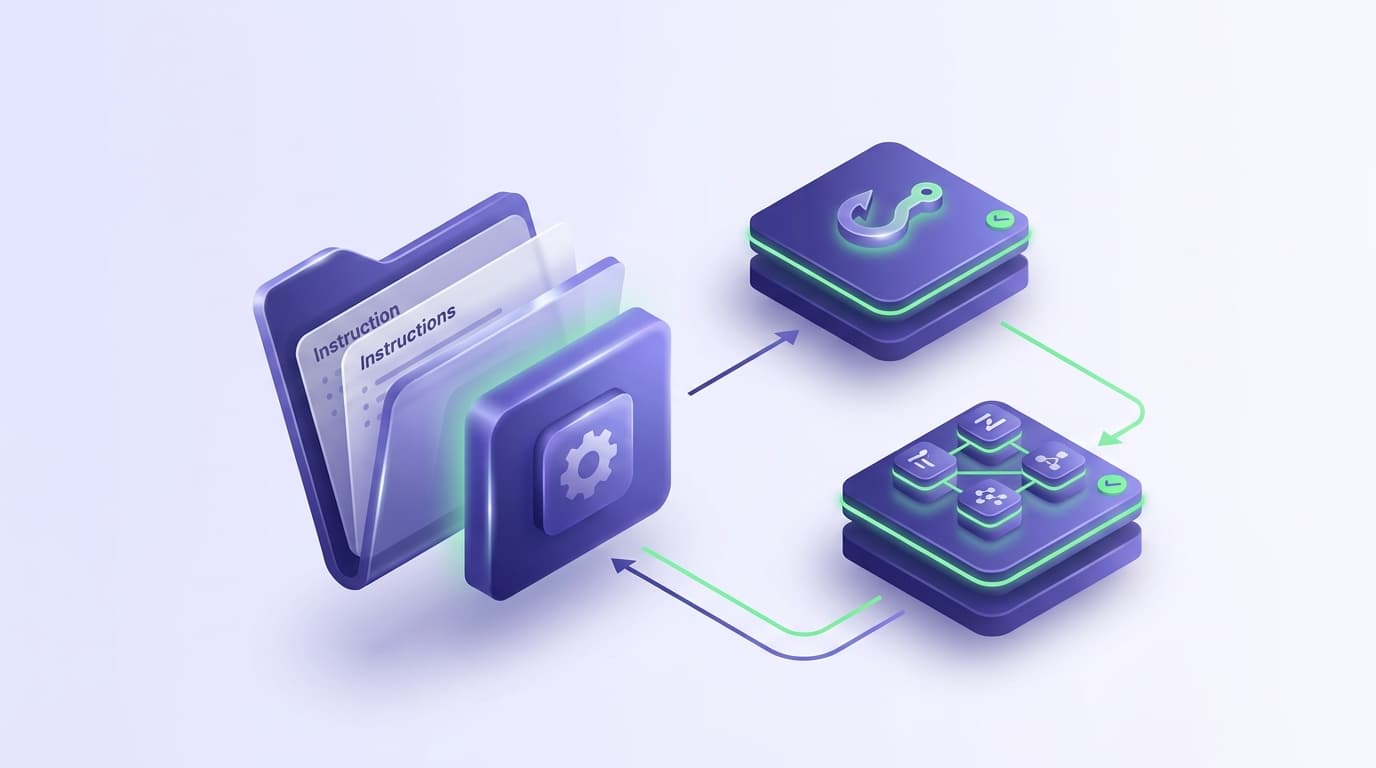
Illustrated Shiplight blog cover: a glossy folder of instruction cards being loaded on demand into an agent, beside distinct hook and subagent layers.
GuidesEngineering

Claude Code Skills: What They Are and When to Use One
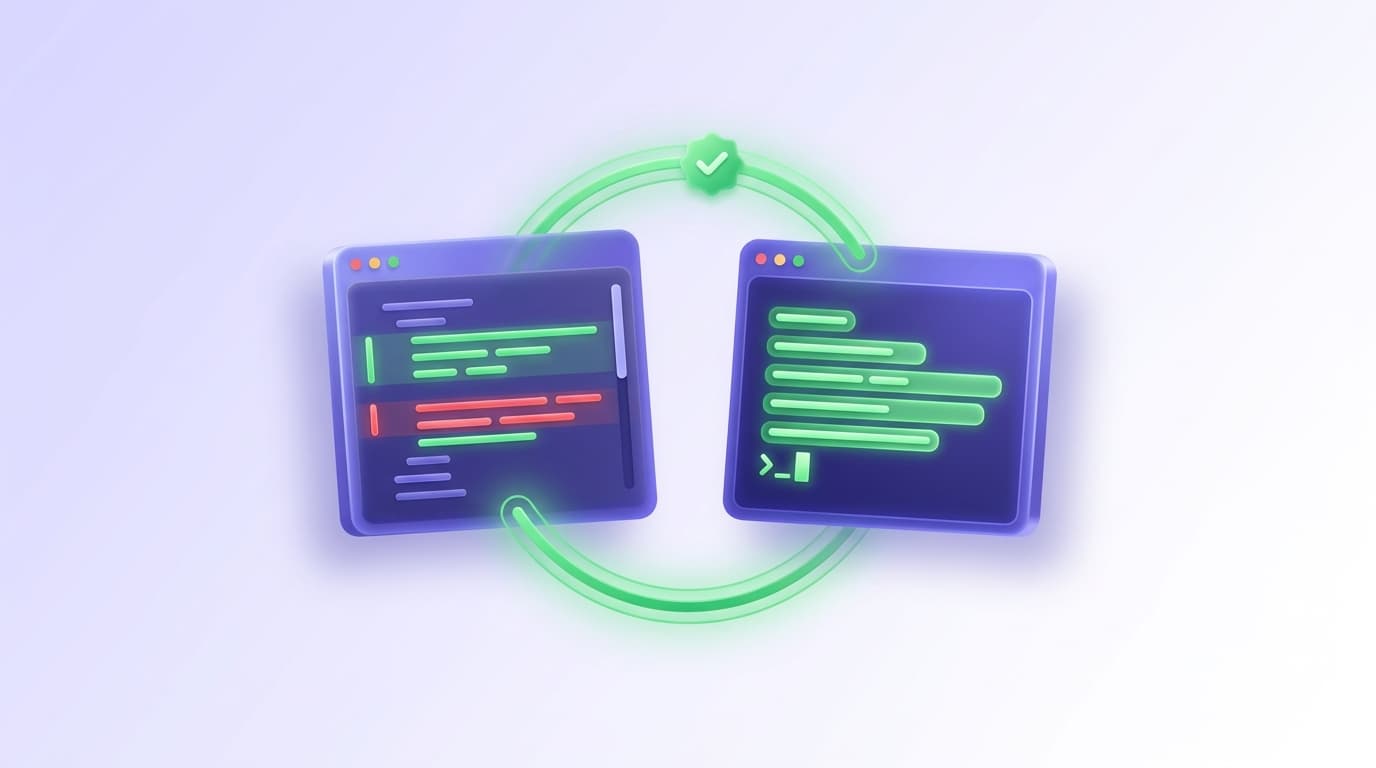
Illustrated Shiplight blog cover: a glossy code editor window with visible inline diffs beside an autonomous terminal agent window, linked by a glowing verification loop.
GuidesEngineering

Claude Code vs Cursor: Which AI Coding Tool in 2026?
Illustrated Shiplight blog cover: a glossy terminal window dispatching a coding task to a cloud sandbox and receiving a finished diff back.
GuidesEngineering

Codex CLI: What It Is and How Teams Actually Use It

Illustrated Shiplight blog cover: a committed instruction file feeding conventions into a coding agent, with an enforcement gate beside it.
GuidesEngineering

Codex Skills: Teaching the Agent Your Conventions

Illustrated Shiplight blog cover: a token budget meter with the largest slice consumed by retries and oversized tool responses rather than the task.
GuidesEngineering

Codex Usage: Where the Tokens Actually Go
Illustrated Shiplight blog cover: two glossy terminal windows facing each other in balanced head-to-head comparison, each streaming generated code, a bright green verification checkmark floating between them.
GuidesEngineering

Codex vs Claude Code: Which Terminal Coding Agent in 2026?

Illustrated Shiplight blog cover: a glossy code editor window and a terminal agent window sharing one codebase between them.
GuidesEngineering

Cursor CLI: The Terminal Half of an Editor-First Tool
Illustrated Shiplight blog cover: an open modular terminal harness with several swappable glowing model cards slotting into it, beside a single sealed managed agent capsule.
GuidesEngineering

OpenCode vs Claude Code: Open Source Agent or Managed One?

Illustrated Shiplight blog cover: a system of automated quality gates built into a delivery pipeline rather than one inspection station at the end.
Best PracticesEngineering

Quality Engineering: What the Discipline Becomes in 2026

Illustrated Shiplight blog cover: a development timeline with the verification checkpoint moved from the far right to sit directly beside the coding step.
GuidesBest Practices

Shift Left Testing: What It Means When Agents Write the Code

Illustrated Shiplight blog cover: one main agent context delegating two isolated side contexts that return only their conclusions.
GuidesEngineering

Subagents: When Splitting the Context Actually Helps
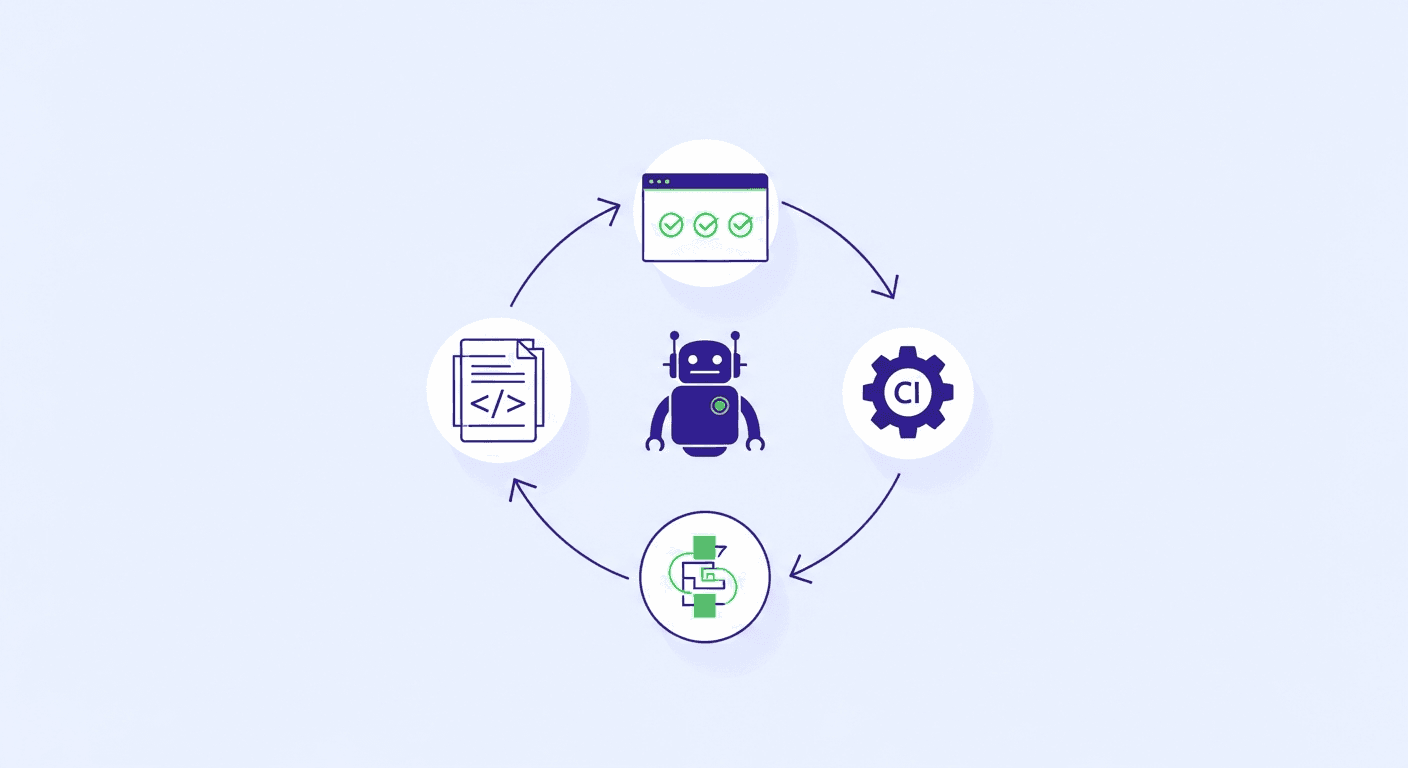
Agent-first testing loop: AI coding agent writes code, verifies in browser, saves as CI test
EngineeringGuides

Agent-First Testing: Build Quality Into Every AI Coding Session
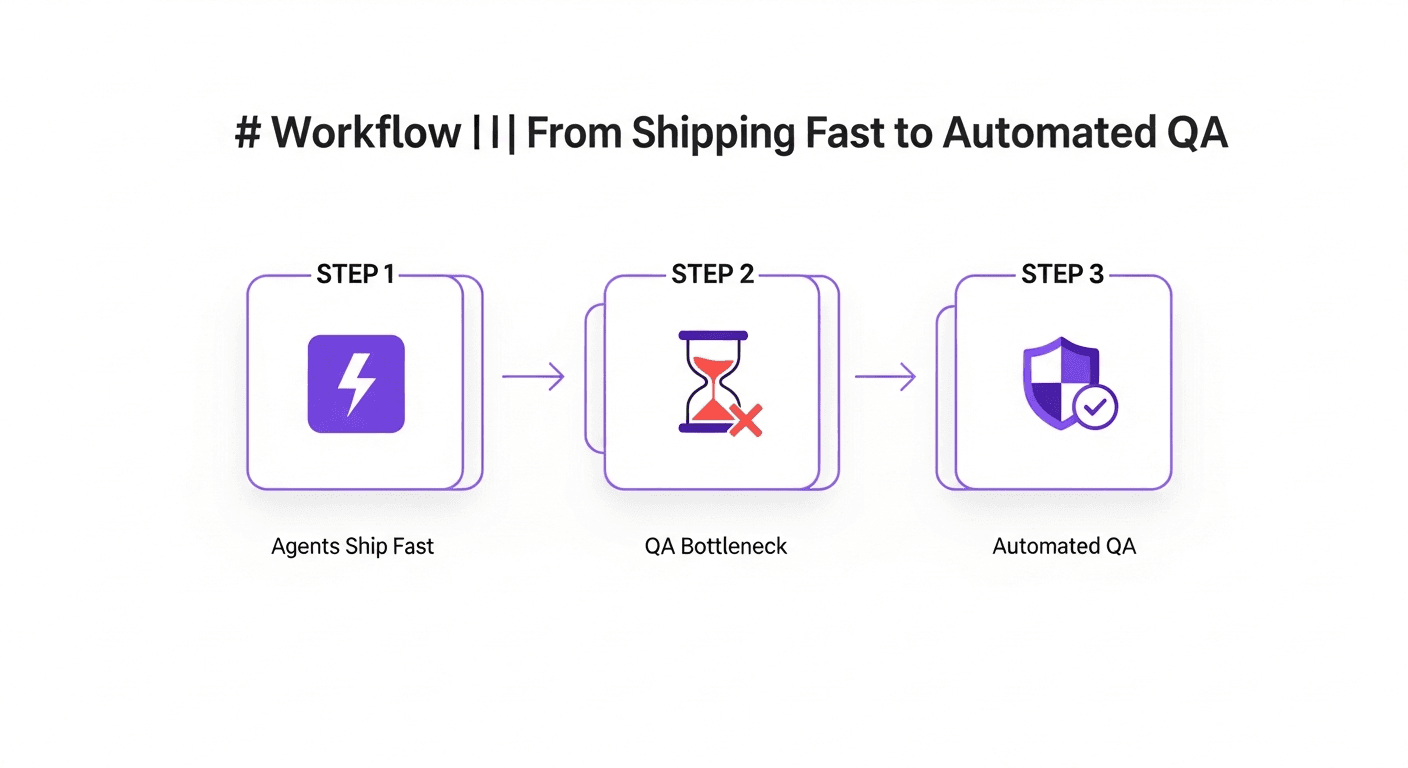
Three-step workflow: Agents Ship Fast → QA Bottleneck → Automated QA
EngineeringAI Testing

The Human QA Bottleneck in Agent-First Engineering Teams
Illustrated Shiplight blog cover: a glossy AI agent chip as the primary builder at the center of a small software-development scene, surrounded by orbiting build elements.
EngineeringAI Testing

What Is Agent-First Development? A Guide for Engineering Teams in 2026
Illustrated Shiplight blog cover: a glossy autonomous agent core with its own hands driving a real browser window unattended, leaving a trail of bright green verified checkmarks.
AI TestingEngineering

Agent-Native Autonomous QA: The New Paradigm for Software Quality in 2026

See testing that keeps up with your AI coding agents.