MCP and Agent Tooling

An MCP server gives an agent capability; a skill gives it procedure. These pages cover both halves, how they compose, and what it takes to make a tool something an agent can actually drive.

22 articles, newest first.

Illustrated Shiplight blog cover: a glossy indigo spine running left to right through three floating translucent panels, a product brief covered in fine ruled lines, a code block with layered syntax bars, and a final sealed report card glowing bright green with a checkmark, small satellite tiles orbiting each panel on thin connector filaments, a scattering of tiny indigo nodes and soft green pass-dots drifting in the negative space around the chain.
GuidesEngineering

Spec Project: Taking a Feature From PRD to Test Evidence
Illustrated Shiplight blog cover: a glossy instruction-contract card pinned inside a git repository block, its rules radiating as thin guide-lines to several small agent cores working around it.
GuidesEngineering

AGENTS.md: Using It as a Testing Contract, Not Just Style Notes
Illustrated Shiplight blog cover: a glossy protocol connector port labeled by shape on one side and an open instruction card on the other, the two clicking together into one complete agent capability.
EngineeringGuides

MCP Servers vs Agent Skills: What Each Is For, and Why Tools Need Both
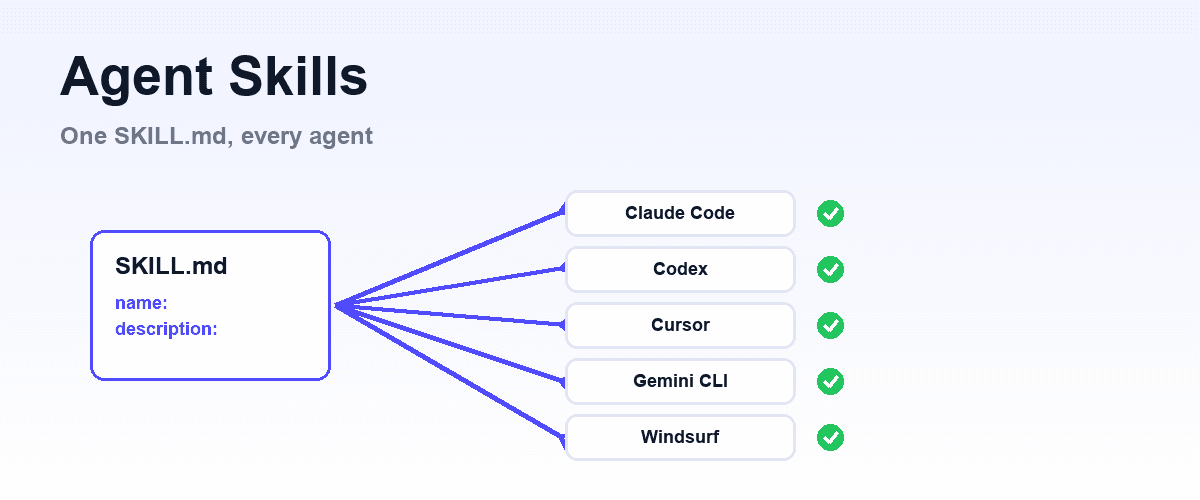
Shiplight blog cover, light gradient, indigo accents, a single SKILL.md folder fanning out arrows to multiple AI agent icons
GuidesEngineering

Agent Skills: The Open Standard for Teaching AI Agents
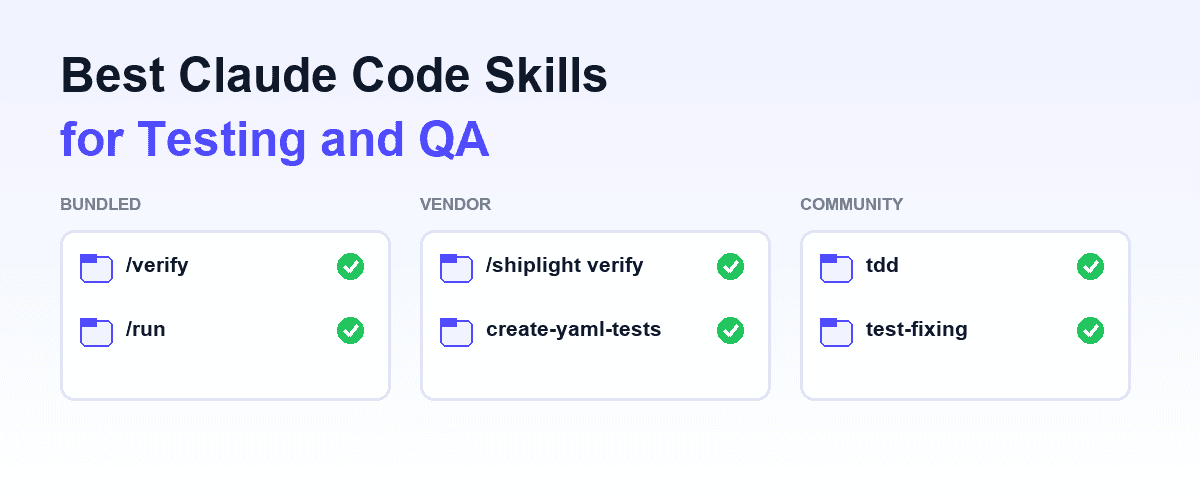
Shiplight blog cover: a shelf of skill folders sorted into bundled, vendor and community groups, with a test-status panel showing green checks beside the loaded skills
AI TestingGuides

Best Claude Code Skills for Testing and QA
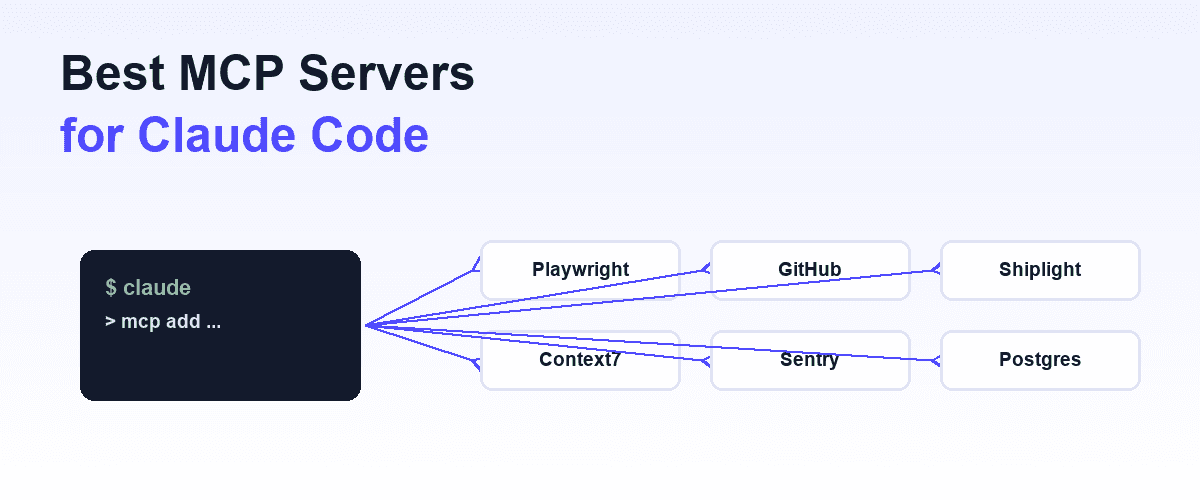
Shiplight blog cover, light gradient, indigo accents, showing a Claude Code terminal connected by lines to a small grid of labeled MCP server nodes
GuidesEngineering

Best MCP Servers for Claude Code: 10 Worth Installing
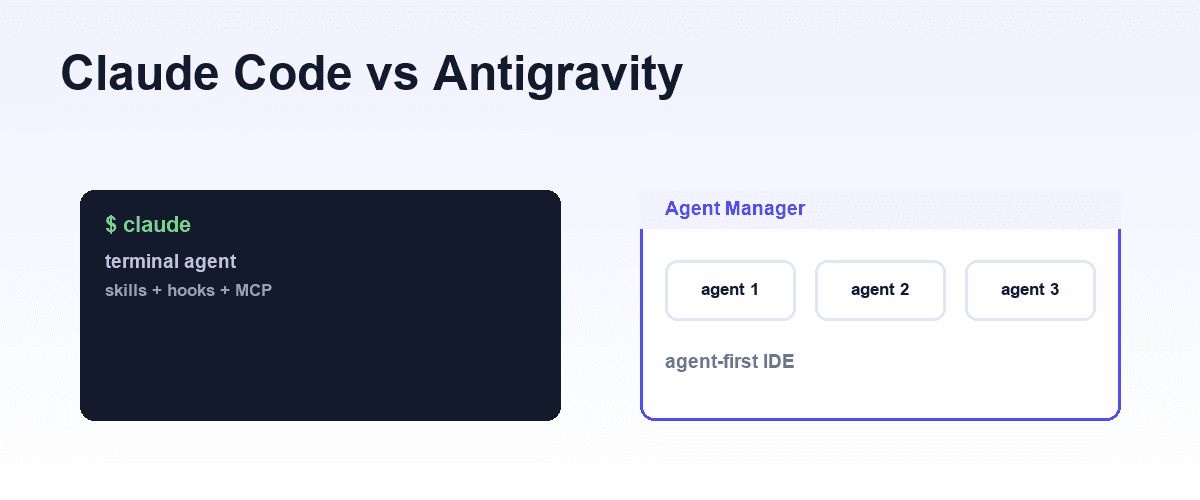
Shiplight blog cover, light gradient, indigo accents, split diagram of a terminal window and an IDE window each running a coding agent, connected to a shared browser verification layer
GuidesEngineering

Claude Code vs Antigravity: Terminal Agent or Agent-First IDE
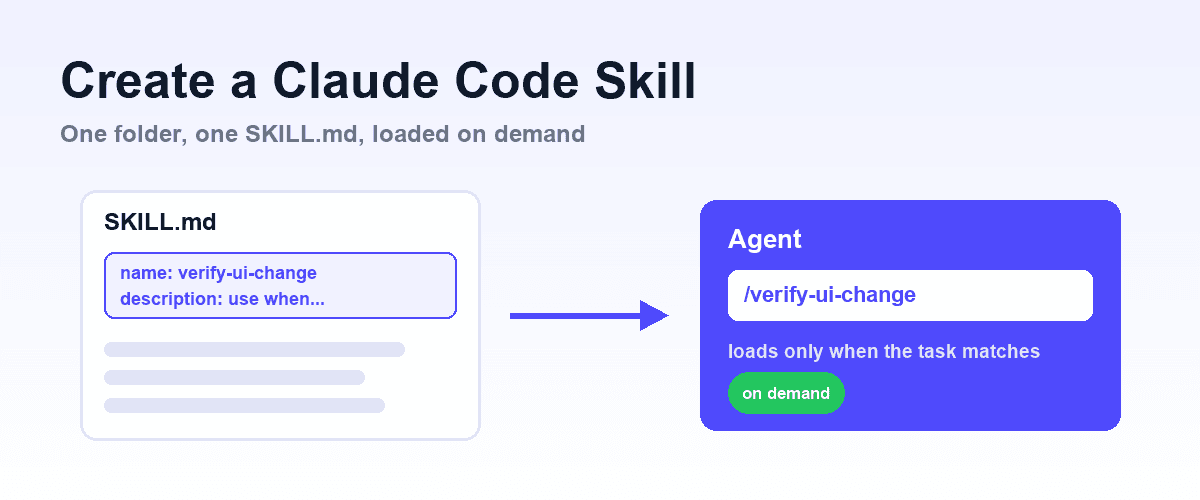
Shiplight blog cover: a SKILL.md file being assembled from frontmatter and instruction blocks into a folder, with an arrow showing the agent loading it on demand
GuidesEngineering

How to Create a Claude Code Skill, Step by Step
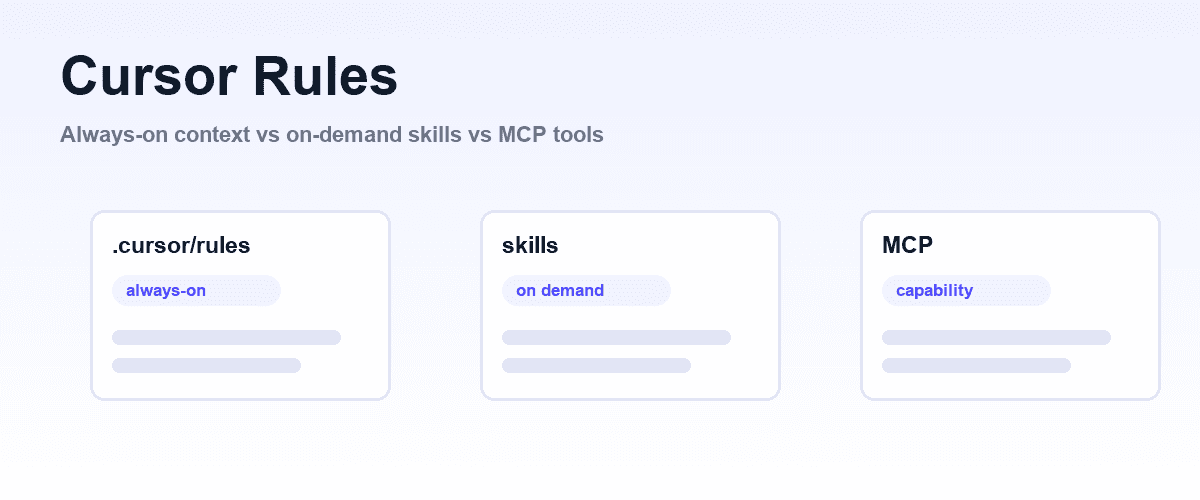
Shiplight blog cover, light gradient, indigo accents, with a diagram of a .cursor/rules folder feeding rule files into an agent's context window alongside a skills folder and MCP tools
GuidesEngineering

Cursor Rules: How They Work and When a Rule Beats a Skill
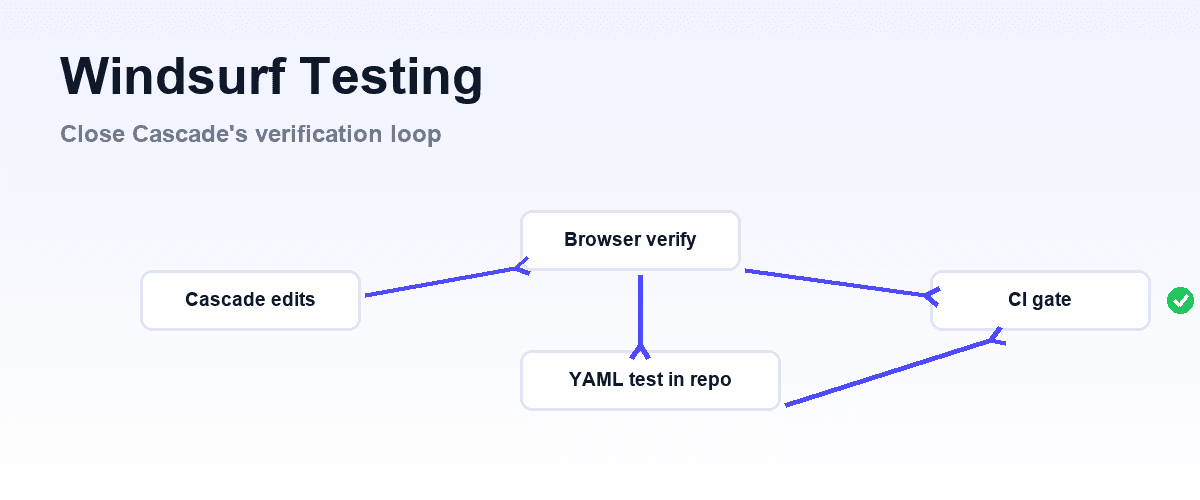
Shiplight blog cover, light gradient, indigo accents, showing a loop diagram from a Windsurf Cascade tile through a browser verification tile to a CI check tile, connected by curved arrows with a green pass badge
GuidesAI Testing

How to Test Code Written by Windsurf

Illustrated Shiplight blog cover: a small protocol server being assembled from a few well-labeled tool components.
GuidesEngineering

How to Build an MCP Server
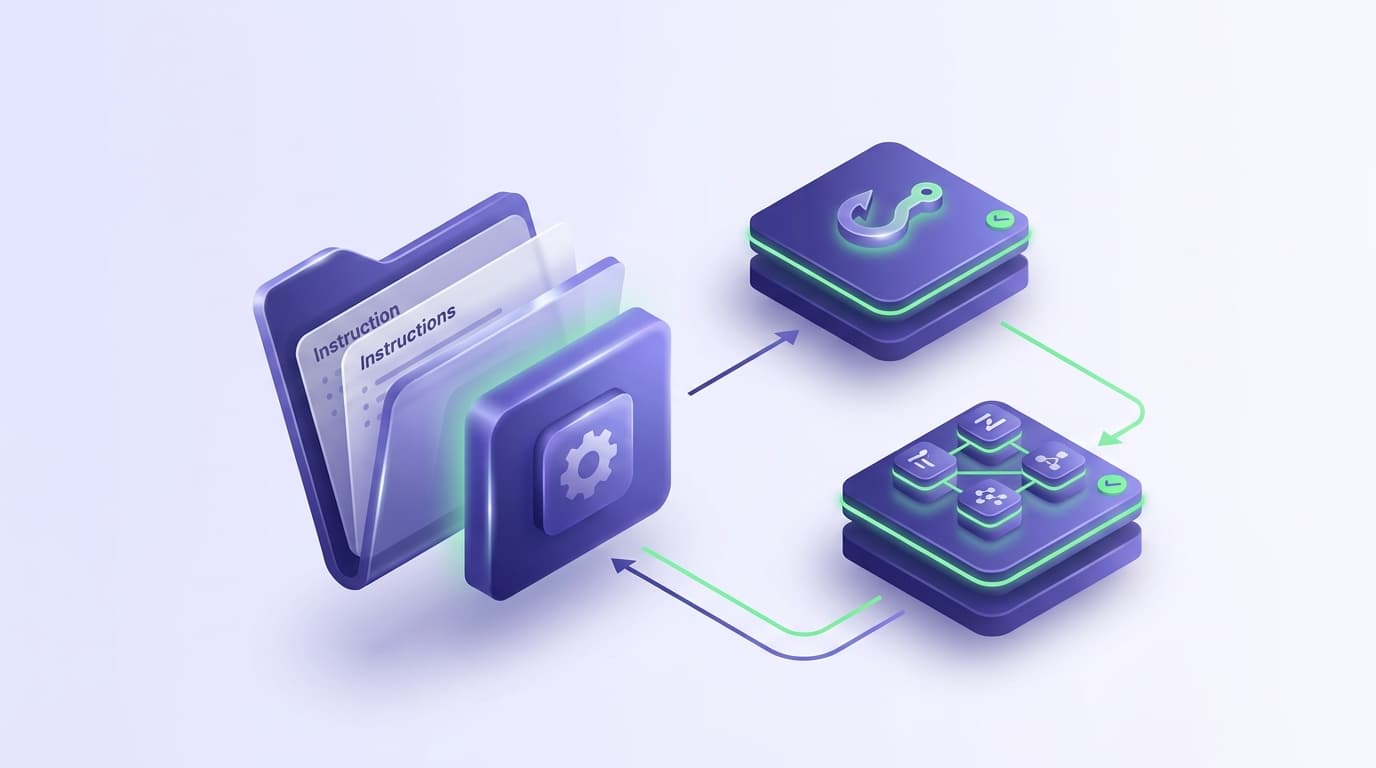
Illustrated Shiplight blog cover: a glossy folder of instruction cards being loaded on demand into an agent, beside distinct hook and subagent layers.
GuidesEngineering

Claude Code Skills: What They Are and When to Use One
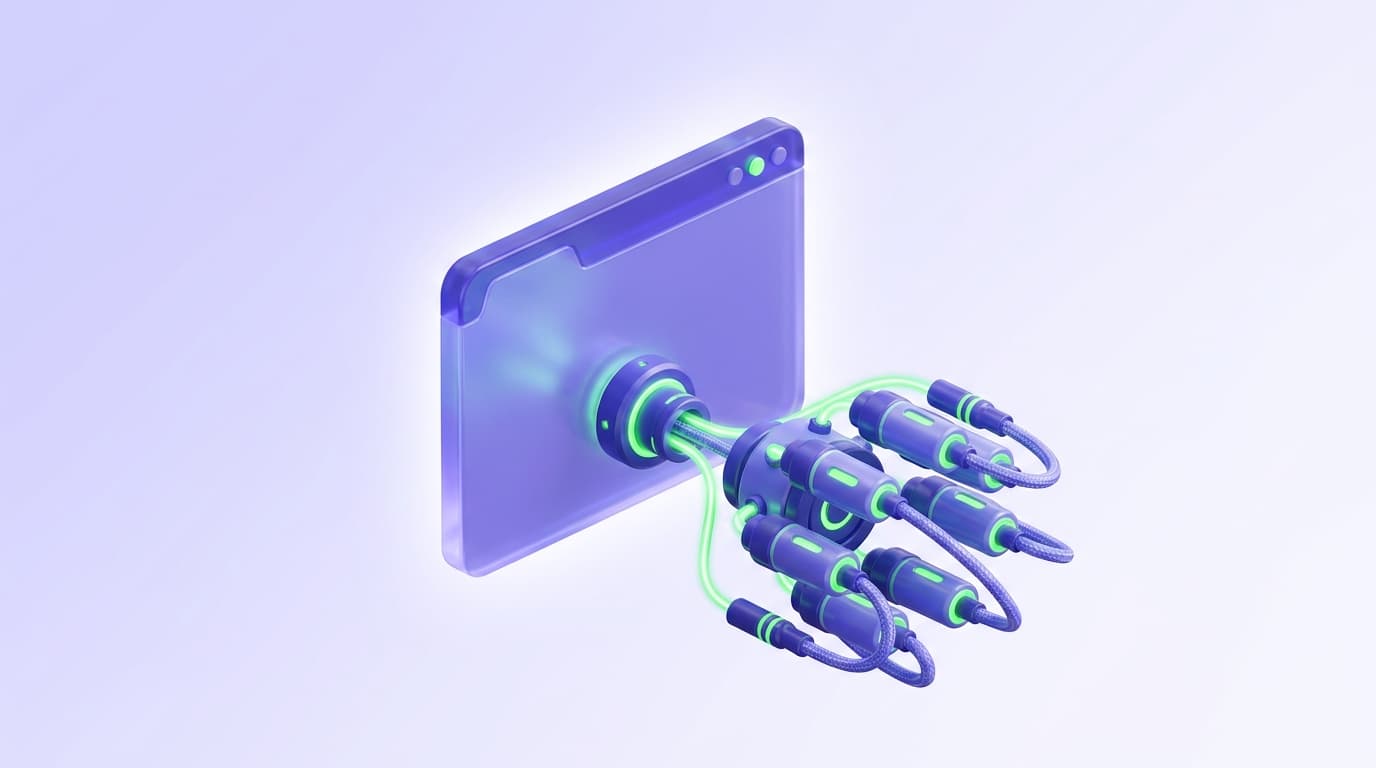
Illustrated Shiplight blog cover: an assistant window with several tool connectors plugged into it through a single protocol port.
GuidesEngineering

Claude MCP: Connecting Servers to Claude and Claude Code

Illustrated Shiplight blog cover: a committed instruction file feeding conventions into a coding agent, with an enforcement gate beside it.
GuidesEngineering

Codex Skills: Teaching the Agent Your Conventions
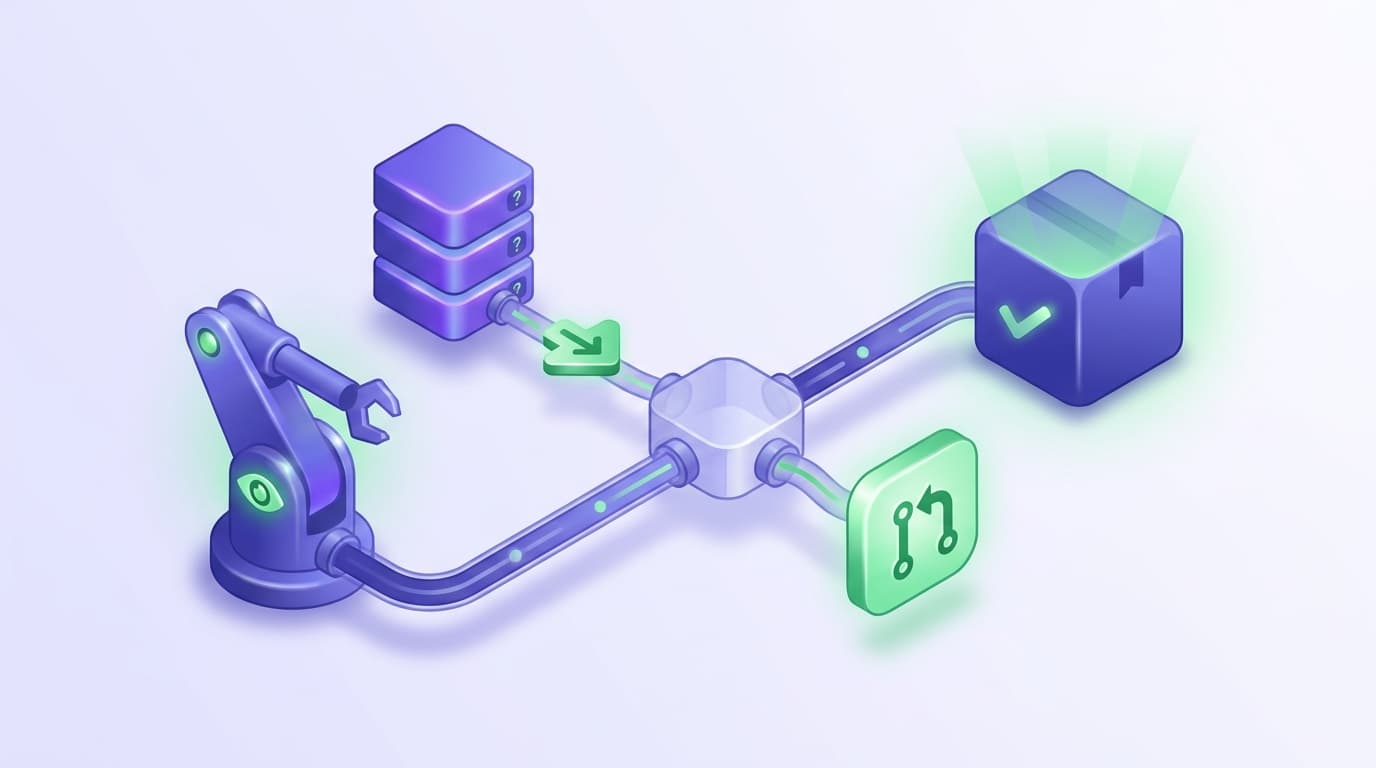
Illustrated Shiplight blog cover: an agent connected to a repository, reading issues and opening a pull request through a protocol connector.
GuidesEngineering

GitHub MCP Server: What It Does and Where It Stops
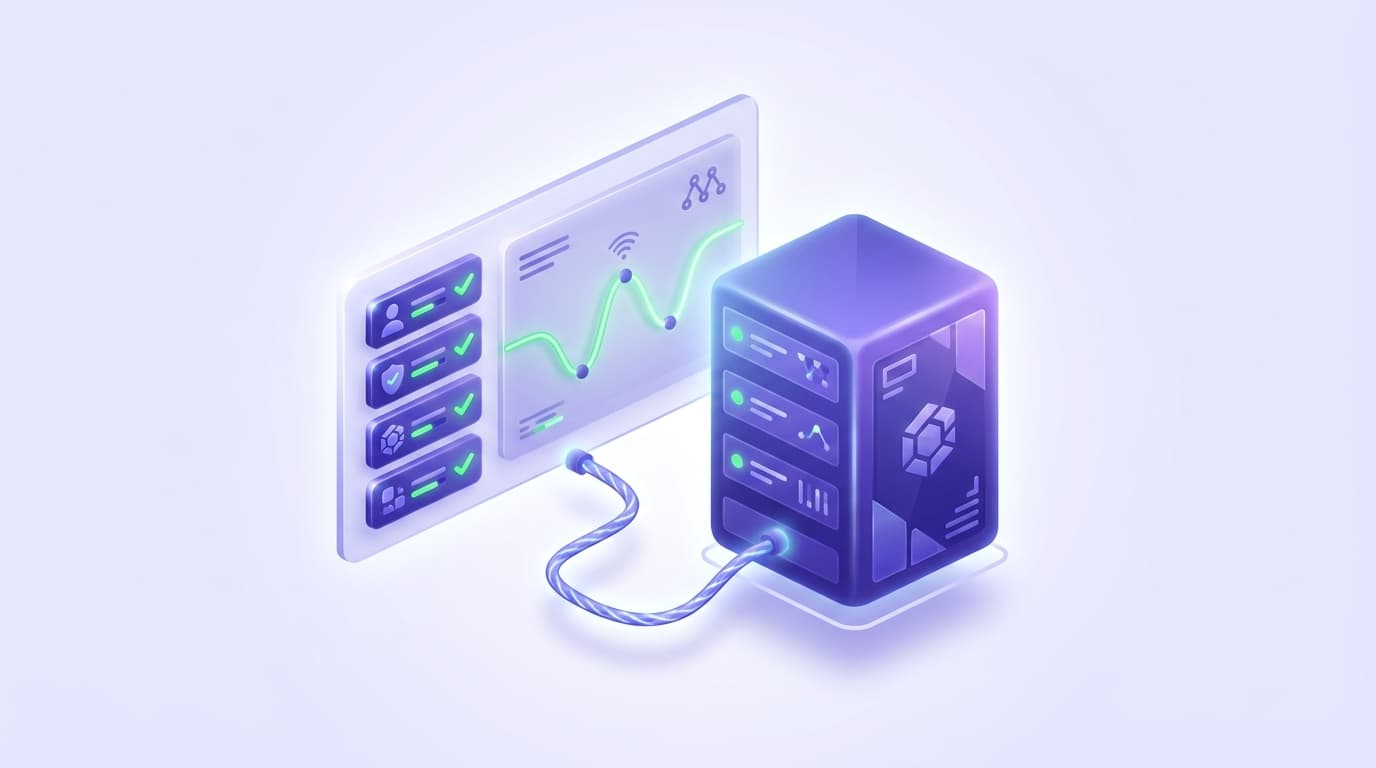
Illustrated Shiplight blog cover: a diagnostic panel wired directly into a protocol server, displaying its tool list and one traced call.
GuidesEngineering

MCP Inspector: Debugging an MCP Server Before an Agent Uses It

Illustrated Shiplight blog cover: a protocol connector between an agent and a tool, with a scoped permission boundary drawn around the tool.
EngineeringBest Practices

MCP Security: What Changes When a Model Decides
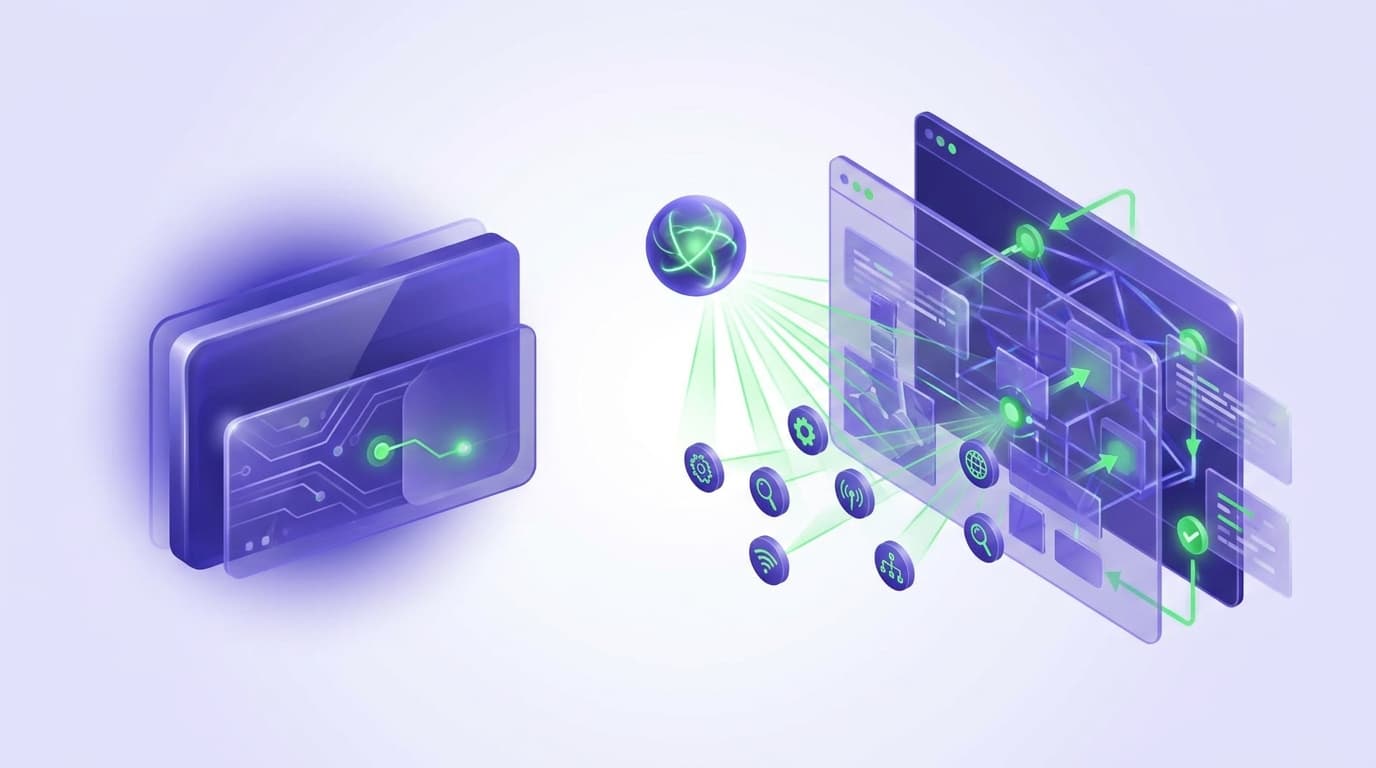
Illustrated Shiplight blog cover: a developer-facing API endpoint card beside a model-facing protocol layer wrapping it, an AI agent discovering tools at runtime.
GuidesEngineering

MCP vs API: What Is Actually Different

Illustrated Shiplight blog cover: a glossy browser window wired through a glowing protocol connector to an AI agent, the page rendered beside it as a clean structured accessibility tree of labeled nodes.
GuidesEngineering

Playwright MCP: Giving AI Agents a Real Browser in 2026

Illustrated Shiplight blog cover: a central glowing protocol hub connecting one AI agent outward to several distinct tool cards through identical connectors.
GuidesEngineering

What Is MCP? The Model Context Protocol Explained

Illustrated Shiplight blog cover: a glossy central connector plug hub linking a glossy AI chip to browser-testing tool icons, producing a green checkmark result.
GuidesAI Testing

How to Use MCP for Test Automation: A Workflow
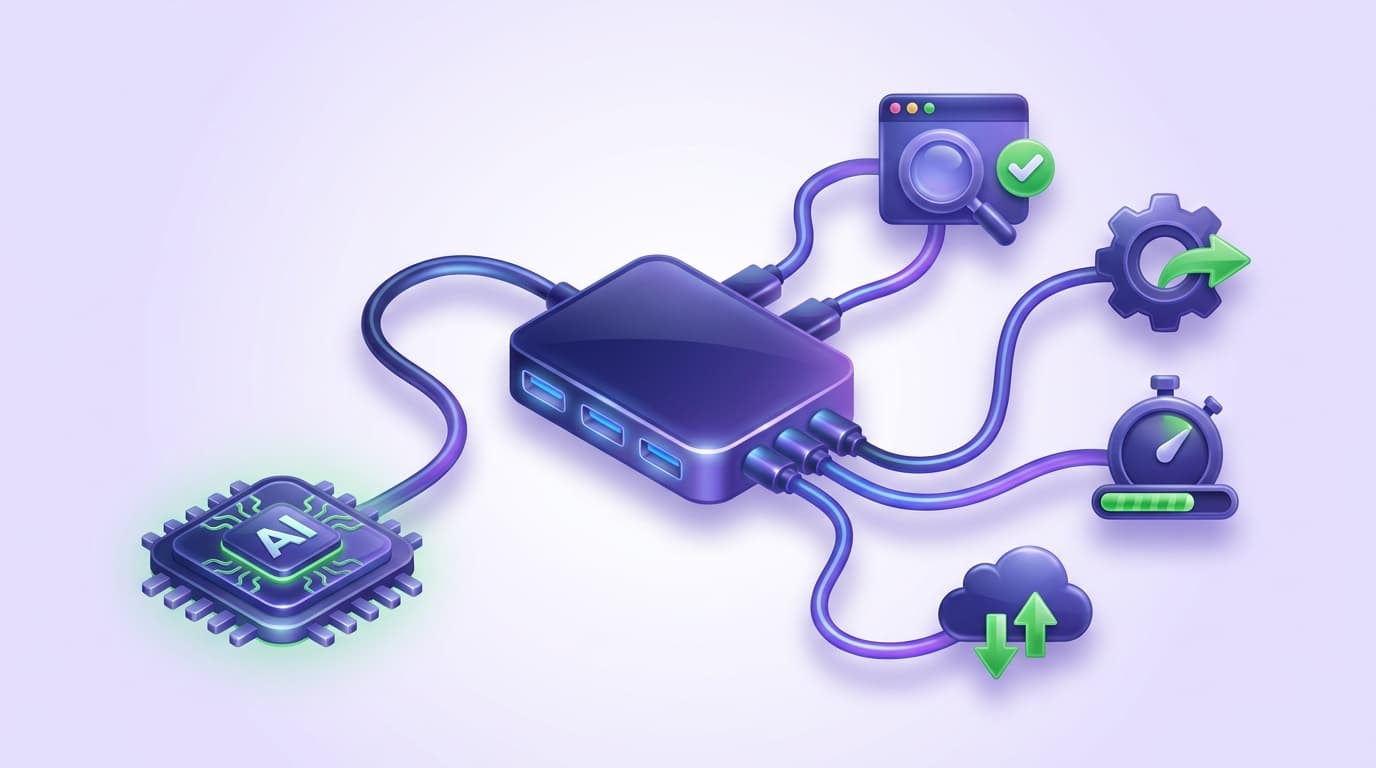
Illustrated Shiplight blog cover: a glossy MCP connector plug hub linking a glossy AI chip to several browser-testing tool icons.
Guides

MCP for Testing: The Best MCP Servers for Browser Testing, Compared

See testing that keeps up with your AI coding agents.