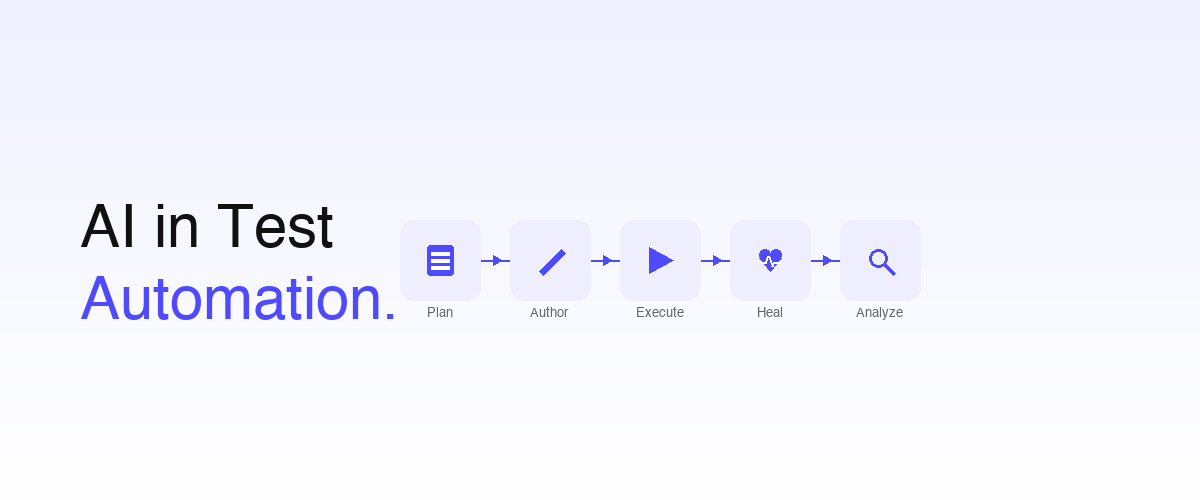
Scaling test automation with AI involves shifting from labor-intensive manual scripting to intelligent systems that generate, maintain, and optimize tests autonomously. This transformation lets QA teams keep pace with rapid development cycles by focusing on strategy rather than execution.
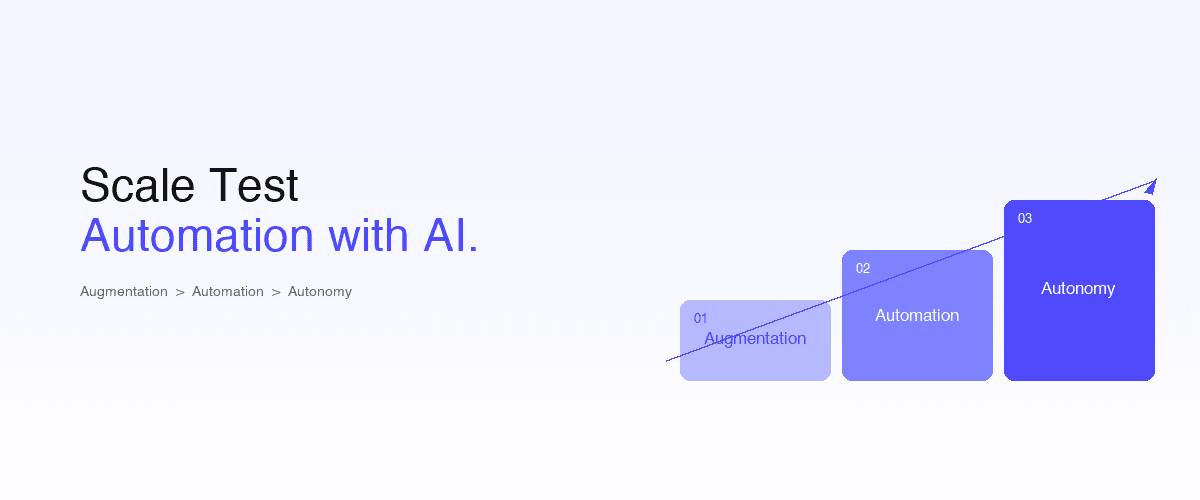
The five core scaling strategies are autonomous test generation, self-healing maintenance, intelligent prioritization, visual and multi-layer validation, and AI-powered diagnostics: adopted through a phased Augmentation → Automation → Autonomy roadmap.
This guide covers each strategy, the realistic numbers, the roadmap, and the tools.
Key takeaways
- Scaling is a model change, not a volume change. You don't scale by writing more scripts faster; you scale by removing the scripting and maintenance bottlenecks entirely.
- Five strategies compound: autonomous generation removes the authoring ceiling; self-healing removes the maintenance ceiling (60–80% maintenance reduction); prioritization shrinks what must run; visual/multi-layer extends coverage breadth; diagnostics collapse triage time.
- Adopt in three phases: Augmentation (small wins) → Automation (full workflows) → Autonomy (self-optimizing). Skipping phases is the most common failure.
- QA's job shifts from execution to strategy: the headcount stays, the work moves up the value chain. See the QA role in the AI era.
Why traditional test automation doesn't scale
Traditional automation scales linearly with people: more tests need more engineers to write them and more engineers to fix them when the UI changes. The Capgemini World Quality Report consistently shows 40–60% of QA hours going to maintenance: meaning past ~100–200 tests per engineer, maintenance equals authoring throughput and net coverage growth stalls.
AI changes the scaling curve by automating the authoring and maintenance themselves. See the human QA bottleneck in agent-first teams and near-zero maintenance E2E testing.
The 5 core strategies to scale test automation with AI
1. Autonomous test generation
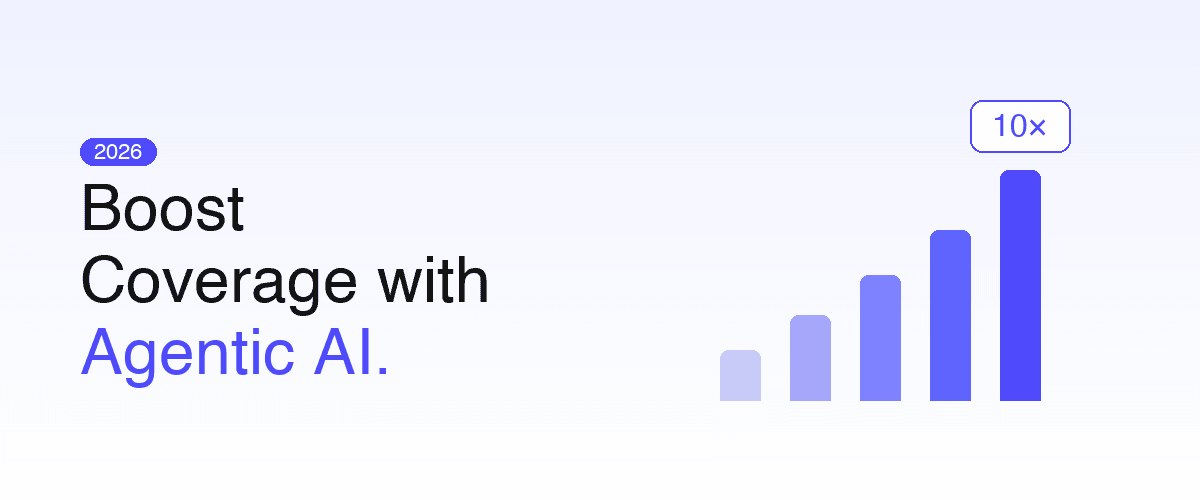
Use AI to create test scripts automatically from plain-English descriptions, user stories, or functional requirements. This eliminates the single biggest bottleneck (manual script creation) so coverage arrives with the feature instead of a sprint later. The largest gain comes when the AI coding agent that wrote the feature also generates the test in the same session.
See AI testing tools that automatically generate test cases and boost test coverage with agentic AI.
Shiplight surface: Shiplight YAML Test Format (intent → executable test) + MCP Server (coding agent authors in-session).
2. Self-healing maintenance
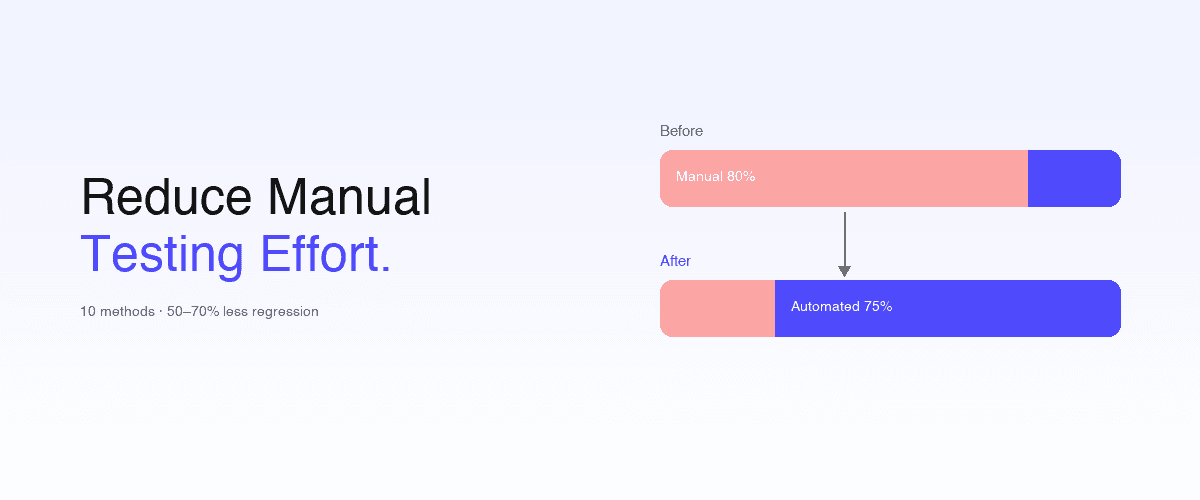
Implement AI that dynamically adapts test scripts to UI changes. Self-healing reduces maintenance effort by 60–80%, preventing tests from becoming brittle as the application evolves; this is the strategy that removes the maintenance ceiling that caps traditional automation. Prefer healing that proposes reviewable patches over silent rewrites. See self-healing vs manual maintenance and intent, cache, heal pattern.
3. Intelligent prioritization
Apply machine learning to historical failure data and code-change analysis to identify high-risk areas, so you run a smaller, more meaningful subset of tests focused on the most likely failure points instead of the full suite every cycle.
This scales by reducing what must run, not just speeding up execution. See software testing strategies (risk-based pattern) and how to reduce manual testing effort.
4. Visual and multi-layer validation
Scale beyond simple functional checks: AI visual regression testing detects pixel-level defects, and multi-layer validation extends coverage across web, mobile, and API in one motion. This is breadth scaling: more kinds of defects caught per run without proportional human effort. See E2E vs integration testing.
5. AI-powered diagnostics
Use AI root-cause analysis to resolve failures in minutes instead of days: clustering failures into root-cause groups, separating flakes from real defects, and giving developers immediate actionable feedback. Triage is a hidden scaling tax; collapsing it is as impactful as removing authoring effort. See from flaky tests to actionable signal and actionable E2E failures.
The maturity roadmap: Augmentation → Automation → Autonomy
Experts recommend a phased approach; skipping phases is the most common reason scaling efforts fail:
| Phase | What it means | Where to start |
|---|---|---|
| 1. Augmentation (small wins) | Apply AI to high-value, low-risk tasks | Generate test data; AI-maintain existing locators |
| 2. Automation (full workflows) | AI orchestrates complete testing cycles with human oversight | Intent-based authoring + self-healing + PR-time gates |
| 3. Autonomy (self-optimization) | Systems continuously improve from execution results | Agent-native generation via MCP; ML prioritization tuned on history |
Most teams reach Phase 2 in a quarter and Phase 3 over the following two. See the 30-day agentic E2E playbook for the Phase-2 timeline and from "we have tests" to "we have a quality system" (TestOps) for the operational scaffolding.
How much does AI actually scale automation?
| Lever | Realistic effect |
|---|---|
| Autonomous generation | Coverage tracks code-change speed, not human authoring (5–10× authoring throughput) |
| Self-healing | 60–80% maintenance-effort reduction |
| Intelligent prioritization | 30–50% reduction in tests run per cycle without losing risk coverage |
| AI diagnostics | Triage time from days → minutes |
These stack: a team that adopts all five typically moves from "QA is the release bottleneck" to "QA owns strategy" within one to two quarters, at flat headcount.
Key AI-powered tools for scaling test automation
| Tool | Scaling strength |
|---|---|
| Shiplight AI | Autonomous generation + self-healing + MCP agent-native; tests in git |
| Vendor cloud consoles (low-code or constrained plain-English) | Generation and self-healing inside a hosted console; tests live in the vendor's cloud, not your repo |
| Applitools | AI visual validation (visual-layer scaling) |
| Panaya | Change-impact-driven test scoping (prioritization) |
See best AI testing tools in 2026 and best AI automation tools for software testing for full comparisons.
Conclusion
Scaling test automation with AI is not about producing scripts faster: it's about removing the authoring and maintenance ceilings that make traditional automation scale linearly with headcount. The five strategies (autonomous generation, self-healing, prioritization, visual/multi-layer, diagnostics) compound, and the Augmentation → Automation → Autonomy roadmap is how disciplined teams get there without skipping the trust-building phases.
Shiplight AI is built for the Automation and Autonomy phases: natural-language YAML generation, self-healing by default, and MCP so the coding agent generates and runs tests in the same session it writes code. Book a 30-minute walkthrough and we'll map your current automation against the five scaling levers.
Frequently Asked Questions
How do I scale test automation with AI?
Shift from manual scripting to systems that generate, maintain, and optimize tests, using five strategies: autonomous test generation from plain English, self-healing maintenance (60 to 80% reduction), ML-based prioritization to run a smaller high-risk subset, visual and multi-layer validation, and AI diagnostics for faster root cause. Adopt them in three phases (Augmentation, Automation, Autonomy) rather than all at once.
Why doesn't traditional test automation scale?
Traditional automation scales linearly with headcount: more tests need more engineers to write and maintain them. With 40 to 60% of QA hours historically lost to maintenance, net coverage stalls because maintenance consumes the hours that would produce new coverage. AI changes the curve by automating authoring and maintenance, so coverage tracks code-change speed instead of typing speed.
How much can self-healing reduce test maintenance?
AI self-healing typically reduces test maintenance effort by 60–80% by dynamically adapting tests to UI changes instead of breaking. This is the single highest-impact scaling lever because maintenance, not authoring, is what caps traditional automation. The best implementations propose reviewable patch diffs rather than silently rewriting tests, preserving the audit trail.
Does scaling test automation with AI replace QA engineers?
No: it moves their work from execution to strategy. AI handles generation, maintenance, prioritization, and triage; QA engineers own test strategy, exploratory testing, risk policy, and reviewing AI output. Most teams report flat QA headcount with substantially more coverage. See the QA role in the AI era.
How long does it take to scale test automation with AI?
Roughly a quarter to reach Phase 2 (full AI-orchestrated workflows with human oversight) if you focus narrowly: intent-based authoring + self-healing + PR-time gates first. Phase 3 (self-optimizing autonomy with agent-native generation and tuned ML prioritization) typically follows over the next two quarters. Existing scripted tests keep running throughout: no rewrite required.
What's the difference between scaling coverage and scaling test automation?
Scaling coverage is specifically about how many user journeys are verified (the coverage-ceiling problem). Scaling test automation is broader: it also includes maintenance, prioritization, visual breadth, and triage. You can grow raw test count while still being unscaled if maintenance and triage consume the gains. True scaling addresses all five levers together.
What is the first step that pays back fastest?
Self-healing on a small intent-based suite. It's Phase-1-to-2 appropriate, delivers the largest single reduction (60–80% of maintenance), and is low-risk because existing scripts keep running alongside. Once maintenance stops consuming the team, autonomous generation and prioritization compound on top. See the 30-day agentic E2E playbook.